


The impact of co-existing immune-mediated diseases on phenotype and outcomes in inflammatory bowel diseases
- PMID: 28105709
- PMCID: PMC5315585
- DOI: 10.1111/apt.13940
The impact of co-existing immune-mediated diseases on phenotype and outcomes in inflammatory bowel diseases
Abstract
Background: Inflammatory bowel diseases lead to progressive bowel damage and need for surgery. While the increase in prevalence of other immune-mediated diseases in IBD is well recognised, the impact of this on the natural history of IBD is unknown.
Aim: To determine the impact of concomitant immune-mediated diseases on phenotypes and outcomes in IBD.
Methods: Patients with IBD enrolled in a prospective registry were queried about the presence of other immune-mediated diseases, defined as those where immune dysregulation plays a role in pathogenesis. Demographics and disease-related information were obtained. Subjects also completed measures of quality of life. Multivariable regression models compared disease phenotype and outcomes of IBD patients with and without other immune-mediated diseases.
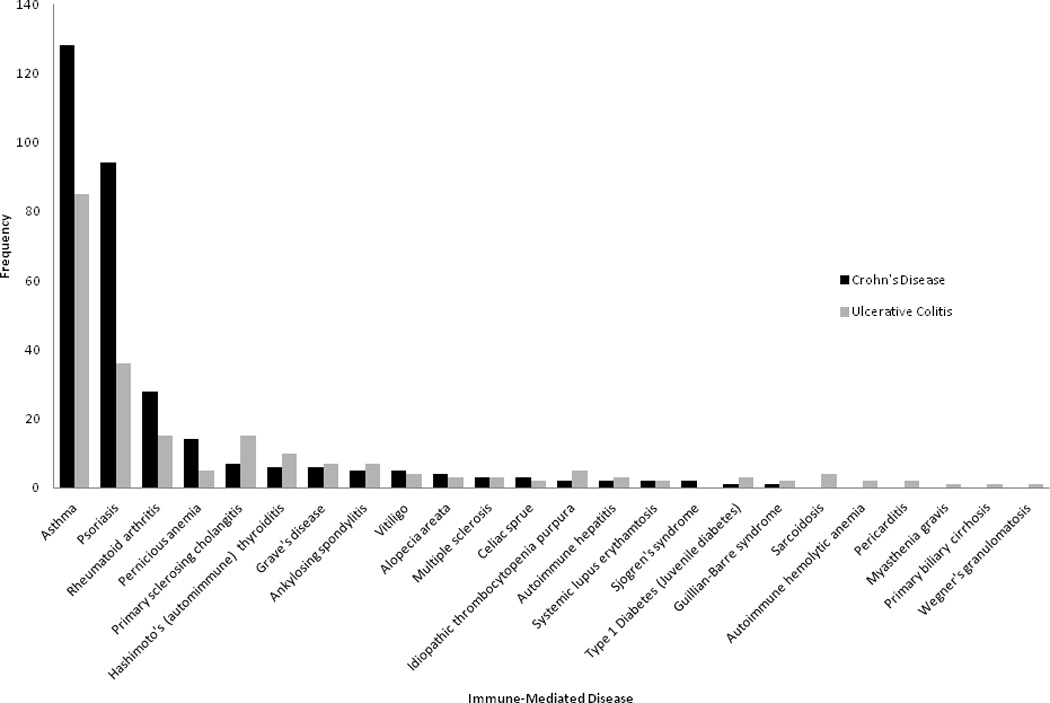
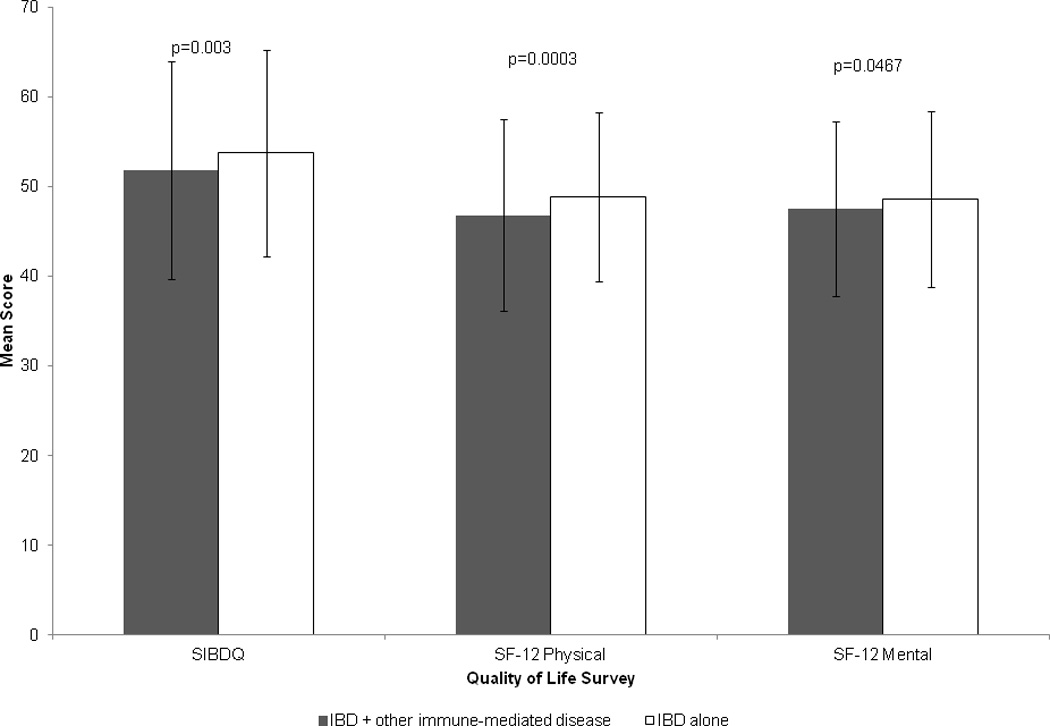
Results: The cohort included 2145 IBD patients among whom 458 (21%) had another immune-mediated disease. There was no difference in CD phenotype between the two groups. UC patients were more likely to have pancolitis in the presence of another immune-mediated disease (62%) compared to those without (52%, P = 0.02). IBD patients with another immune-mediated disease had higher rates of needing anti-TNF biologics [Odds ratio (OR) 1.31, 95% CI 1.05-1.63] and surgery (OR 1.26, 95% CI 0.99-1.61). The presence of another immune-mediated disease was also associated with lower disease-specific and general physical quality of life.
Conclusions: The presence of another immune-mediated disease in IBD patients was associated with higher likelihood of pancolonic involvement in UC, and a modest increase in need for IBD-related surgery and anti-TNF biological therapy. Such patients also experienced worse quality of life.
© 2017 John Wiley & Sons Ltd.
Figures
Comment in
-
Editorial: co-existing immune-mediated disease in inflammatory bowel diseases - a new disease severity indicator?Aliment Pharmacol Ther. 2017 Apr;45(8):1167. doi: 10.1111/apt.13987. Aliment Pharmacol Ther. 2017. PMID: 28326586 No abstract available.
-
Editorial: co-existing immune-mediated disease in inflammatory bowel diseases - a new disease severity indicator? Author's reply.Aliment Pharmacol Ther. 2017 Apr;45(8):1168. doi: 10.1111/apt.13998. Aliment Pharmacol Ther. 2017. PMID: 28326587 Free PMC article. No abstract available.
References
-
- Davidson A, Diamond B. Autoimmune diseases. N Engl J Med. 2001;345:340–350. - PubMed
-
- Wu X, Chen H, Xu H. The genomic landscape of human immune-mediated diseases. J Hum Genet. 2015;60:675–681. - PubMed
-
- Bernstein CN, Loftus EV, Jr, Ng SC, et al. Hospitalisations and surgery in Crohn's disease. Gut. 2012;61:622–629. - PubMed
-
- Bernstein CN, Ng SC, Lakatos PL, et al. A review of mortality and surgery in ulcerative colitis: milestones of the seriousness of the disease. Inflamm Bowel Dis. 2013;19:2001–2010. - PubMed
MeSH terms
Substances
Grants and funding
LinkOut - more resources
Full Text Sources
Other Literature Sources
Medical