Review
. 2017 Jan 18;8(1):39.
doi: 10.3390/genes8010039.

The Complex Relationship between Virulence and Antibiotic Resistance

Affiliations
Review

The Complex Relationship between Virulence and Antibiotic Resistance

Meredith Schroeder et al. Genes (Basel). .

Abstract

Antibiotic resistance, prompted by the overuse of antimicrobial agents, may arise from a variety of mechanisms, particularly horizontal gene transfer of virulence and antibiotic resistance genes, which is often facilitated by biofilm formation. The importance of phenotypic changes seen in a biofilm, which lead to genotypic alterations, cannot be overstated. Irrespective of if the biofilm is single microbe or polymicrobial, bacteria, protected within a biofilm from the external environment, communicate through signal transduction pathways (e.g., quorum sensing or two-component systems), leading to global changes in gene expression, enhancing virulence, and expediting the acquisition of antibiotic resistance. Thus, one must examine a genetic change in virulence and resistance not only in the context of the biofilm but also as inextricably linked pathologies. Observationally, it is clear that increased virulence and the advent of antibiotic resistance often arise almost simultaneously; however, their genetic connection has been relatively ignored. Although the complexities of genetic regulation in a multispecies community may obscure a causative relationship, uncovering key genetic interactions between virulence and resistance in biofilm bacteria is essential to identifying new druggable targets, ultimately providing a drug discovery and development pathway to improve treatment options for chronic and recurring infection.

Keywords: antibiotic resistance; biofilms; microbial communication; virulence genes.


Conflict of interest statement

The authors declare no conflict of interest.

Figures
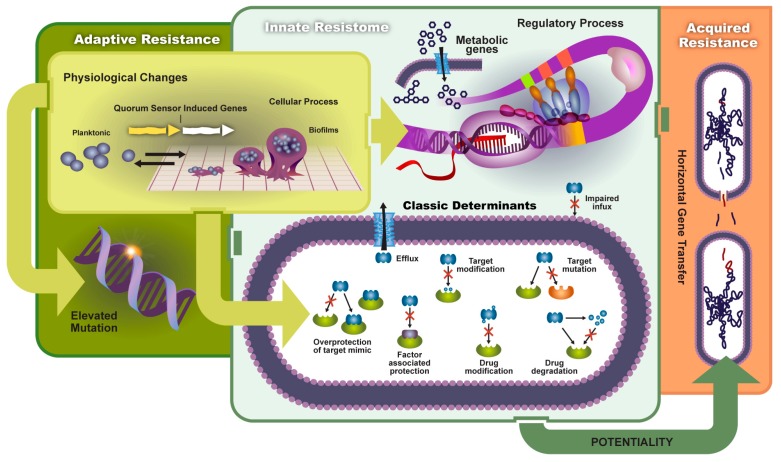
Figure 1
Figure 1
The transmission and mechanisms of antibiotic resistance and virulence can be divided into adaptive resistance, innate resistance, and acquired resistance. Environmental factors can prompt physiological changes and lead to: (1) elevated mutation rates; (2) changes in metabolic genes and regulatory processes; and (3) a host of classic antibiotic inactivation and resistance mechanisms (classic determinants). Such resistance and increased virulence can potentially be shared among bacteria leading to acquired resistance.
Figure 2
Figure 2
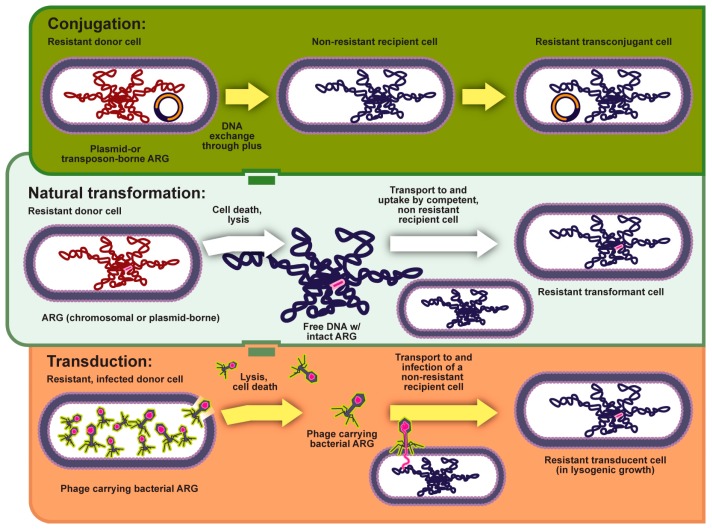
Horizontal gene transfer can commonly occur through conjugation and natural transformation. Additionally, it may occur through transduction, where resistance is transmitted via bacteriophage.
Figure 3
Figure 3
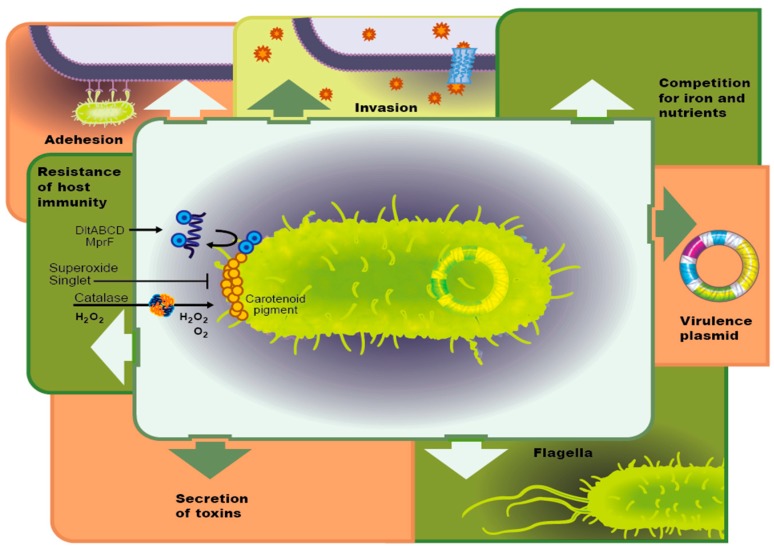
Summary of virulence factors commonly recognized.
Figure 4
Figure 4
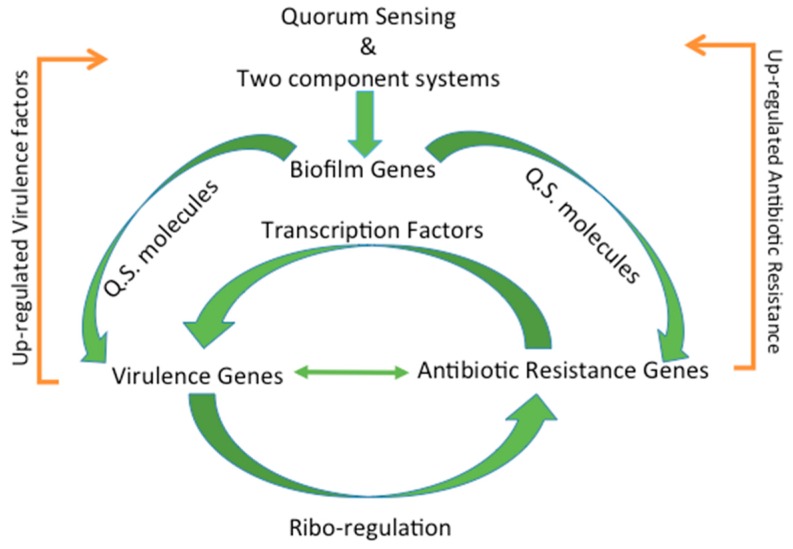
Common regulatory mechanisms act as a connection between virulence and antibiotic resistance. Quorum sensing and two component systems upregulate biofilm genes, which in turn upregulate quorum sensing molecules that in turn influence virulence and antibiotic resistance genes. Up-regulated virulence and antibiotic resistance genes serve to upregulate quorum sensing and two component systems and complete the cycle.

References

    1. Melnyk A.H., Wong A., Kassen R. The fitness costs of antibiotic resistance mutations. Evol. Appl. 2015;8:273–283. doi: 10.1111/eva.12196. - DOI - PMC - PubMed
    1. Roux D., Danilchanka O., Guillard T., Cattoir V., Aschard H., Fu Y., Angoulvant F., Messika J., Ricard J.-D., Mekalanos J.J., et al. Fitness cost of antibiotic susceptibility during bacterial infection. Sci. Transl. Med. 2015;7:297ra114. doi: 10.1126/scitranslmed.aab1621. - DOI - PubMed
    1. Guillard T., Pons S., Roux D., Pier G.B., Skurnik D. Antibiotic resistance and virulence: Understanding the link and its consequences for prophylaxis and therapy. BioEssays. 2016;38:682–693. doi: 10.1002/bies.201500180. - DOI - PubMed
    1. Tay S.B., Yew W.S. Development of quorum-based anti-virulence therapeutics targeting Gram-negative bacterial pathogens. Int. J. Mol. Sci. 2013;14:16570–16599. doi: 10.3390/ijms140816570. - DOI - PMC - PubMed
    1. Von Dohren H. Antibiotics: Actions, origins, resistance, by C. Walsh. 2003. Washington, DC: ASM Press. 345 pp. $99.95 (hardcover) Protein Sci. Publ. Protein Soc. 2004;13:3059–3060. doi: 10.1110/ps.041032204. - DOI