Review
. 2017 Jan 19;17(1):182.
doi: 10.3390/s17010182.

Current and Emerging Technology for Continuous Glucose Monitoring

Affiliations
Review

Current and Emerging Technology for Continuous Glucose Monitoring

Cheng Chen et al. Sensors (Basel). .

Abstract

Diabetes has become a leading cause of death worldwide. Although there is no cure for diabetes, blood glucose monitoring combined with appropriate medication can enhance treatment efficiency, alleviate the symptoms, as well as diminish the complications. For point-of-care purposes, continuous glucose monitoring (CGM) devices are considered to be the best candidates for diabetes therapy. This review focuses on current growth areas of CGM technologies, specifically focusing on subcutaneous implantable electrochemical glucose sensors. The superiority of CGM systems is introduced firstly, and then the strategies for fabrication of minimally-invasive and non-invasive CGM biosensors are discussed, respectively. Finally, we briefly outline the current status and future perspective for CGM systems.

Keywords: continuous glucose monitoring; glucose biosensor; implanted devices; mini-invasive; non-invasive.


Conflict of interest statement

The authors declare no conflict of interest.

Figures
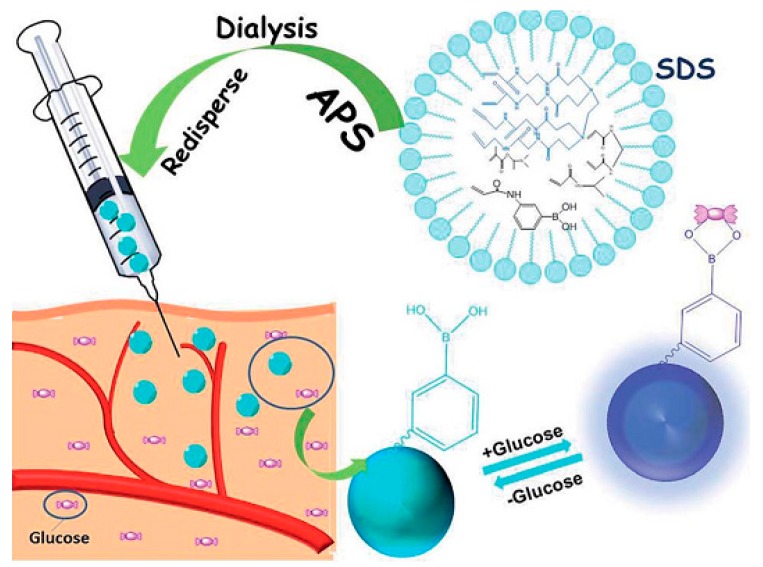
Figure 1
Figure 1
The schematic illustration of G1.0 PAMAM-functionalized microgels that can recognize glucose and emit blue fluorescence after injection. Reprinted with permission from [36].
Figure 2
Figure 2
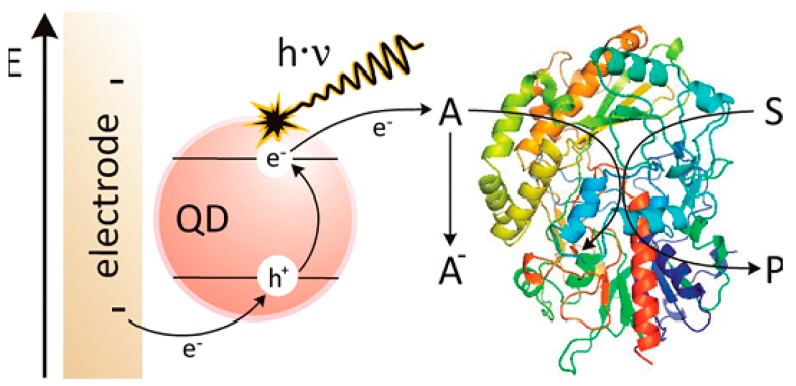
Illustration of the electron transfer steps after illumination of the QD electrode. Reprinted with permission from [40].
Figure 3
Figure 3
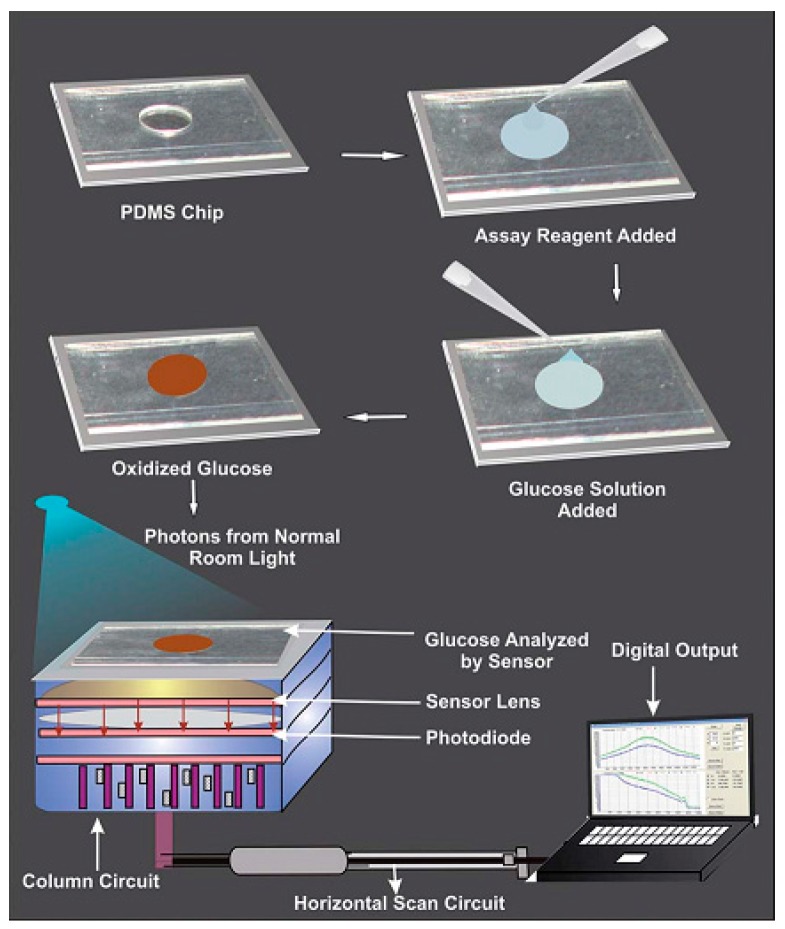
Schematic of PDMS chip utilization for monitoring of glucose solutions by a CMOS image sensor. Reprinted with permission from [44].
Figure 4
Figure 4
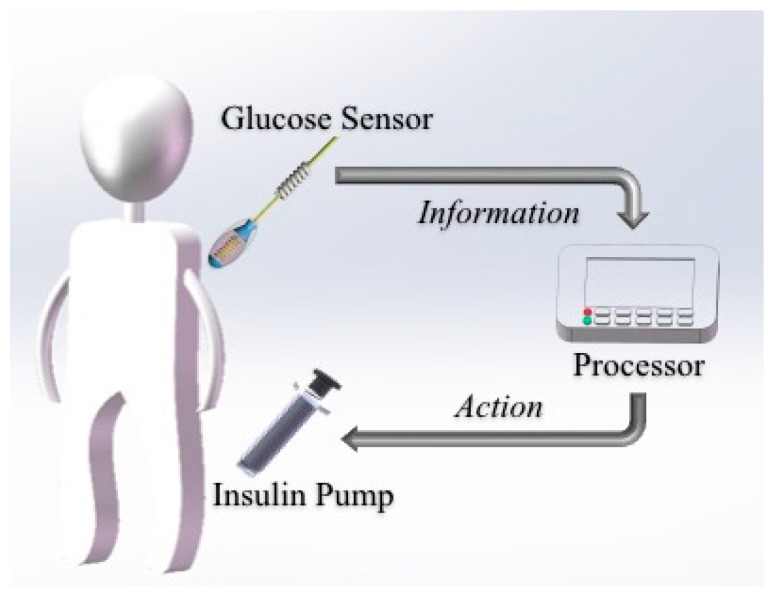
Illustration of closed-loop glycemic management system utilizing the ‘Sense and Act’ method for optimized insulin delivery.
Figure 5
Figure 5
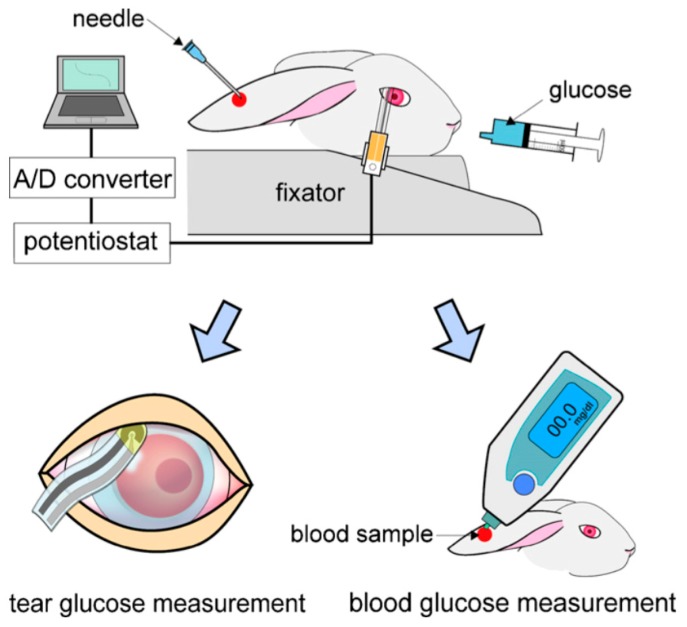
Measurement method of tear glucose concentration with a contact lens biosensor. BG levels were simultaneously measured by a commercial BG monitoring kit. Reprinted with permission from [69].
Figure 6
Figure 6
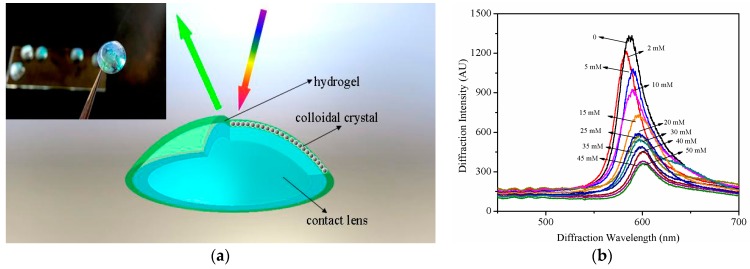
(a) Diagram and photograph (insert) of a physical hydrogel photonic crystal sensing lens; (b) Diffraction wavelength shifts with the variation of the glucose concentration in artificial tear solution.
Figure 7
Figure 7
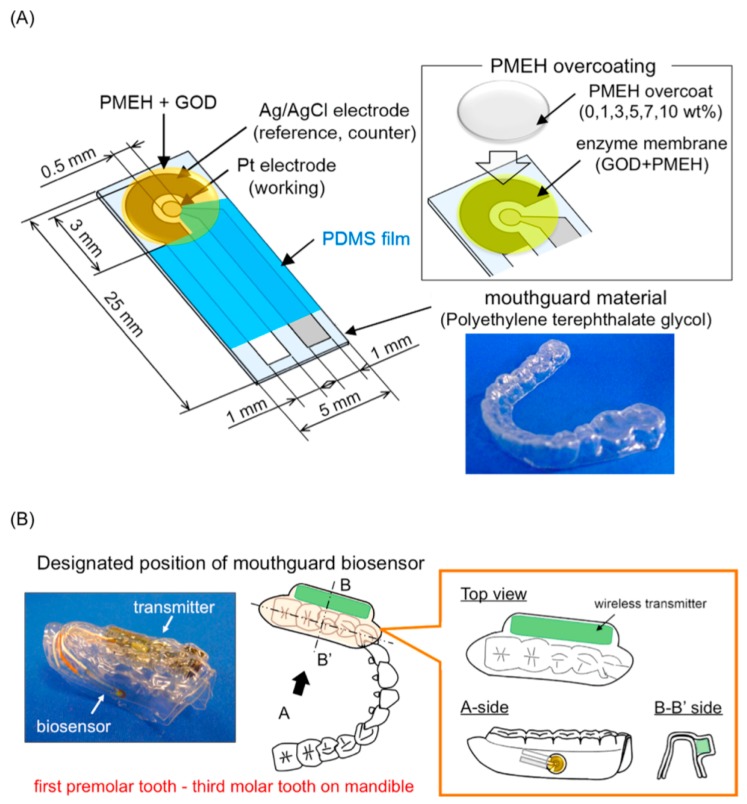
(A) Schematic image of the glucose biosensor on the polyethylene terephthalate glycol mouthguard support. Pt and Ag electrodes were formed on the PETG through a sputtering process. Each electrode sensor consisted of a 0.20 mm2 Pt working electrode and a 4.0 mm2 Ag/AgCl reference/counter electrode, both insulated with PDMS on a 0.5 mm thick PETG layer. 30 units of GOD were applied to the sensing region of the working electrode. In order to optimize enzyme entrapment, 2.0 mL of 1.0 wt% PMEH solution was spread over the sensing region to form the PMEH overcoat; (B) Schematic image of the mouth-guard biosensor custom-fit to the patient’s dentition. The device consists of a glucose sensor and wireless transmitter incorporating a potentiostat for stable glucose measurement. The sensor was designed to fit the mandibular dentition from the first premolar up to the third molar. The wireless transmitter was neatly encased in PETG. Reprinted with permission from [94].

References

    1. World Health Organization (WHO) Global Report on Diabetes 2016. WHO; Geneva, Switzerland: 2016.
    1. Centers for Disease Control and Prevention . National Diabetes Fact Sheet: National Estimates and General Information on Diabetes and Prediabetes in the United States. Centers for Disease Control and Prevention; Atlanta, GA, USA: 2011.
    1. Wild S., Roglic G., Green A., Sicree R., King H. Global prevalence of diabetes: Estimates for the year 2000 and projections for 2030. Diabetes Care. 2004;27:1047–1053. doi: 10.2337/diacare.27.5.1047. - DOI - PubMed
    1. Chase H.P., Beck R.W., Xing D., Tamborlane W.V., Coffey J., Fox L.A., Ives B., Keady J., Kollman C., Laffel L., et al. Continuous glucose monitoring in youth with type 1 diabetes: 12-month follow-up of the Juvenile Diabetes Research Foundation continuous glucose monitoring randomized trial. Diabetes Technol. Ther. 2010;12:507–515. doi: 10.1089/dia.2010.0021. - DOI - PubMed
    1. Vigersky R.A. The benefits, limitations, and cost-effectiveness of advanced technologies in the management of patients with diabetes mellitus. J. Diabetes Sci. Technol. 2015;9:320–330. doi: 10.1177/1932296814565661. - DOI - PMC - PubMed