


Internet-Delivered Self-management Support for Improving Coronary Heart Disease and Self-management-Related Outcomes: A Systematic Review
- PMID: 28107251
- PMCID: PMC5469565
- DOI: 10.1097/JCN.0000000000000392
Internet-Delivered Self-management Support for Improving Coronary Heart Disease and Self-management-Related Outcomes: A Systematic Review
Abstract
Introduction: Coronary heart disease (CHD) is associated with significant morbidity and mortality, including mental health comorbidity, which is associated with poor outcomes. Self-management is key, but there is limited access to self-management support. Internet-delivered interventions may increase access.
Objective: The aim of this study was to conduct a systematic review to (1) determine the effectiveness of Internet-delivered CHD self-management support for improving CHD, mood, and self-management related outcomes and (2) identify and describe essential components for effectiveness.
Method: Randomized controlled trials that met prespecified eligibility criteria were identified using a systematic search of 3 healthcare databases (Medline, PsychINFO, and Embase).
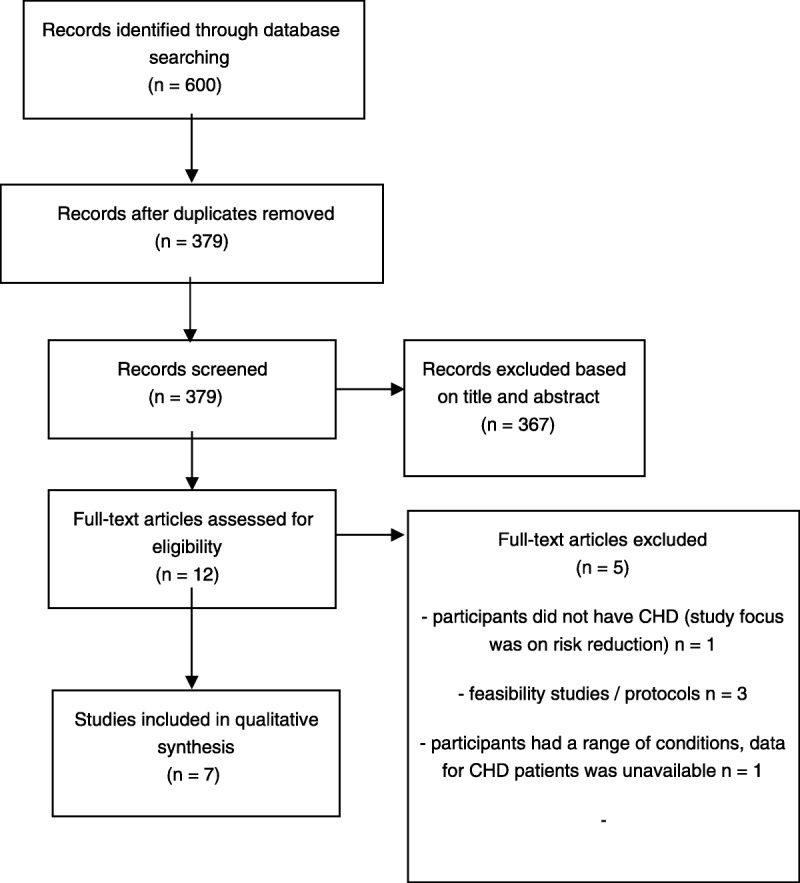
Results: Seven trials, which included 1321 CHD patients, were eligible for inclusion. There was considerable heterogeneity between studies in terms of the intervention content, outcomes measured, and study quality. All 7 of the studies reported significant positive between-group effects, in particular for lifestyle-related outcomes. Personalization of interventions and provision of support to promote engagement may be associated with improved outcomes, although more data are required to confirm this. The theoretical basis of interventions was poorly developed though evidence-based behavior change interventions were used.
Conclusion: More well-designed randomized controlled trials are needed. These should also explore how interventions work and how to improve participant retention and satisfaction and examine the role of personalization and support within interventions.
Conflict of interest statement
Conflicts of interest: G.L., A.C., I.J.N., D.R., and E.A.B. are involved in the development of an Internet-delivered intervention for people with cardiovascular disease and psychological distress (Space From Heart Disease). This review was conducted to inform that work.
Figures
References
-
- Townsend NWK, Bhatnagar P, Smolina K, et al. Coronary Heart Disease Statistics 2012 Edition. London, England: British Heart Foundation; 2012.
-
- Frasure-Smith N, Lespérance F. Depression and cardiac risk: present status and future directions. Postgrad Med J. 2010;86(1014):193–196. - PubMed
-
- Lee G, Dix S, Mitra B, Coleridge J, Cameron P. The efficacy and safety of a chest pain protocol for short stay unit patients: a one year follow-up. Eur J Cardiovasc Nurs. 2015;14(5):416–422. - PubMed
Publication types
MeSH terms
LinkOut - more resources
Full Text Sources
Other Literature Sources
Miscellaneous
