


Association of In-Hospital Mortality and Dysglycemia in Septic Patients
- PMID: 28107491
- PMCID: PMC5249165
- DOI: 10.1371/journal.pone.0170408
Association of In-Hospital Mortality and Dysglycemia in Septic Patients
Abstract
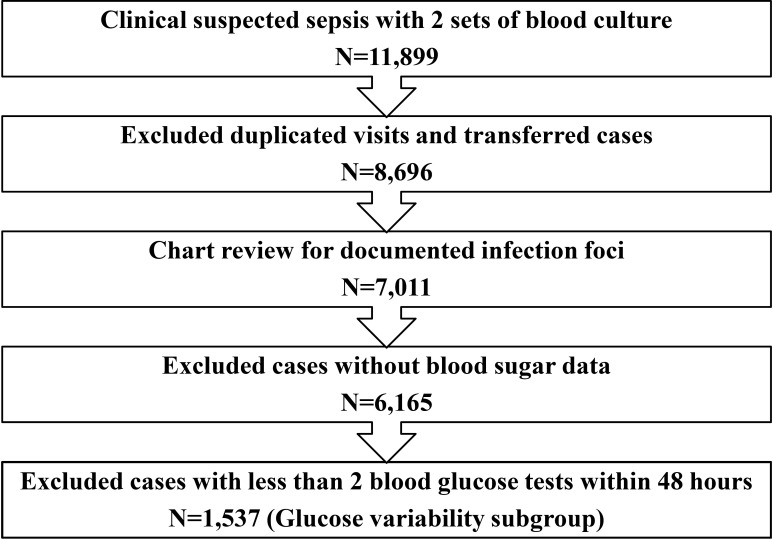
Background: The associations between dysglycemia and mortality in septic patients with and without diabetes are yet to be confirmed. Our aim was to analyze the association of diabetes and sepsis mortality, and to examine how dysglycemia (hyperglycemia, hypoglycemia and glucose variability) affects in-hospital mortality of patients with suspected sepsis in emergency department (ED) and intensive care units.
Methods: Clinically suspected septic patients admitted to ED were included, and stratified into subgroups according to in-hospital mortality and the presence of diabetes. We analyzed patients' demographics, comorbidities, clinical and laboratory parameters, admission glucose levels and severity of sepsis. Odds ratio of mortality was assessed after adjusting for possible confounders. The correlations of admission glucose and CoV (blood glucose coefficients of variation) and mortality in diabetes and non-diabetes were also tested.
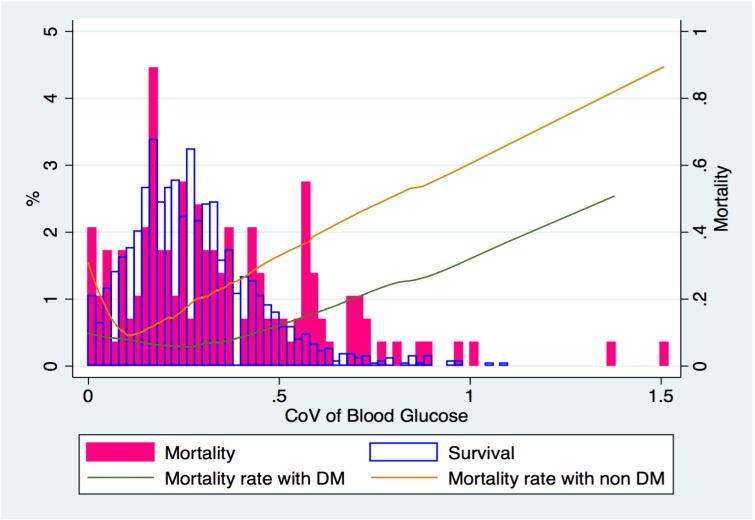
Results: Diabetes was present in 58.3% of the patients. Diabetic patients were older, more likely to have end-stage renal disease and undergoing hemodialysis, but had fewer malignancies, less sepsis severity (lower Mortality in Emergency Department Sepsis Score), less steroid usage in emergency department, and lower in-hospital mortality rate (aOR:0.83, 95% CI 0.65-0.99, p = 0.044). Hyperglycemia at admission (glucose≥200 mg/dL) was associated with higher risks of in-hospital mortality among the non-diabetes patients (OR:1.83 vs. diabetes, 95% CI 1.20-2.80, p = 0.005) with the same elevated glucose levels at admission. In addition, CoV>30% resulted in higher risk of death as well (aOR:1.88 vs. CoV between 10 and 30, 95%CI 1.24-2.86 p = 0.003).
Conclusions: This study indicates that while diabetes mellitus seems to be a protective factor in sepsis patients, hyper- or hypoglycemia status on admission, and increased blood glucose variation during hospital stays, were independently associated with increased odds ratio of mortality.
Conflict of interest statement
The authors have declared that no competing interests exist.
Figures
References
MeSH terms
Substances
LinkOut - more resources
Full Text Sources
Other Literature Sources
Medical
