


Diagnostic Efficacy of Sentinel Lymph Node Biopsy in Early Oral Squamous Cell Carcinoma: A Meta-Analysis of 66 Studies
- PMID: 28107500
- PMCID: PMC5249063
- DOI: 10.1371/journal.pone.0170322
Diagnostic Efficacy of Sentinel Lymph Node Biopsy in Early Oral Squamous Cell Carcinoma: A Meta-Analysis of 66 Studies
Abstract
Objectives: The diagnostic efficacy of sentinel lymph node biopsy(SLNB) in early oral squamous cell carcinoma(OSCC) still remains controversial. This meta-analysis was conducted to assess the diagnostic value of SLNB in clinically neck-negative T1-2 OSCC.
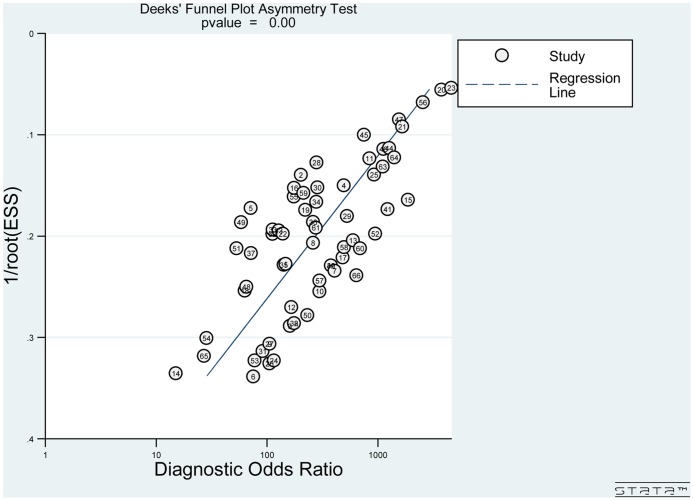
Methods: A systematic literature search for relevant literature published up to September 11, 2016 was conducted in PubMed, Embase, Web of Science, Cochrane Library and ClinicalTrials, and the reference lists of eligible studies were examined. Data from different studies were pooled to estimate the summary sentinel lymph node(SLN) identification rate, sensitivity, negative predictive value. Summary receiver operator characteristic curve(SROC) was plotted and area under the SROC curve (AUC) was calculated to evaluate the overall diagnostic efficacy. Threshold effect was assessed with use of the spearman correlation coefficient. Between-study heterogeneity was tested using the Q tests and the I2 statistics. Subgroup analyses were conducted in view of the greater effect of different study characteristics on diagnostic efficacy of SLN. Deeks' funnel plot asymmetry test was performed to evaluate publication bias. Sensitivity analysis was evaluated through omitting studies one by one and comparing the pooled results of random-effects model and fixed-effects model. All analyses were performed using Review Manager (version 5.3.5), Meta-DiSc (version 1.4), Comprehensive Meta Analysis (version 2.0) and STATA (version 12).
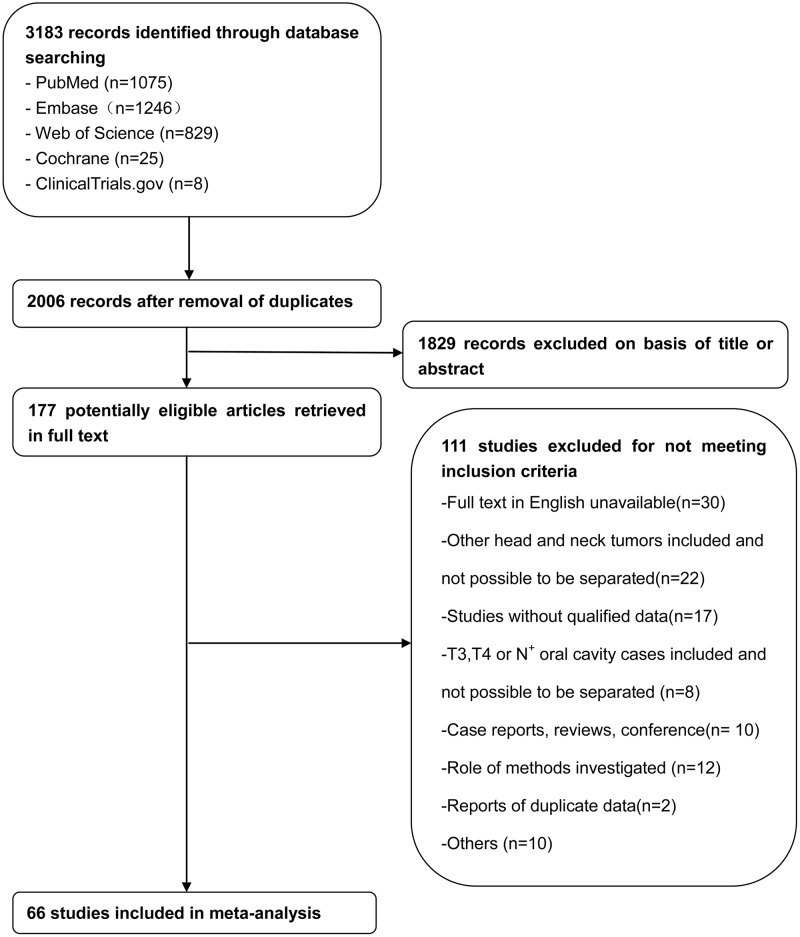
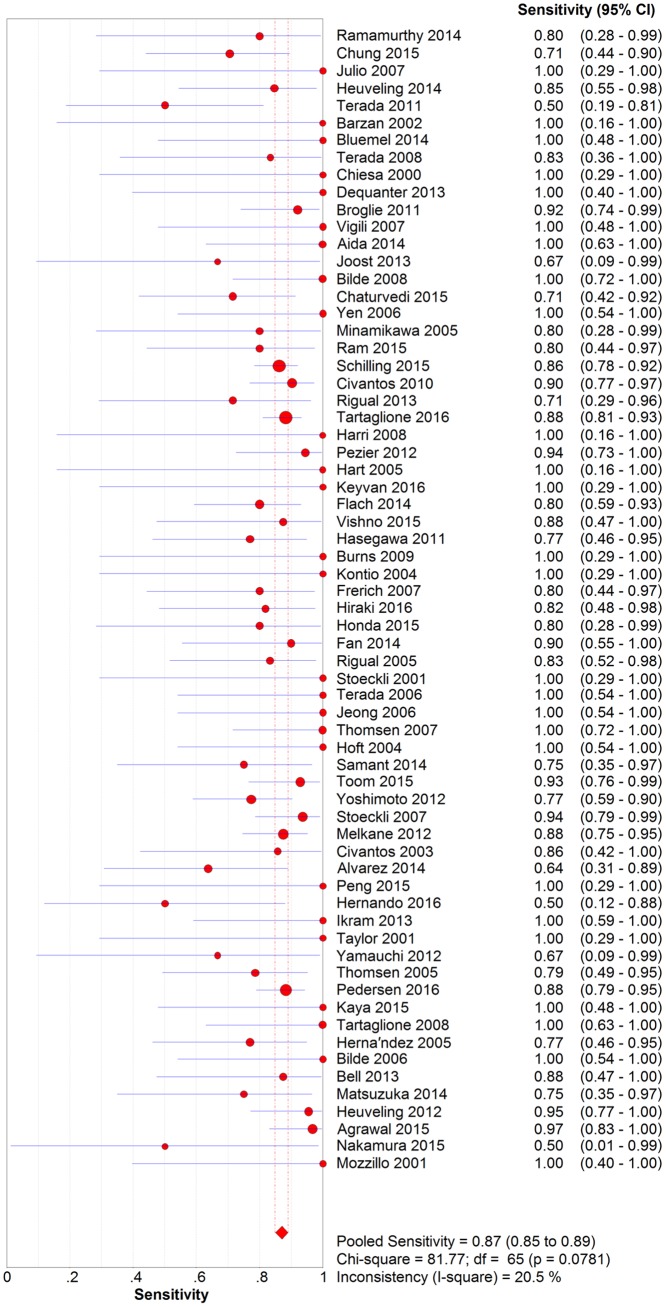
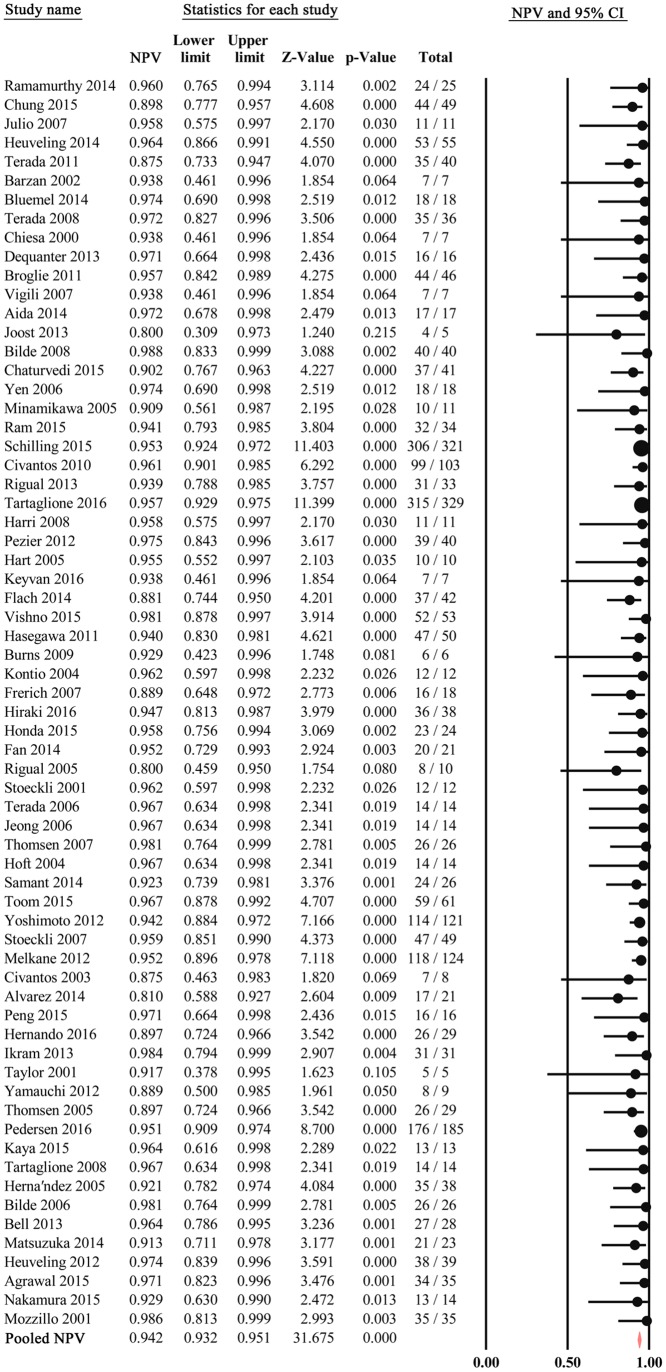
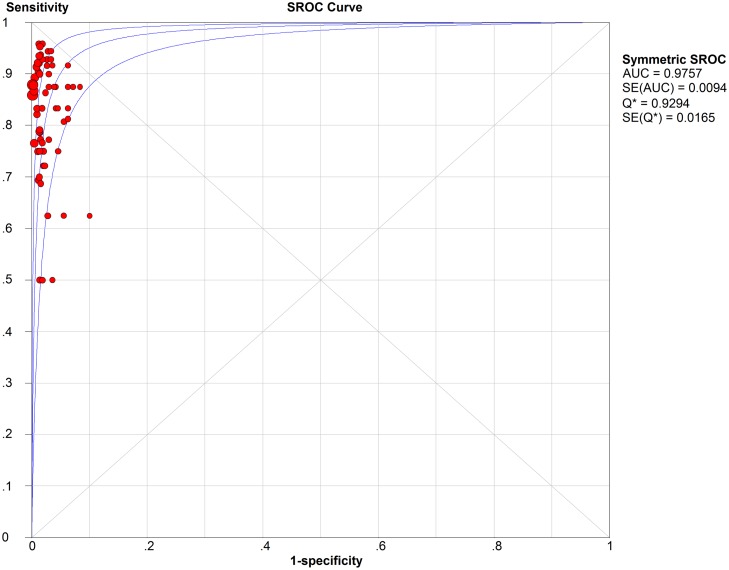
Results: 66 studies comprising 3566 patients with cT1-2N0 OSCC were included in this meta-analysis. The pooled SLN identification rate was 96.3%(95% CI: 95.3%-97.0%). The pooled sensitivity was 0.87 (95% CI: 0.85-0.89), pooled negative predictive value was 0.94 (95% CI: 0.93-0.95), and AUC was 0.98 (95% CI: 0.97-0.99). Subgroup analyses indicated that SLN assessment with immunohistochemistry(IHC) achieved a significantly higher sensitivity than without IHC.
Conclusions: This meta-analysis suggests that SLNB has a high diagnostic accuracy in cT1-2N0 oral squamous cell carcinoma, and is an ideal alternative to elective neck dissection. Furthermore, the use of IHC can significantly improve SLNB diagnostic sensitivity for early OSCC.
Conflict of interest statement
The authors have declared that no competing interests exist.
Figures
References
-
- De Zinis LO, Bolzoni A, Piazza C, Nicolai P. Prevalence and localization of nodal metastases in squamous cell carcinoma of the oral cavity: role and extension of neck dissection. European archives of oto-rhino-laryngology: official journal of the European Federation of Oto-Rhino-Laryngological Societies (EUFOS): affiliated with the German Society for Oto-Rhino-Laryngology—Head and Neck Surgery. 2006;263(12):1131–5. Epub 2006/09/28. - PubMed
-
- Pillsbury HC 3rd, Clark M. A rationale for therapy of the N0 neck. The Laryngoscope. 1997;107(10):1294–315. - PubMed
-
- Braams JW, Pruim J, Freling NJ, Nikkels PG, Roodenburg JL, Boering G, et al. Detection of lymph node metastases of squamous-cell cancer of the head and neck with FDG-PET and MRI. Journal of nuclear medicine: official publication, Society of Nuclear Medicine. 1995;36(2):211–6. - PubMed
-
- Ross GL, Soutar DS, MacDonald DG, Shoaib T, Camilleri IG, Robertson AG. Improved staging of cervical Metastases in clinically node-negative patients with head and neck squamous cell carcinoma. Annals of surgical oncology. 2004;11(2):213–8. - PubMed
Publication types
MeSH terms
LinkOut - more resources
Full Text Sources
Other Literature Sources
Medical
