Fibrinolytic Enzyme Cotherapy Improves Tumor Perfusion and Therapeutic Efficacy of Anticancer Nanomedicine
- PMID: 28108516
- PMCID: PMC5523511
- DOI: 10.1158/0008-5472.CAN-16-1646
Fibrinolytic Enzyme Cotherapy Improves Tumor Perfusion and Therapeutic Efficacy of Anticancer Nanomedicine
Abstract
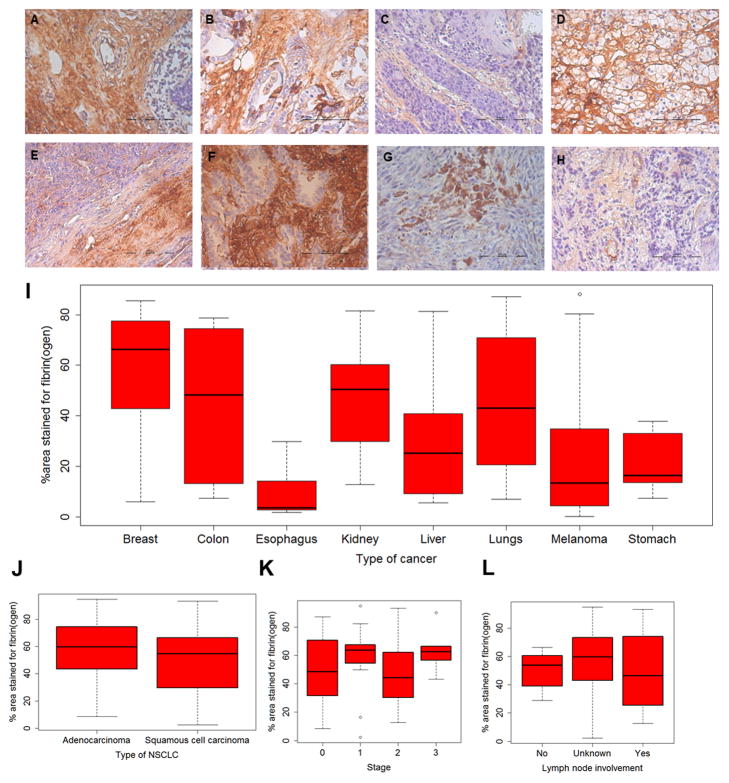
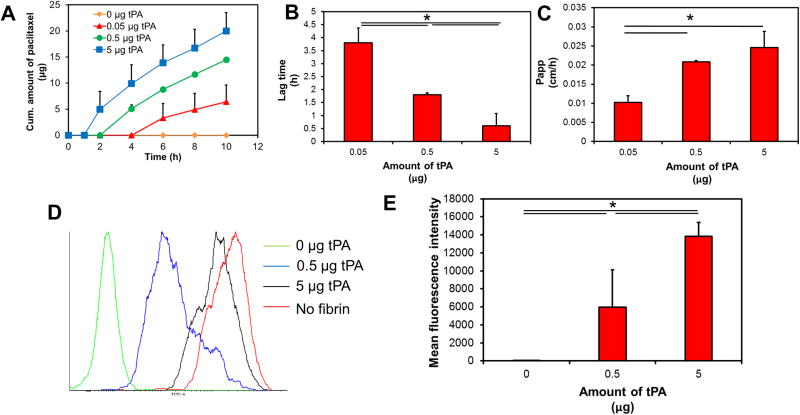
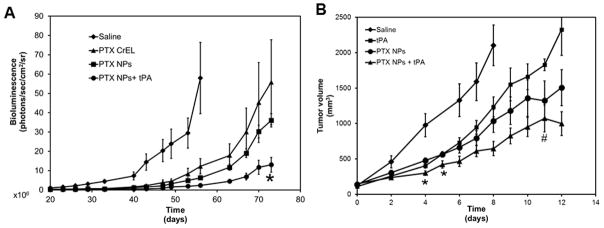
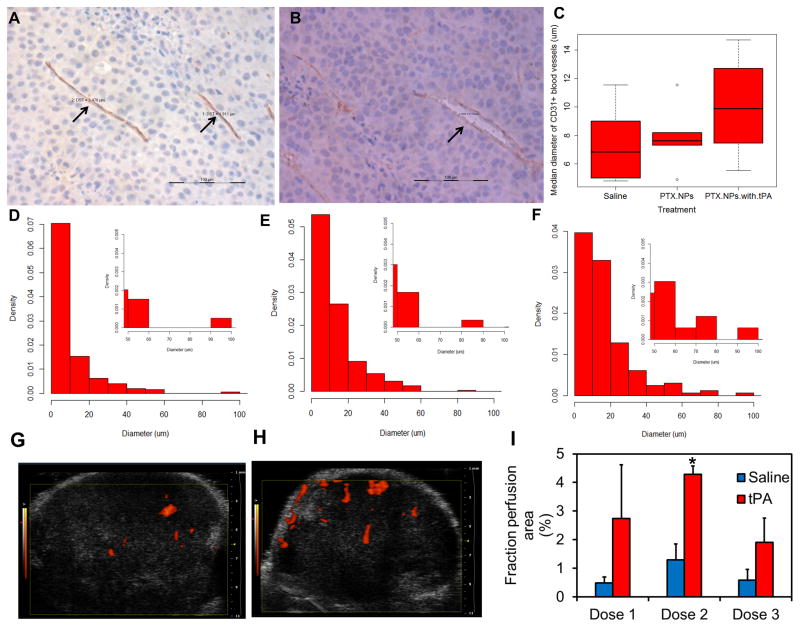
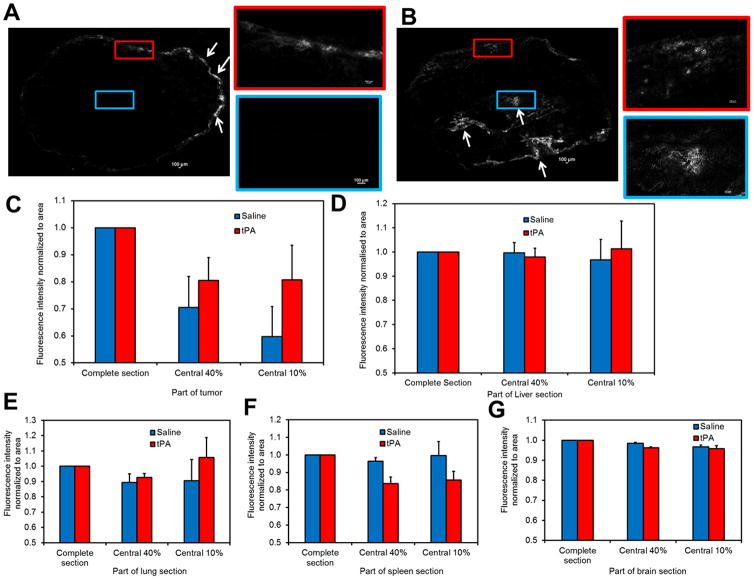
Elevated interstitial fluid pressure and solid stress within tumors contribute to poor intratumoral distribution of nanomedicine. In this study, we hypothesized that the presence of fibrin in tumor extracellular matrix contributes to hindered intratumoral distribution of nanocarriers and that this can be overcome through the use of a fibrinolytic enzyme such as tissue plasminogen activator (tPA). Analysis of fibrin expression in human tumor biopsies showed significant fibrin staining in nearly all tumor types evaluated. However, staining was heterogeneous across and within tumor types. We determined the effect of fibrin on the diffusion, intratumoral distribution, and therapeutic efficacy of nanocarriers. Diffusivity of nanocarriers in fibrin matrices was limited and could be improved significantly by coincubation with tPA. In vivo, coadministration of tPA improved the anticancer efficacy of nanoparticle-encapsulated paclitaxel in subcutaneous syngeneic mouse melanoma and orthotopic xenograft lung cancer models. Furthermore, treatment with tPA led to decompression of blood vessels and improved tumor perfusion. Cotreatment with tPA resulted in greater intratumoral penetration of a model nanocarrier (Doxil), leading to enhanced availability of the drug in the tumor core. Fibrinolytics such as tPA are already approved for other indications. Fibrinolytic cotherapy is therefore a rapidly translatable strategy for improving therapeutic effectiveness of anticancer nanomedicine. Cancer Res; 77(6); 1465-75. ©2017 AACR.
©2017 American Association for Cancer Research.
Conflict of interest statement
Figures
References
-
- Minchinton AI, Tannock IF. Drug penetration in solid tumours. Nat Rev Cancer. 2006;6:583–92. - PubMed
-
- Moghimi SM, Hunter AC, Murray JC. Long-circulating and target-specific nanoparticles: theory to practice. Pharmacol Rev. 2001;53:283–318. - PubMed
-
- Torchilin VP. Polymer-coated long-circulating microparticulate pharmaceuticals. J Microencapsul. 1998;15:1–19. - PubMed
-
- Albanese A, Tang PS, Chan WC. The effect of nanoparticle size, shape, and surface chemistry on biological systems. Annu Rev Biomed Eng. 2012;14:1–16. - PubMed
-
- Chauhan VP, Stylianopoulos T, Boucher Y, Jain RK. Delivery of molecular and nanoscale medicine to tumors: transport barriers and strategies. Annu Rev Chem Biomol Eng. 2011;2:281–98. - PubMed
Publication types
MeSH terms
Substances
Grants and funding
LinkOut - more resources
Full Text Sources
Other Literature Sources
Medical