


Patterns of Social Affiliations and Healthcare Engagement Among Young, Black, Men Who Have Sex With Men
- PMID: 28108879
- PMCID: PMC5522368
- DOI: 10.1007/s10461-016-1668-3
Patterns of Social Affiliations and Healthcare Engagement Among Young, Black, Men Who Have Sex With Men
Abstract
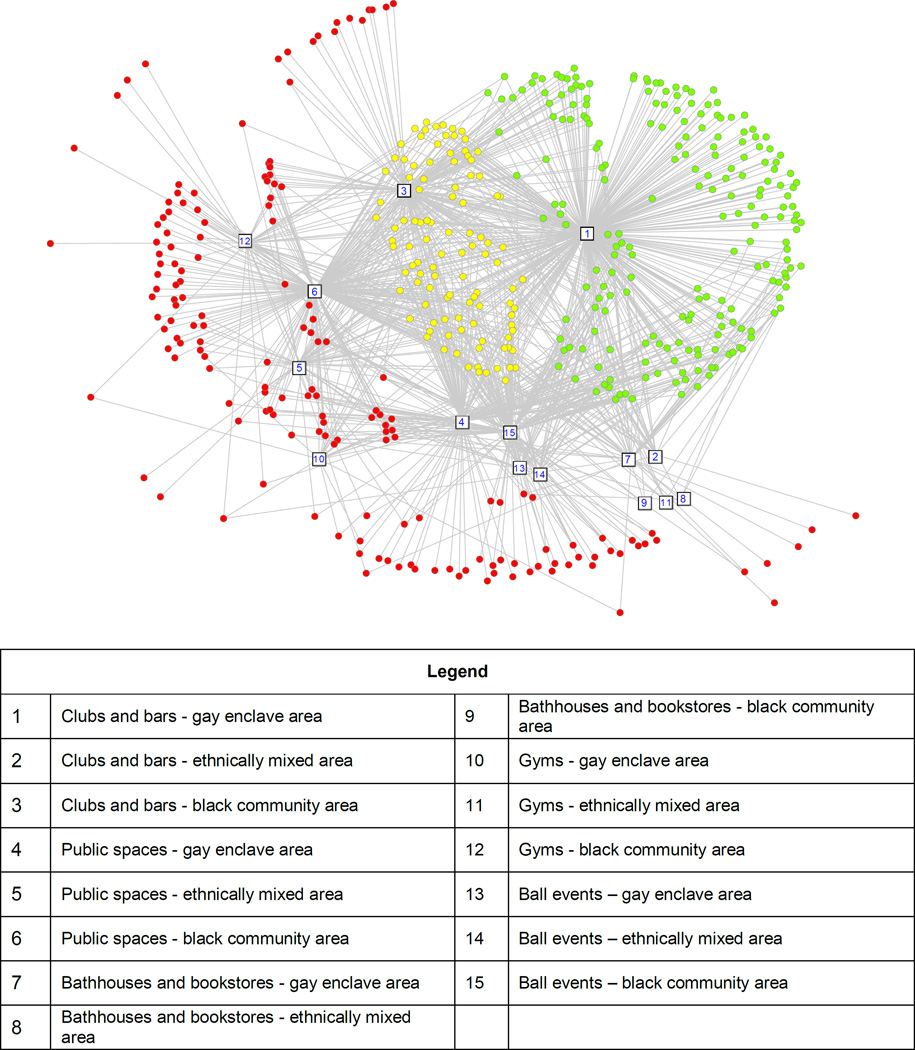
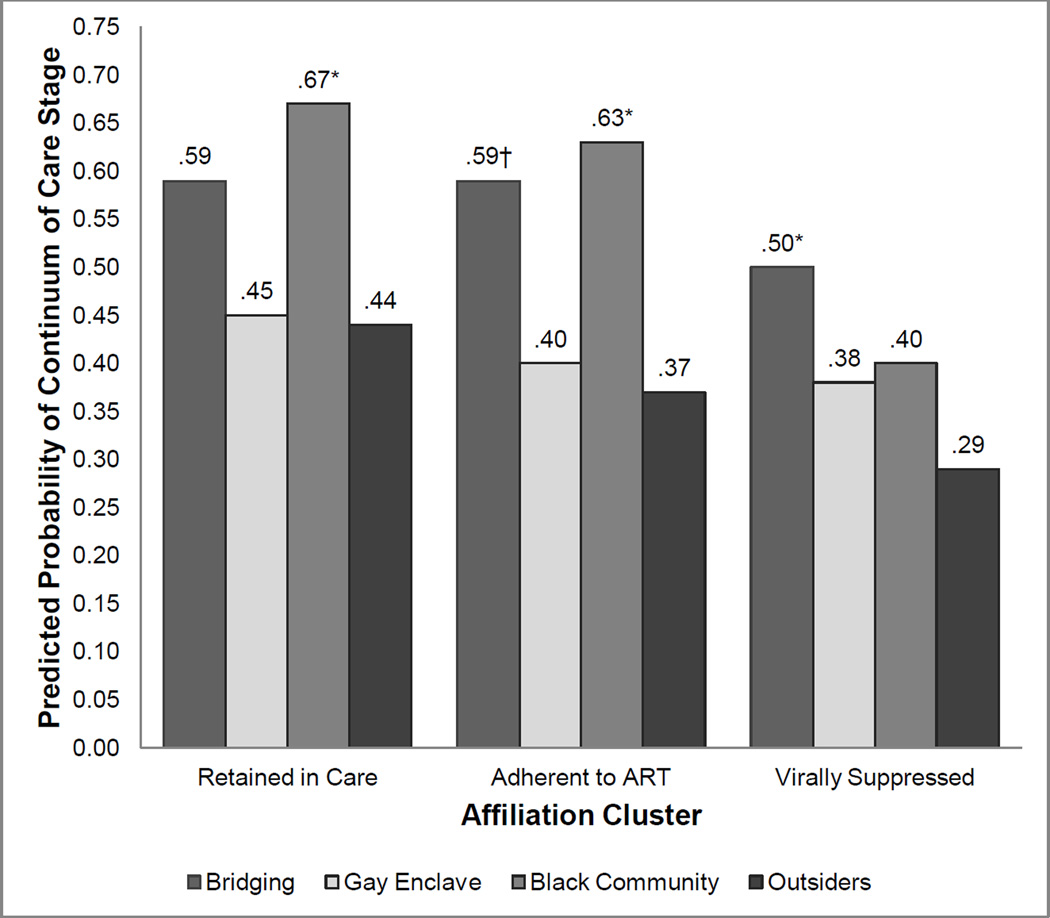
Little work has examined how individuals' social affiliations-the venues in which they meet friends and engage in informal social interaction-influence their engagement with public health services. We investigate how links to these local places shape access to information and exposure to health-seeking behavior. Using longitudinal data from a respondent-driven sample of 618 young black men who have sex with men (YBMSM) in Chicago, we identify different sets of social venues that connect YBMSM. We then examine how YBMSM's connections within this network influence their receipt of HIV prevention and treatment services and knowledge of pre-exposure prophylaxis (PrEP). Our results show that YBMSM's positions within Chicago's venue network shape the types of health-related services they access, net of demographic, structural, and community covariates. Men with affiliations that are linked to the city's gay enclave are most likely to know about PrEP, while men with affiliations that are predominately in the black community demonstrate improved HIV treatment outcomes. Outreach engaging MSM beyond venues in gay enclaves is needed.
Keywords: Affiliations; HIV; Health disparities; Men who have sex with men; Minority health; Neighborhoods; Public health; Social networks.
Conflict of interest statement
Figures
References
-
- Centers for Disease Control and Prevention. Lifetime Risk of HIV Diagnosis. [Accessed June 5, 2016];NCHHSTP. 2016 http://www.cdc.gov/nchhstp/newsroom/2016/croi-press-release-risk.html.
-
- Millett GA, Peterson JL, Flores SA, et al. Comparisons of disparities and risks of HIV infection in black and other men who have sex with men in Canada, UK, and USA: A meta-analysis. The Lancet. 2012;380(9839):341–348. - PubMed
-
- Pierce SJ, Miller RL, Morales MM, Forney J. Identifying HIV prevention service needs of African American men who have sex with men: an application of spatial analysis techniques to service planning. J Public Health Manag Pract. 2007;(Suppl):S72–S79. - PubMed
Publication types
MeSH terms
Grants and funding
LinkOut - more resources
Full Text Sources
Other Literature Sources
Medical
Miscellaneous
