


Guided and unguided internet-based vestibular rehabilitation versus usual care for dizzy adults of 50 years and older: a protocol for a three-armed randomised trial
- PMID: 28110290
- PMCID: PMC5253547
- DOI: 10.1136/bmjopen-2016-015479
Guided and unguided internet-based vestibular rehabilitation versus usual care for dizzy adults of 50 years and older: a protocol for a three-armed randomised trial
Abstract
Introduction: Dizziness is a common symptom in general practice with a high prevalence among older adults. The most common cause of dizziness in general practice is peripheral vestibular disease. Vestibular rehabilitation (VR) is a safe and effective treatment for peripheral vestibular disease that entails specific exercises to maximise the central nervous system compensation for the effects of vestibular pathology. An internet-based VR intervention has recently been shown to be safe and effective. Online interventions are low cost and easily accessible, but prone to attrition and non-adherence. A combination of online and face-to-face therapy, known as blended care, may balance these advantages and disadvantages.
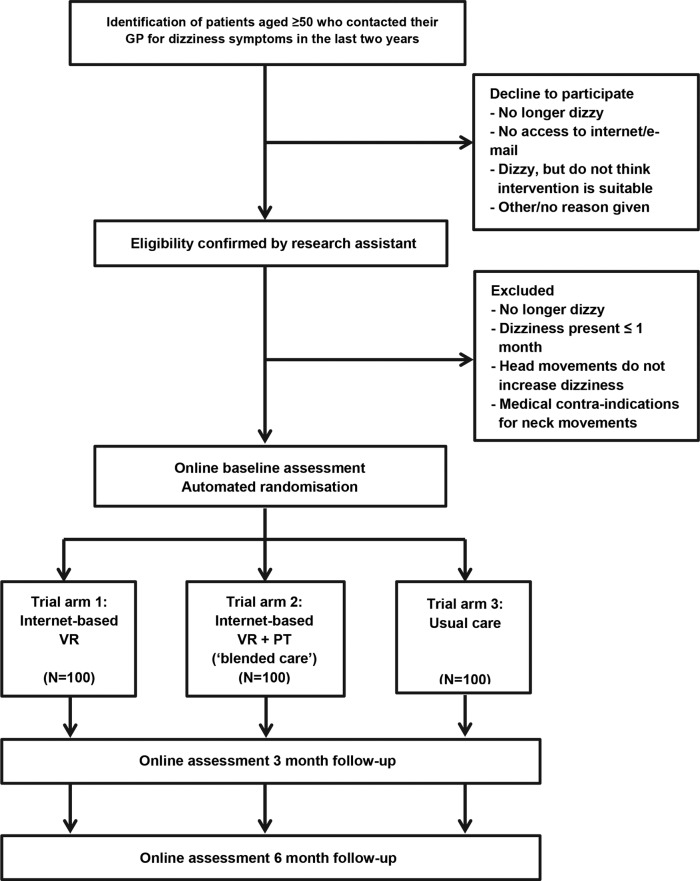
Methods and analysis: A single-blind, three-arm, randomised controlled trial among patients aged 50 years and over presenting with dizziness of vestibular origin in general practice will be performed. In this study, we will compare the clinical and cost-effectiveness of stand-alone internet-based VR and internet-based VR with physiotherapeutic support ('blended care') with usual care during 6 months of follow-up. We will use a translated Dutch version of a British online VR intervention. Randomisation will be stratified by dizziness severity. The primary outcome measure is the Vertigo Symptoms Scale-Short Form. Intention-to-treat analysis will be performed, adjusting for confounders. The economic evaluation will be conducted from a societal perspective. We will perform an additional analysis on the data to identify predictors of successful treatment in the same population to develop a clinical decision rule for general practitioners.
Ethics and dissemination: The ethical committee of the VU University Medical Center approved ethics and dissemination of the study protocol. The insights and results of this study will be widely disseminated through international peer-reviewed journals and conference presentations.
Trial registration number: Pre-results, NTR5712.
Keywords: PRIMARY CARE; dizziness; general practice; therapy; vertigo; vestibular rehabilitation.
Published by the BMJ Publishing Group Limited. For permission to use (where not already granted under a licence) please go to http://www.bmj.com/company/products-services/rights-and-licensing/.
Conflict of interest statement
Conflicts of Interest: None declared.
Figures
References
Publication types
MeSH terms
Associated data
LinkOut - more resources
Full Text Sources
Other Literature Sources
Medical
