


Systemic Immunity Is Required for Effective Cancer Immunotherapy
- PMID: 28111070
- PMCID: PMC5312823
- DOI: 10.1016/j.cell.2016.12.022
Systemic Immunity Is Required for Effective Cancer Immunotherapy
Abstract
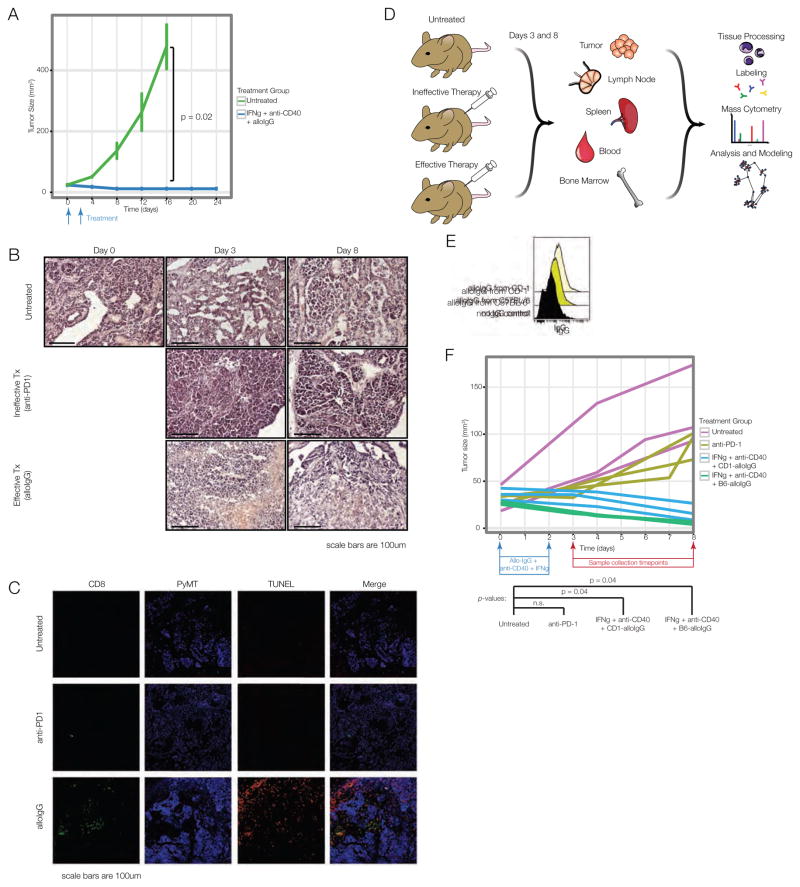
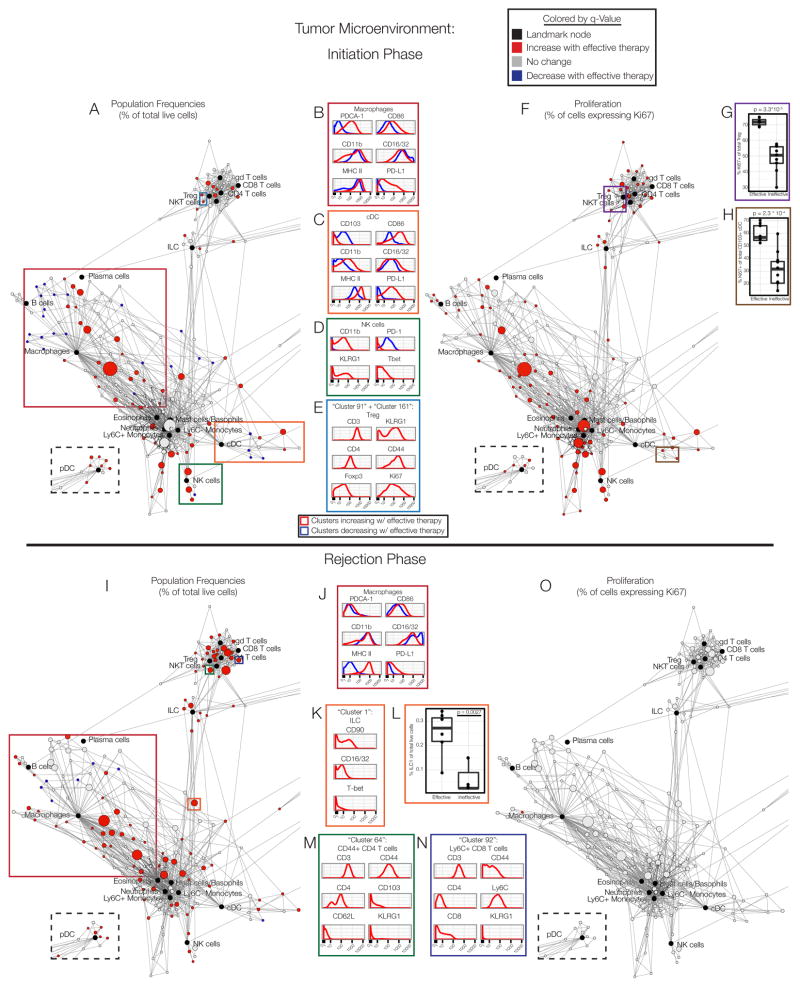
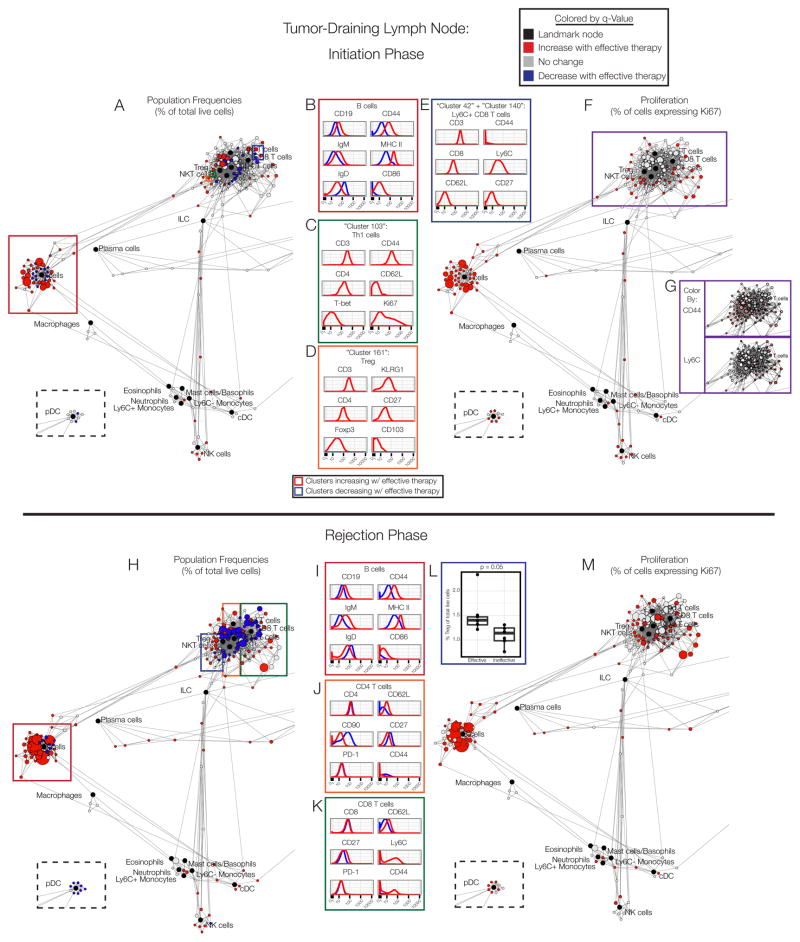
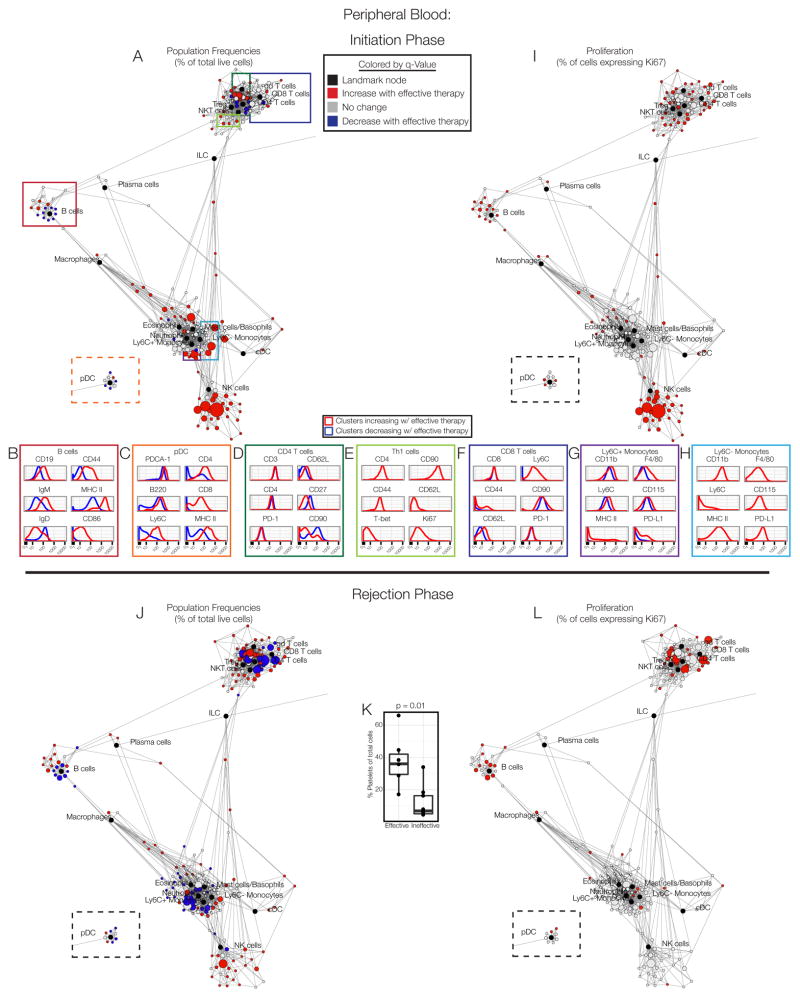
Immune responses involve coordination across cell types and tissues. However, studies in cancer immunotherapy have focused heavily on local immune responses in the tumor microenvironment. To investigate immune activity more broadly, we performed an organism-wide study in genetically engineered cancer models using mass cytometry. We analyzed immune responses in several tissues after immunotherapy by developing intuitive models for visualizing single-cell data with statistical inference. Immune activation was evident in the tumor and systemically shortly after effective therapy was administered. However, during tumor rejection, only peripheral immune cells sustained their proliferation. This systemic response was coordinated across tissues and required for tumor eradication in several immunotherapy models. An emergent population of peripheral CD4 T cells conferred protection against new tumors and was significantly expanded in patients responding to immunotherapy. These studies demonstrate the critical impact of systemic immune responses that drive tumor rejection.
Keywords: cancer immunotherapy; immune responses; immunotherapy; mass cytometry; secondary lymphoid organs; single-cell analysis; systems immunology; tumor immunology; tumor microenvironment.
Copyright © 2017 Elsevier Inc. All rights reserved.
Figures
References
-
- Bandura DR, Baranov VI, Ornatsky OI, Antonov A, Kinach R, Lou X, Pavlov S, Vorobiev S, Dick JE, Tanner SD. Mass cytometry: technique for real time single cell multitarget immunoassay based on inductively coupled plasma time-of-flight mass spectrometry. Anal Chem. 2009;81:6813–6822. - PubMed
-
- Bates GJ, Fox SB, Han C, Leek RD, Garcia JF, Harris AL, Banham AH. Quantification of regulatory T cells enables the identification of high-risk breast cancer patients and those at risk of late relapse. J Clin Oncol. 2006;24:5373–5380. - PubMed
Publication types
MeSH terms
Substances
Grants and funding
- T32 CA009302/CA/NCI NIH HHS/United States
- R33 CA183654/CA/NCI NIH HHS/United States
- R01 AI118884/AI/NIAID NIH HHS/United States
- F31 CA189331/CA/NCI NIH HHS/United States
- U19 AI057229/AI/NIAID NIH HHS/United States
- DP5 OD023056/OD/NIH HHS/United States
- U19 AI100627/AI/NIAID NIH HHS/United States
- R01 HL120724/HL/NHLBI NIH HHS/United States
- HHSN272201200028C/AI/NIAID NIH HHS/United States
- U54 CA209971/CA/NCI NIH HHS/United States
- F32 CA189408/CA/NCI NIH HHS/United States
- R01 CA196657/CA/NCI NIH HHS/United States
LinkOut - more resources
Full Text Sources
Other Literature Sources
Medical
Molecular Biology Databases
Research Materials
