


Heat stress intervention research in construction: gaps and recommendations
- PMID: 28111405
- PMCID: PMC5462636
- DOI: 10.2486/indhealth.2016-0047
Heat stress intervention research in construction: gaps and recommendations
Abstract
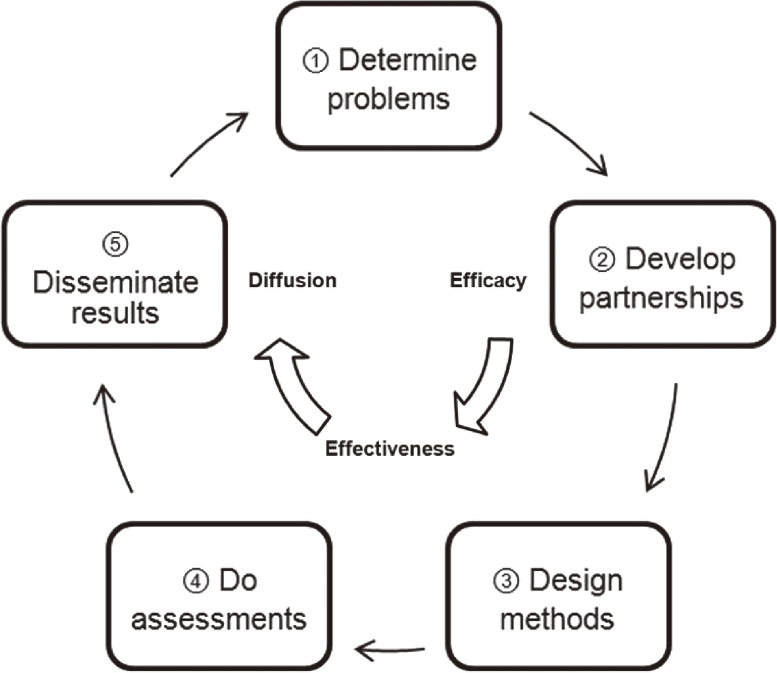
Developing heat stress interventions for construction workers has received mounting concerns in recent years. However, limited efforts have been exerted to elaborate the rationale, methodology, and practicality of heat stress intervention in the construction industry. This study aims to review previous heat stress intervention research in construction, to identify the major research gaps in methodological issues, and to offer detailed recommendations for future studies. A total of 35 peer-reviewed journal papers have been identified to develop administrative, environmental or personal engineering interventions to safeguard construction workers. It was found that methodological limitations, such as arbitrary sampling methods and unreliable instruments, could be the major obstacle in undertaking heat stress intervention research. To bridge the identified research gaps, this study then refined a research framework for conducting heat stress intervention studies in the construction industry. The proposed research strategy provides researchers and practitioners with fresh insights into expanding multidisciplinary research areas and solving practical problems in the management of heat stress. The proposed research framework may foster the development of heat stress intervention research in construction, which further aids researchers, practitioners, and policymakers in formulating proper intervention strategies.
Keywords: 5-D model; Construction workers; Heat stress; Intervention; Research framework.
Figures
References
-
- Pérez-Alonso J, Callejón-Ferre ÁJ, Carreño-Ortega Á, Sánchez-Hermosilla J (2011) Approach to the evaluation of the thermal work environment in the greenhouse-construction industry of SE Spain. Build Environ 46, 1725–34.
-
- Chan APC, Yang Y, Wong FKW, Yam MCH (2013) Dressing behavior of construction workers in hot and humid weather. Occup Ergon 11, 177–86.
-
- Edwards PJ, Bowen PA (1998) Risk and risk management in construction: a review and future directions for research. Eng Construct Architect Manag 5, 339–49.
-
- Miller V, Bates G, Schneider JD, Thomsen J (2011) Self-pacing as a protective mechanism against the effects of heat stress. Ann Occup Hyg 55, 548–55. - PubMed
Publication types
MeSH terms
LinkOut - more resources
Full Text Sources
Other Literature Sources
Medical
