


Flexitarian Diets and Health: A Review of the Evidence-Based Literature
- PMID: 28111625
- PMCID: PMC5216044
- DOI: 10.3389/fnut.2016.00055
Flexitarian Diets and Health: A Review of the Evidence-Based Literature
Abstract
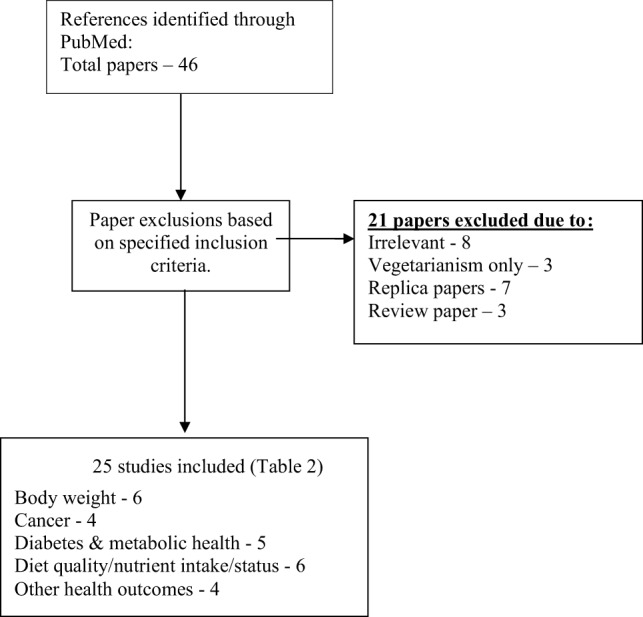
A flexitarian or semi-vegetarian diet (SVD) is one that is primarily vegetarian with the occasional inclusion of meat or fish. Of late, there appears to be an increasing movement toward this practice. There has not been a recent update on these diets from a health perspective. Using the National Centre for Biotechnology Information PubMed database, a search was made for all studies published between 2000 and 2016 that met defined inclusion criteria. A total of 25 studies were located with 12 focusing on body weight and diet quality. There was emerging evidence suggestive of benefits for body weight, improved markers of metabolic health, blood pressure, and reduced risk of type 2 diabetes. SVD may also have a role to play in the treatment of inflammatory bowel diseases, such as Crohn's disease. Given that there is a higher tendency for females to be flexitarian yet males are more likely to overconsume meat, there is a clear need to communicate the potential health benefits of these diets to males.
Keywords: dietary trends; flexitarian; gender differences; public health; semi-vegetarian diet.
Figures
References
-
- Oxford English Dictionary. The Definitive Record of the English Language. (2014). Available from: http://www.oed.com
-
- Dagevos H. Flexibility in the frequency of meat consumption – empirical evidence from the Netherlands. EuroChoices (2014) 13(2):40–5. 10.1111/1746-692X.12062 - DOI
-
- Dagevos H, Voordouw J. Sustainability and meat consumption: is reduction realistic? Sustainability Sci Pract Policy (2013) 9(2):60–9.
Publication types
LinkOut - more resources
Full Text Sources
Other Literature Sources
Medical
Miscellaneous
