


FRNA Bacteriophages as Viral Indicators of Faecal Contamination in Mexican Tropical Aquatic Systems
- PMID: 28114378
- PMCID: PMC5256921
- DOI: 10.1371/journal.pone.0170399
FRNA Bacteriophages as Viral Indicators of Faecal Contamination in Mexican Tropical Aquatic Systems
Abstract
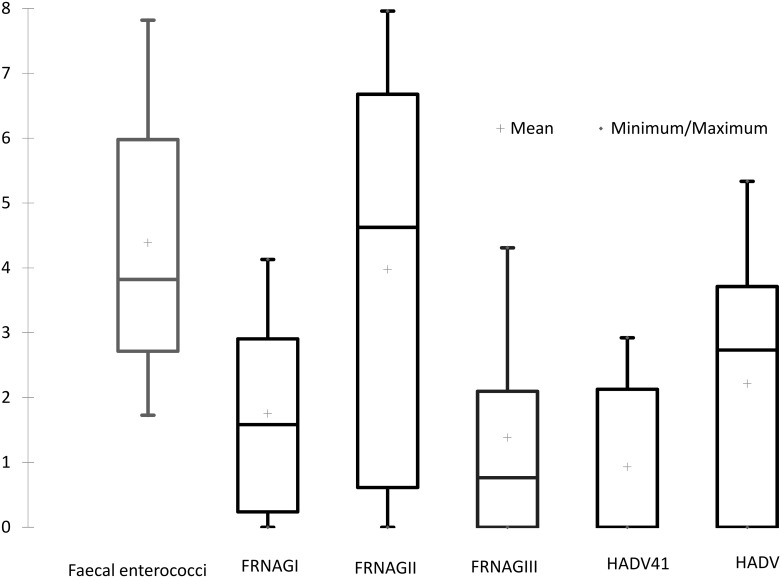
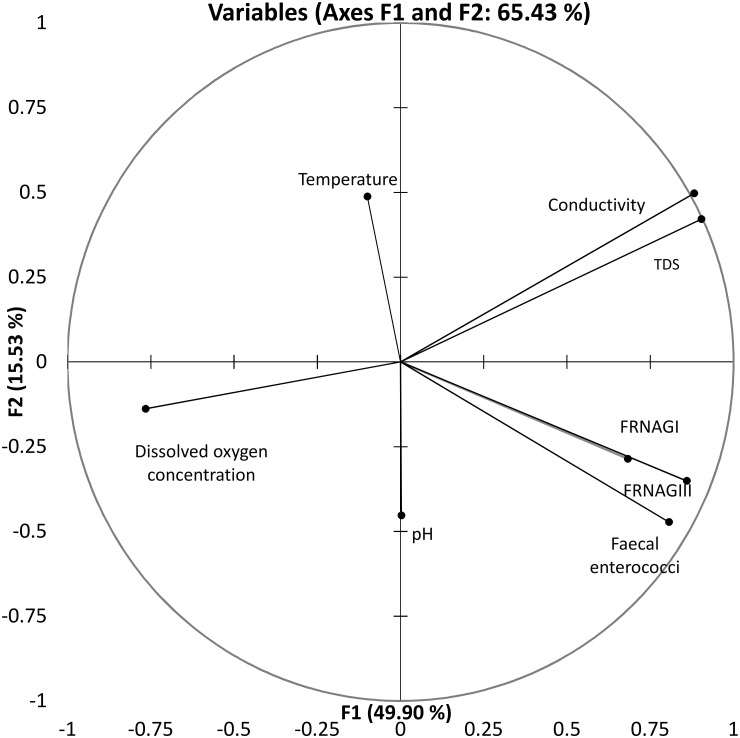
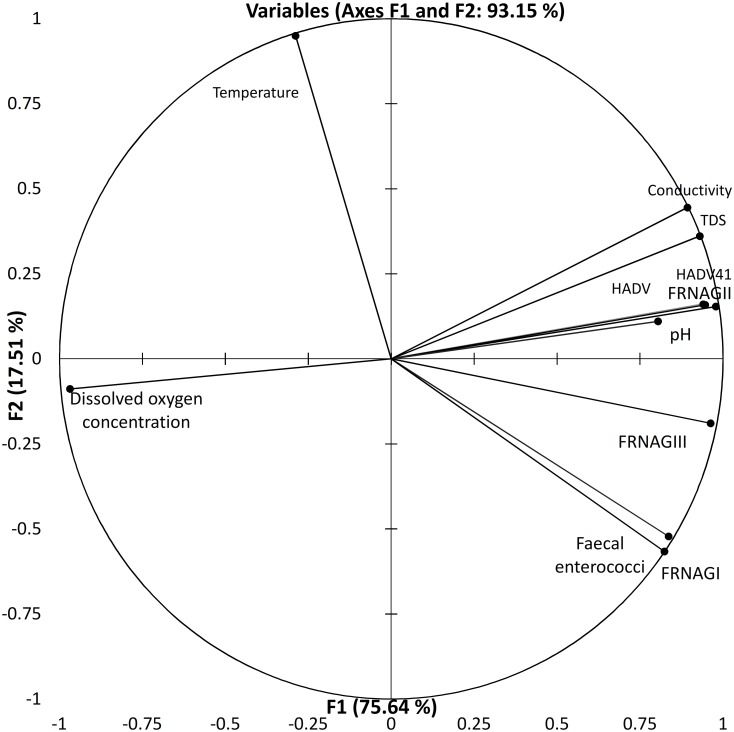
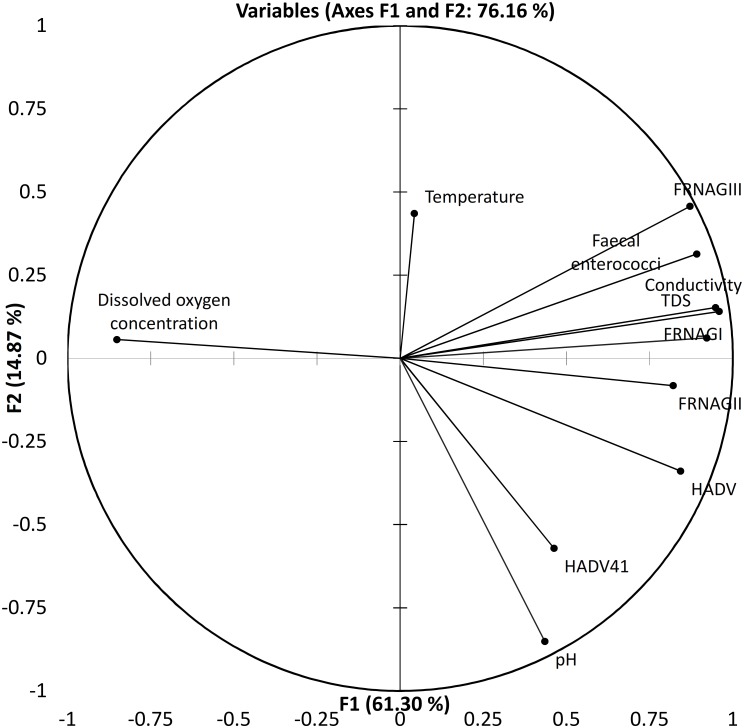
A particular challenge to water safety in populous intertropical regions is the lack of reliable faecal indicators to detect microbiological contamination of water, while the numerical relationships of specific viral indicators remain largely unexplored. The aim of this study was to investigate the numerical relationships of FRNA-bacteriophage genotypes, adenovirus 41, and human adenoviruses (HADV) in Mexican surface water systems to assess sewage contamination. We studied the presence of HADV, HADV41 and FRNA bacteriophage genotypes in water samples and quantified by qPCR and RT-qPCR. Virus and water quality indicator variances, as analyzed by principal component analysis and partial least squared regression, followed along the major percentiles of water faecal enterococci. FRNA bacteriophages adequately deciphered viral and point source water contamination. The strongest correlation for HADV was with FRNA bacteriophage type II, in water samples higher than the 50th percentiles of faecal enterococci, thus indicating urban pollution. FRNA bacteriophage genotypes I and III virus indicator performances were assisted by their associations with electrical conductivity and faecal enterococci. In combination, our methods are useful for inferring water quality degradation caused by sewage contamination. The methods used have potential for determining source contamination in water and, specifically, the presence of enteric viruses where clean and contaminated water have mixed.
Conflict of interest statement
The authors have declared that no competing interests exist.
Figures
References
-
- Ramani S, Kang G (2009) Viruses causing childhood diarrhoea in the developing world. Curr Opin Infect Dis 22: 477–482. - PubMed
-
- Guzman Herrador BR, de Blasio BF, MacDonald E, Nichols G, Sudre B, Vold L, et al. (2015) Analytical studies assessing the association between extreme precipitation or temperature and drinking water-related waterborne infections: a review. Environmental Health 14: 29 10.1186/s12940-015-0014-y - DOI - PMC - PubMed
MeSH terms
LinkOut - more resources
Full Text Sources
Other Literature Sources
Medical
Molecular Biology Databases
