


OPREVENT2: Design of a multi-institutional intervention for obesity control and prevention for American Indian adults
- PMID: 28114926
- PMCID: PMC5260044
- DOI: 10.1186/s12889-017-4018-0
OPREVENT2: Design of a multi-institutional intervention for obesity control and prevention for American Indian adults
Abstract
Background: Obesity and other nutrition-related chronic disease rates are high in American Indian (AI) populations, and an urgent need exists to identify evidence-based strategies for prevention and treatment. Multi-level, multi-component (MLMC) interventions are needed, but there are significant knowledge gaps on how to deliver these types of interventions in low-income rural AI communities.
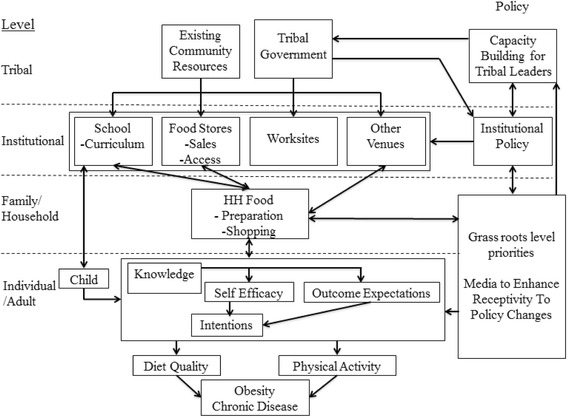
Methods: OPREVENT2 is a MLMC intervention targeting AI adults living in six rural reservations in New Mexico and Wisconsin. Aiming to prevent and reduce obesity in adults by working at multiple levels of the food and physical activity (PA) environments, OPREVENT2 focuses on evidence-based strategies known to increase access to, demand for, and consumption of healthier foods and beverages, and increase worksite and home-based opportunities for PA. OPREVENT2 works to create systems-level change by partnering with tribal stakeholders, multiple levels of the food and PA environment (food stores, worksites, schools), and the social environment (children as change agents, families, social media). Extensive evaluation will be conducted at each level of the intervention to assess effectiveness via process and impact measures.
Discussion: Novel aspects of OPREVENT2 include: active engagement with stakeholders at many levels (policy, institutional, and at multiple levels of the food and PA system); use of community-based strategies to engage policymakers and other key stakeholders (community workshops, action committees); emphasis on both the built environment (intervening with retail food sources) and the social environment. This paper describes the design of the intervention and the evaluation plan of the OPREVENT2.
Trial registration: Clinical Trial Registration: NCT02803853 (June 10, 2016).
Keywords: Adults; American Indian; Multi-level interventions; Obesity; Policy; Rural; Study design.
References
-
- National Center for Health Statistics. Health, United States, 2011: With Special Feature on Socioeconomic Status and Health. Hyattsville; 2012. - PubMed
-
- Schiller JS, Lucas JW, Peregoy JA. Summary Health Statistics for U.S. Adults: National Health Interview Survey, 2011. Vital Health Stat. 2012. - PubMed
-
- Barnes PM, Adams PF, Powell-Griner E. Health Characteristics of the American Indian or Alaska Native Adult Population: United States, 2004–2008. Hyattsville: US Department of Health and Human Services, Centers for Disease Control and Prevention; 2010. 1–23.
Publication types
MeSH terms
Associated data
Grants and funding
LinkOut - more resources
Full Text Sources
Other Literature Sources
Medical
