


Epidermal Dysfunction Leads to an Age-Associated Increase in Levels of Serum Inflammatory Cytokines
- PMID: 28115059
- PMCID: PMC5441930
- DOI: 10.1016/j.jid.2017.01.007
Epidermal Dysfunction Leads to an Age-Associated Increase in Levels of Serum Inflammatory Cytokines
Abstract
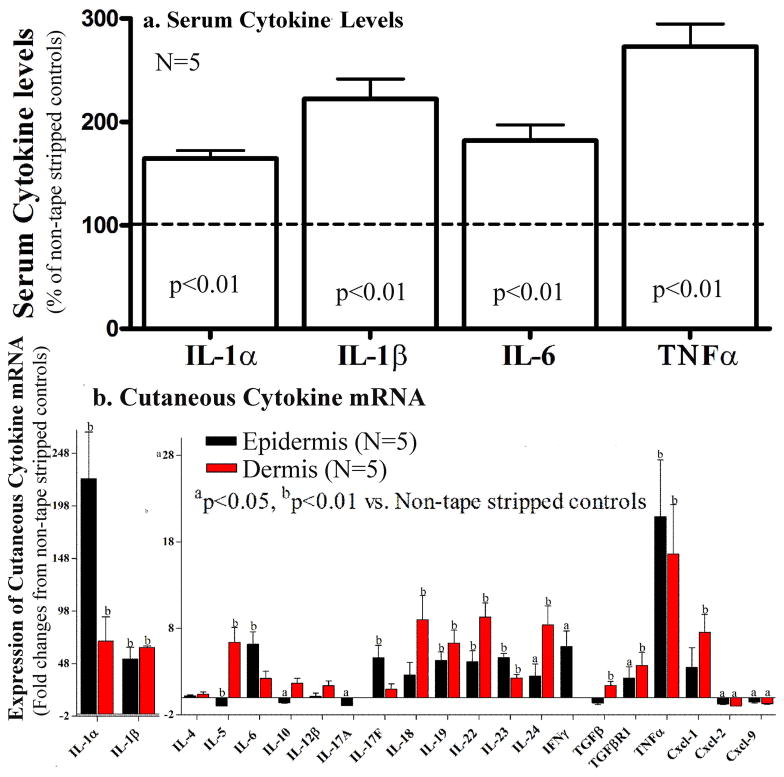
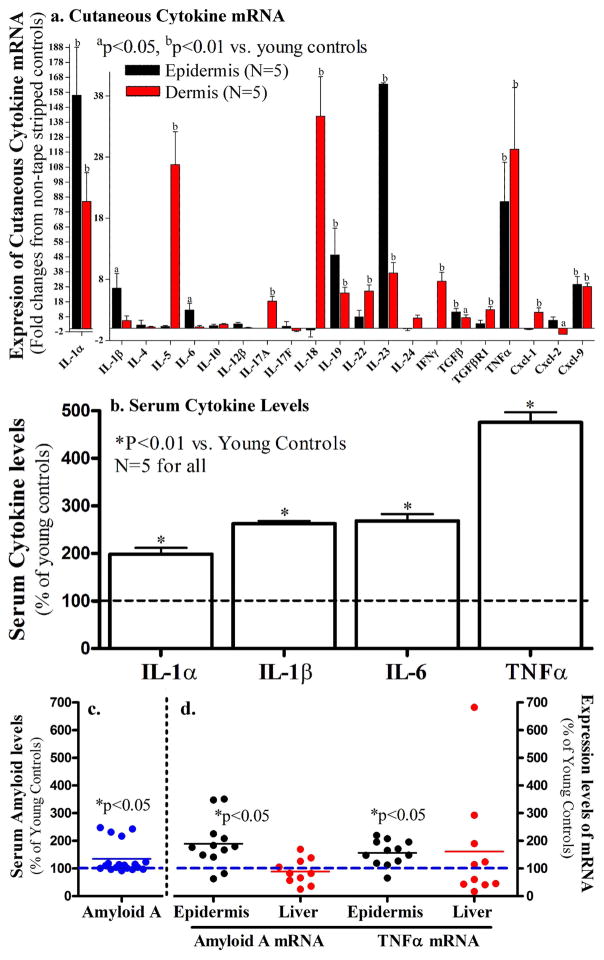
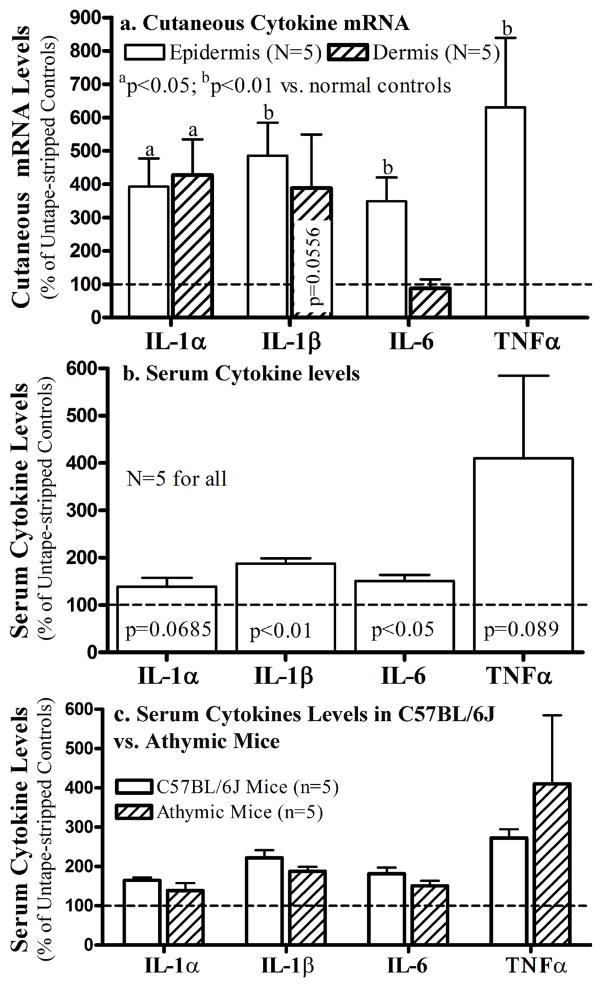
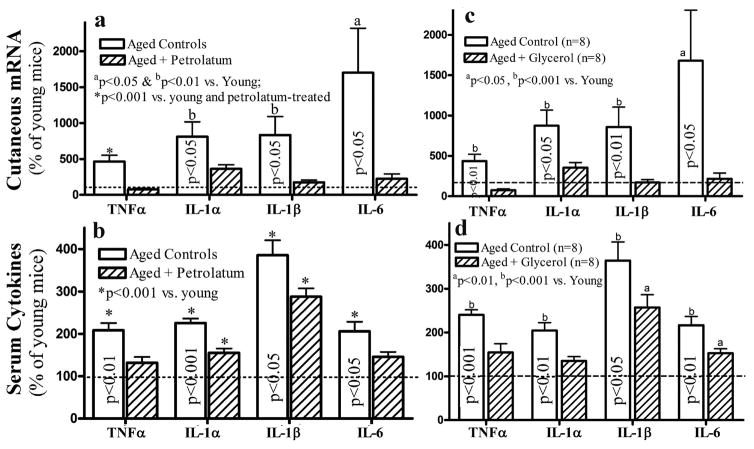
Even though elderly populations lack visible or other clinical signs of inflammation, their serum cytokine and C-reactive protein levels typically are elevated. However, the origin of age-associated systemic inflammation is unknown. Our previous studies showed that abnormalities in epidermal function provoke cutaneous inflammation, and because intrinsically aged skin displays compromised permeability barrier homeostasis and reduced stratum corneum hydration, we hypothesized here that epidermal dysfunction could contribute to the elevations in serum cytokines in the elderly. Our results show first that acute disruption of the epidermal permeability barrier in young mice leads not only to a rapid increase in cutaneous cytokine mRNA expression but also an increase in serum cytokine levels. Second, cytokine levels in both the skin and serum increase in otherwise normal, aged mice (>12 months). Third, expression of tumor necrosis factor-α and amyloid A mRNA levels increased in the epidermis, but not in the liver, in parallel with a significant elevation in serum levels of cytokines. Fourth, disruption of the permeability barrier induced similar elevations in epidermal and serum cytokine levels in normal and athymic mice, suggesting that T cells play a negligible role in the elevations in cutaneous and serum inflammatory cytokines induced by epidermal dysfunction. Fifth, correction of epidermal function significantly reduced cytokine levels not only in the skin but also in the serum of aged mice. Together, these results indicate that the sustained abnormalities in epidermal function in chronologically aged skin contribute to the elevated serum levels of inflammatory cytokines, potentially predisposing the elderly to the subsequent development or exacerbation of chronic inflammatory disorders.
Copyright © 2017 The Authors. Published by Elsevier Inc. All rights reserved.
Conflict of interest statement
All authors declare no conflicts of interest except that invention disclosure has been filed for the concept of preventing/treating systemic disorders using strategies to improve epidermal functions.
Figures
Comment in
-
Epidermal Barrier Protects against Age-Associated Systemic Inflammation.J Invest Dermatol. 2017 Jun;137(6):1206-1208. doi: 10.1016/j.jid.2017.02.964. Epub 2017 Apr 7. J Invest Dermatol. 2017. PMID: 28395899
References
-
- Ablett E, Whiteman DC, Boyle GM, Green AC, Parsons PG. Induction of metallothionein in human skin by routine exposure to sunlight: evidence for a systemic response and enhanced induction at certain body sites. J Invest Dermatol. 2003;120:318–24. - PubMed
-
- Ashida Y, Denda M. Dry environment increases mast cell number and histamine content in dermis in hairless mice. Br J Dermatol. 2003;149:240–7. - PubMed
-
- Ashida Y, Ogo M, Denda M. Epidermal interleukin-1 alpha generation is amplified at low humidity: implications for the pathogenesis of inflammatory dermatoses. Br J Dermatol. 2001;144:238–43. - PubMed
Publication types
MeSH terms
Substances
Grants and funding
LinkOut - more resources
Full Text Sources
Other Literature Sources
Medical
Research Materials
