


Disparities in HIV/AIDS Risk Behaviors After Youth Leave Detention: A 14-Year Longitudinal Study
- PMID: 28115541
- PMCID: PMC5260145
- DOI: 10.1542/peds.2016-0360
Disparities in HIV/AIDS Risk Behaviors After Youth Leave Detention: A 14-Year Longitudinal Study
Abstract
Objectives: To examine changes in the prevalence of 15 HIV/AIDS sex and drug risk behaviors in delinquent youth during the 14 years after they leave detention, focusing on sex and racial/ethnic differences.
Methods: The Northwestern Juvenile Project, a prospective longitudinal study of 1829 youth randomly sampled from detention in Chicago, Illinois, recruited between 1995 and 1998 and reinterviewed up to 11 times. Independent interviewers assessed HIV/AIDS risk behaviors using the National Institutes on Drug Abuse Risk Behavior Assessment.
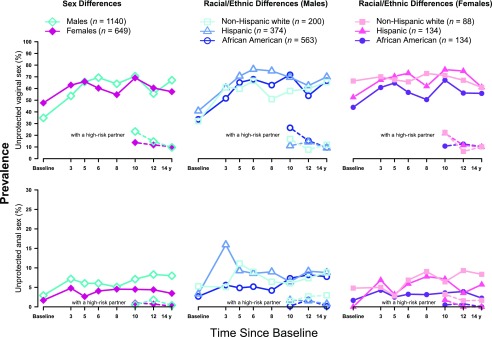
Results: Fourteen years after detention (median age, 30 years), one-quarter of males and one-tenth of females had >1 sexual partner in the past 3 months. One-tenth of participants reported recent unprotected vaginal sex with a high-risk partner. There were many sex and racial/ethnic differences. For example, African American males had 4.67 times the odds of having >1 partner than African American females (95% confidence interval [CI], 3.22-6.76). Over time, compared with non-Hispanic white males, African American males had 2.56 times the odds (95% CI, 1.97-3.33) and Hispanic males had 1.63 times the odds (95% CI, 1.24-2.12) of having multiple partners, even after adjusting for incarceration and age. Non-Hispanic white females were more likely to have multiple partners than racial/ethnic minority females.
Conclusions: Although rates decrease over time, prevalence of sex risk behaviors are much higher than the general population. Among males, racial/ethnic minorities were at particular risk. The challenge for pediatric health is to address how disproportionate confinement of racial/ethnic minority youth contributes to disparities in the HIV/AIDS epidemic.
Copyright © 2017 by the American Academy of Pediatrics.
Conflict of interest statement
POTENTIAL CONFLICT OF INTEREST: The authors have indicated they have no potential conflicts of interest to disclose.
Figures


References
-
- US Census Bureau, Population Division Annual estimates of the resident population by single year of age and sex for the United States. April 1, 2010 to July 1, 2014. Available at: https://factfinder.census.gov/faces/tableservices/jsf/pages/productview..... Accessed August 1, 2015
-
- US Centers for Disease Control and Prevention Diagnoses of HIV infection in the United States and dependent areas, 2014. HIV Surveillance Report, 2014 Vol. 26. Available at: www.cdc.gov/hiv/pdf/library/reports/surveillance/cdc-hiv-surveillance-re.... Accessed September 22, 2015
-
- Canterbury RJ, McGarvey EL, Sheldon-Keller AE, Waite D, Reams P, Koopman C. Prevalence of HIV-related risk behaviors and STDs among incarcerated adolescents. J Adolesc Health. 1995;17(3):173–177 - PubMed
-
- Gillmore MR, Morrison DM, Lowery C, Baker SA. Beliefs about condoms and their association with intentions to use condoms among youths in detention. J Adolesc Health. 1994;15(3):228–237 - PubMed
MeSH terms
Grants and funding
LinkOut - more resources
Full Text Sources
Other Literature Sources
Medical
Miscellaneous
