


Overcoming Therapeutic Resistance of Bone Sarcomas: Overview of the Molecular Mechanisms and Therapeutic Targets for Bone Sarcoma Stem Cells
- PMID: 28115942
- PMCID: PMC5223039
- DOI: 10.1155/2016/2603092
Overcoming Therapeutic Resistance of Bone Sarcomas: Overview of the Molecular Mechanisms and Therapeutic Targets for Bone Sarcoma Stem Cells
Abstract
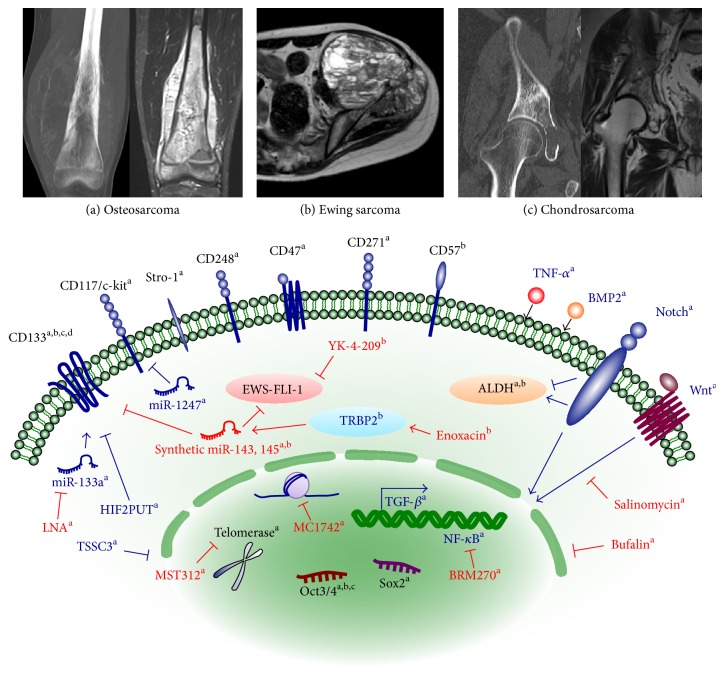
Bone sarcomas are heterogeneous malignant tumors that exhibit clinical, histological, and molecular heterogeneity. Recent progress in their multimodal treatment has gradually improved patient prognosis; however, drug resistance and distant metastasis remain unresolved clinical problems. Recent investigations have suggested the existence of cancer stem-like cells (CSCs) in bone sarcomas, which represent a subpopulation of tumor cells with high tumor-forming ability. The hallmarks of CSCs include tumor- and metastasis-forming potential and drug resistance, which are responsible for poor prognoses of bone sarcoma patients. Therefore, elucidation of the molecular mechanisms of CSCs and identification of therapeutic targets could contribute to novel treatment strategies for bone sarcomas and improve patient prognosis. This paper provides an overview of the accumulating knowledge on bone sarcoma stem cells and preclinical analyses to overcome their lethal phenotypes, in addition to a discussion of their potential for novel therapeutics for bone sarcomas.
Conflict of interest statement
The authors declare that there is no conflict of interests regarding the publication of this paper.
Figures
References
-
- Fletcher C. D. M., Bridge J. A., Hogendoorn P. C. W., Mertens F. WHO Classification of Tumours of Soft Tissue and Bone. 4th 2013.
-
- Bielack S. S., Kempf-Bielack B., Delling G., et al. Prognostic factors in high-grade osteosarcoma of the extremities or trunk: an analysis of 1,702 patients treated on neoadjuvant cooperative osteosarcoma study group protocols. Journal of Clinical Oncology. 2002;20(3):776–790. doi: 10.1200/jco.20.3.776. - DOI - PubMed
-
- Meyers P. A., Heller G., Healey J., et al. Chemotherapy for nonmetastatic osteogenic sarcoma: the memorial sloan-kettering experience. Journal of Clinical Oncology. 1992;10(1):5–15. - PubMed
Publication types
LinkOut - more resources
Full Text Sources
Other Literature Sources
