


A prospective study of time to healing and hypertrophic scarring in paediatric burns: every day counts
- PMID: 28116323
- PMCID: PMC5244545
- DOI: 10.1186/s41038-016-0068-2
A prospective study of time to healing and hypertrophic scarring in paediatric burns: every day counts
Abstract
Background: It is commonly accepted that burns taking longer than 3 weeks to heal have a much higher rate of hypertrophic scarring than those which heal more quickly. However, some of our patients develop hypertrophic scars despite healing within this 3-week period.
Methods: We performed a prospective study of 383 paediatric burns treated non-operatively at a regional burns centre over a 2-year period from May 2011 to April 2013. Scar assessment was performed by a senior burns therapist using the Vancouver Scar Scale.
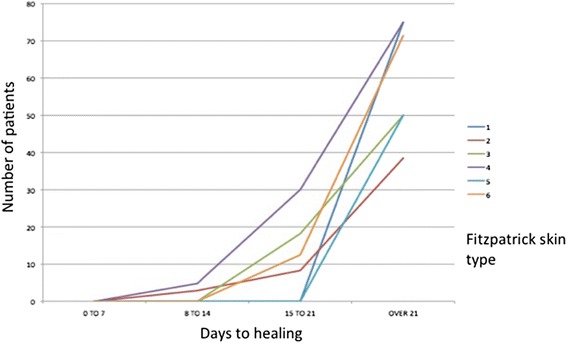
Results: Overall rates of hypertrophic scarring were 17.2%. Time to healing was the strongest predictor of developing hypertrophic scarring, and the earliest hypertrophic scar developed in a patient who was healed after 8 days. The risk of hypertrophic scarring was multiplied by 1.138 for every additional day taken for the burn wound to heal. There was a trend towards higher rates of hypertrophic scarring in non-white skin types but this did not reach statistical significance.
Conclusions: The risk of hypertrophic scarring increases with every day and, therefore, every effort should be made to get the wound healed as quickly as possible, even within the traditional 3-week period usually allowed for healing. We believe that the traditional dogma of aiming for healing within 3 weeks is overly simplistic and should be abandoned: in paediatric burns, every day counts.
Trial registration: Not applicable.
Keywords: Burn; Hypertrophic; Paediatric; Scar; Skin type; Time to healing.
Figures

References
LinkOut - more resources
Full Text Sources
Other Literature Sources
Miscellaneous
