


Quality Control of Traditional Cannabis Tinctures: Pattern, Markers, and Stability
- PMID: 28117322
- PMCID: PMC5064247
- DOI: 10.3390/scipharm84030567
Quality Control of Traditional Cannabis Tinctures: Pattern, Markers, and Stability
Abstract
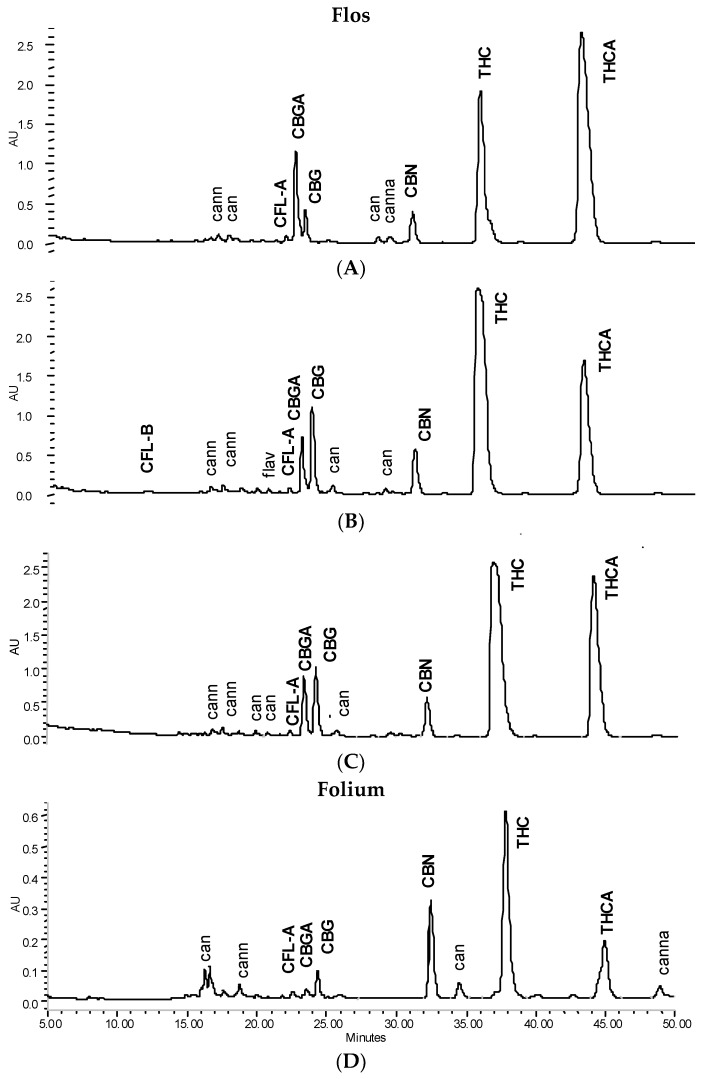
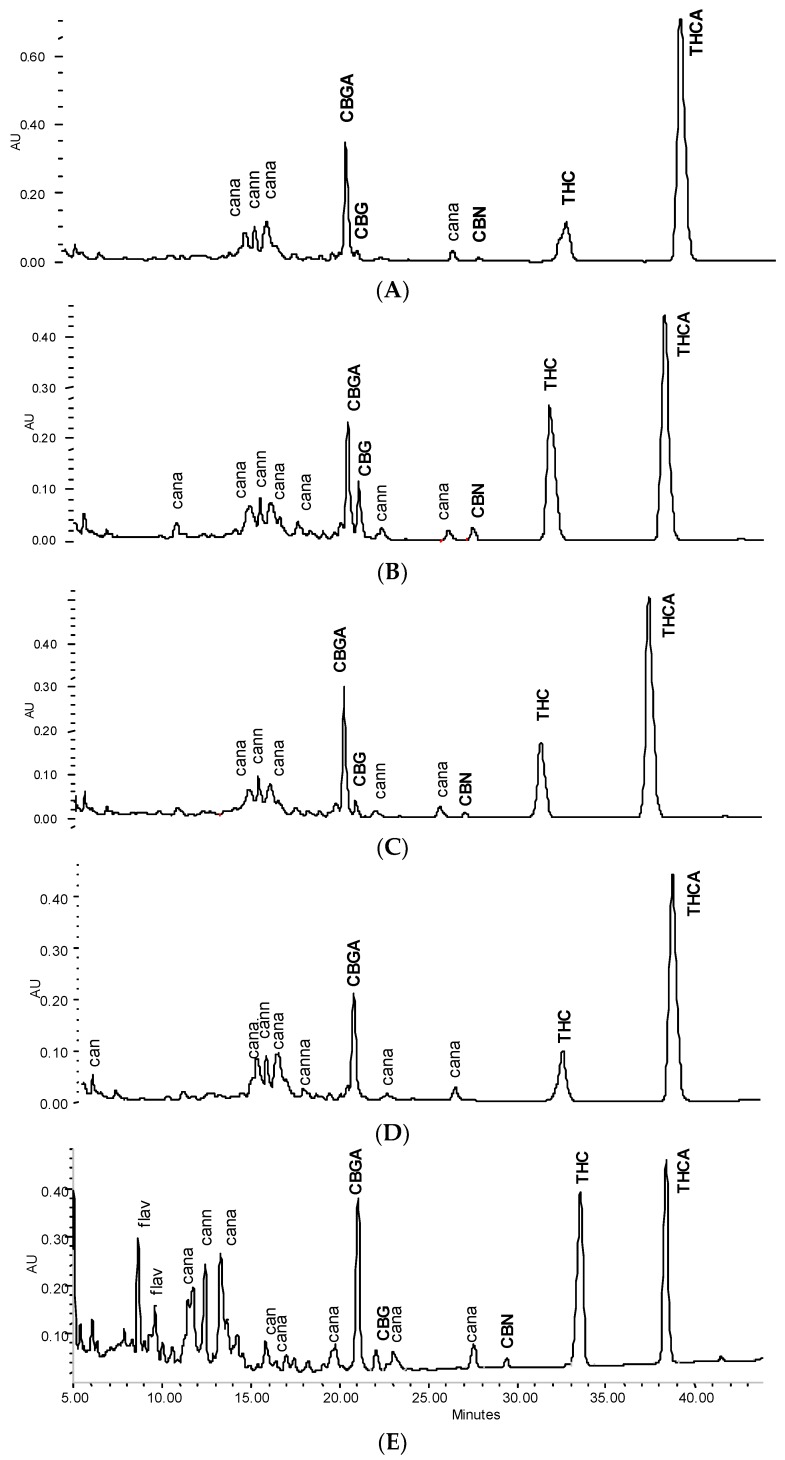
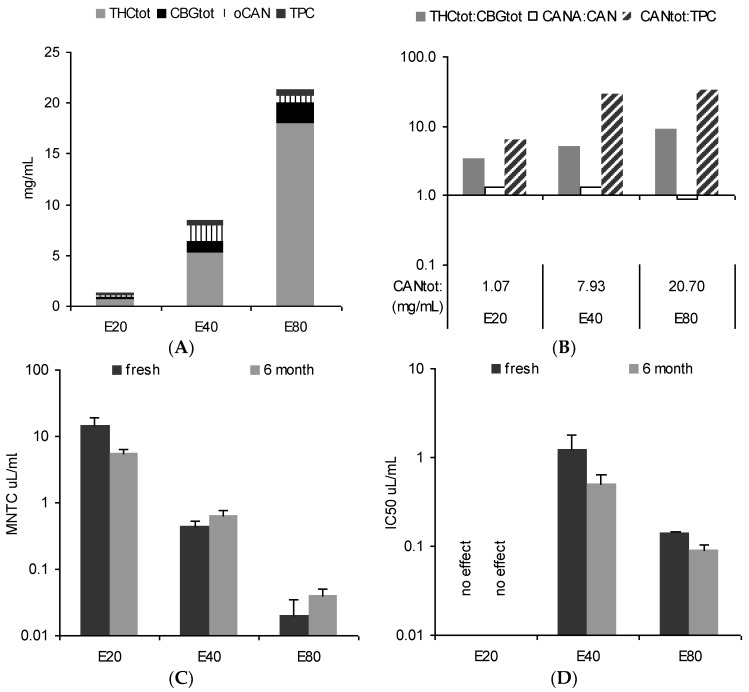
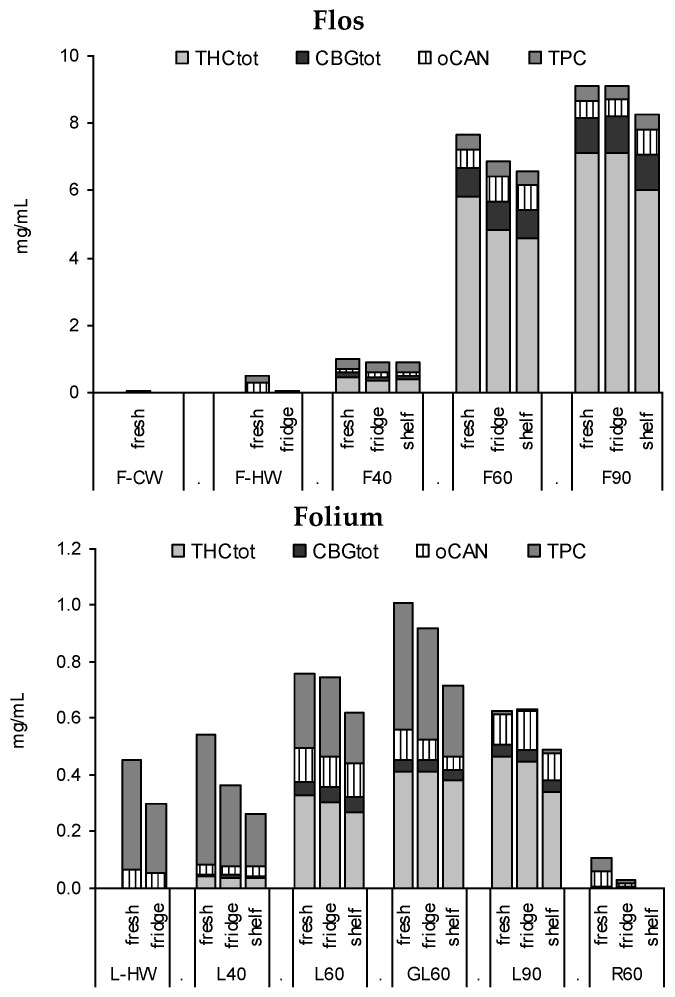
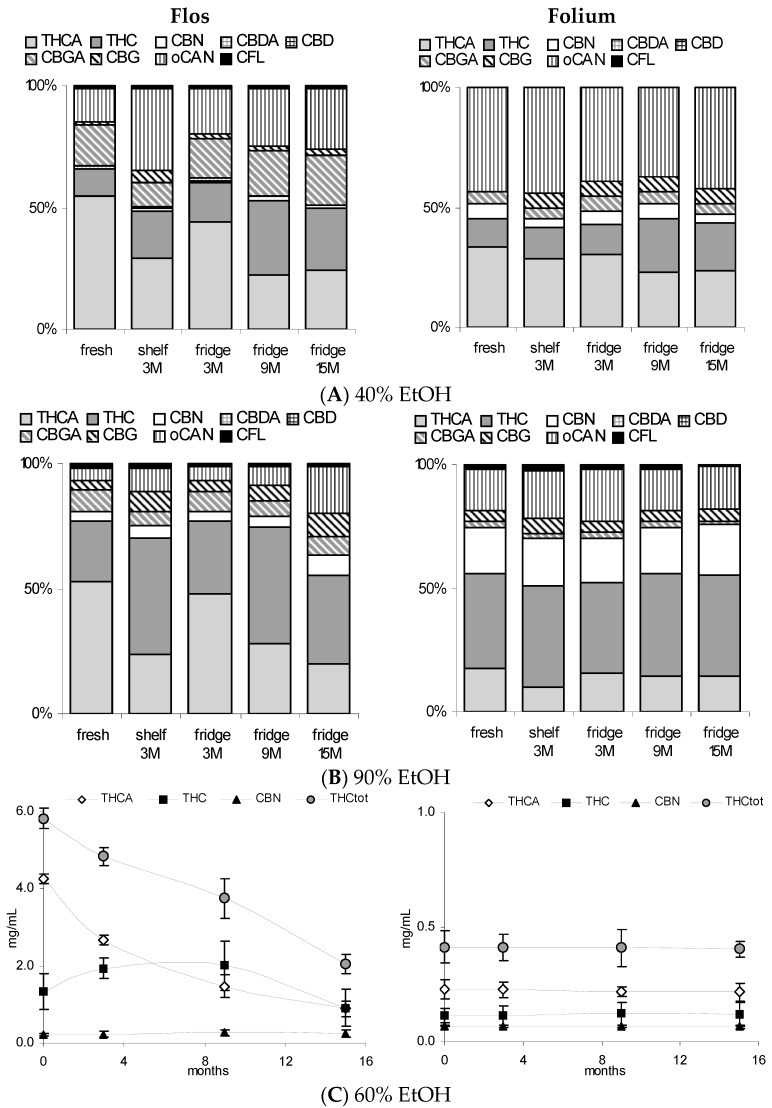
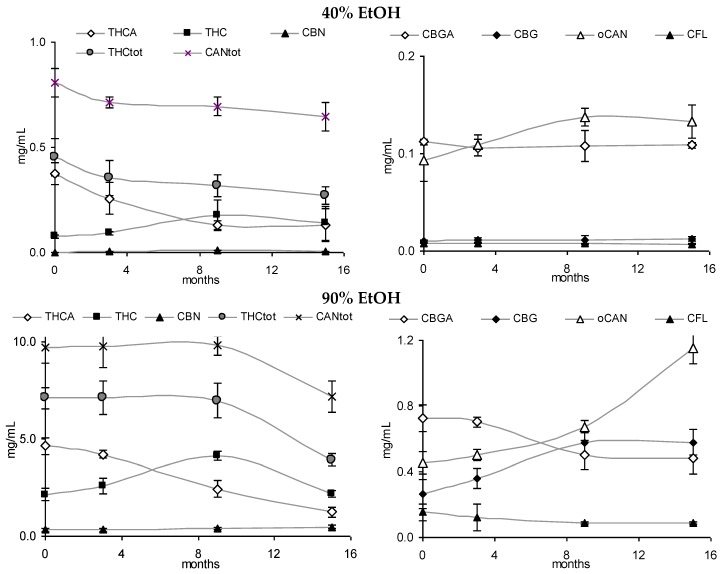
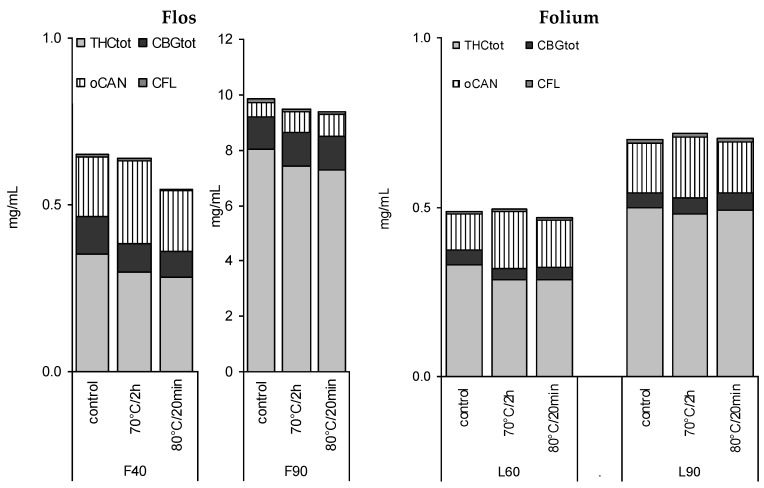
Traditional tinctures of Cannabis sativa L. became obsolete before elucidation of the main cannabinoids and routine quality testing for medicines. In view of increasing medicinal use of cannabinoids and associated safety concerns, tinctures from a Δ9-tetrahydrocannabinol (THC)-type chemovar were studied. High-performance liquid chromatography with diode-array detection (HPLC/DAD) was used to determine THC, Δ9-tetrahydrocannabinolic acid A (THCA), cannabinol (CBN), cannabidiol (CBD), cannabidiolic acid (CBDA), cannabigerol (CBG), cannabigerolic acid (CBGA), cannflavin A/B, and total phenolics. Derived group and ratio markers describe absolute and relative profiles when varying plant part (flos, folium), extraction solvent (EtOH percentage), storage conditions ('shelf' or 'fridge' up to 15 months), and pasteurization (2 h 70 °C, 20 min 80 °C). Tinctures from female flowering tops contained ten-fold more cannabinoids than tinctures from leaves; tinctures (80%-90% EtOH) contained ten-fold more cannabinoids than tinctures (40% EtOH). The analysis of CBGA + CBG, the main co-cannabinoids aside from THCA + THC, appears more relevant than CBDA + CBD. The decarboxylation of THCA to THC-the main change during storage of freshly prepared tinctures-is after 15 months in the 'fridge' comparable to 3 months on the 'shelf'. Minimally increased CBN totals did not correlate to diminished totals of THCA and THC (up to 15% after 3 months 'shelf', 45% after 15 months 'fridge'). Instead, total cannabinoids or acidic/neutral cannabinoid ratios are better stability markers. Moderate changes after pasteurization and partial losses below 10% for total cannabinoids after 9 months 'fridge' indicate possibilities for a reasonable shelf life. Yet storage and use of non-stabilized tinctures remain critical without authorized specification and stability data because a consistent cannabinoid content is not guaranteed.
Keywords: Cannabis sativa L.; stability (HPLC, THC, CBN, CBG); traditional tinctures.
Conflict of interest statement
The author declares the financial support via the European research project (COOP-CT-2004-512696, until March 2007) and Ransom (Hitchin, UK, until March 2008), which provided some prerequisites for this study; however, there was no conflict of interest.
Figures
References
-
- Mikuriya T.H. Marijuana: Medical Papers 1839–1972. Medi-Comp Press; Oakland, CA, USA: 1973. p. 465.
-
- Russo E. Hemp for headache: An in-depth historical and scientific review of cannabis in migraine treatment. J. Cannabis Ther. 2001;1:21–92. doi: 10.1300/J175v01n02_04. - DOI
-
- Evans F.J. The Medicinal Chemistry of Cannabis: O’Shaughnessy’s Legacy. J. Pharm. Sci. 1997;3:533–537.
-
- Royal Pharmaceutical Society of Great Britain Report on Cannabis. Response to the House of Lords Science and Technology Committee. May 29, 1998. [(accessed on 18 April 2013)]. Available online: http//www.parliament.the-stationery-office.co.uk/pa/ld199798/ldselect/ld....
LinkOut - more resources
Full Text Sources
Other Literature Sources
Research Materials
Miscellaneous