


A systematic SNP selection approach to identify mechanisms underlying disease aetiology: linking height to post-menopausal breast and colorectal cancer risk
- PMID: 28117334
- PMCID: PMC5259777
- DOI: 10.1038/srep41034
A systematic SNP selection approach to identify mechanisms underlying disease aetiology: linking height to post-menopausal breast and colorectal cancer risk
Abstract
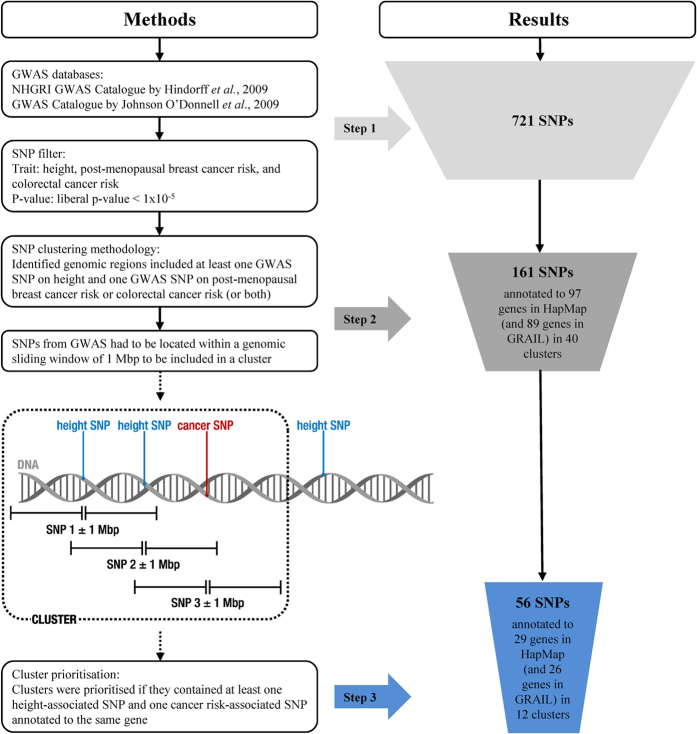
Data from GWAS suggest that SNPs associated with complex diseases or traits tend to co-segregate in regions of low recombination, harbouring functionally linked gene clusters. This phenomenon allows for selecting a limited number of SNPs from GWAS repositories for large-scale studies investigating shared mechanisms between diseases. For example, we were interested in shared mechanisms between adult-attained height and post-menopausal breast cancer (BC) and colorectal cancer (CRC) risk, because height is a risk factor for these cancers, though likely not a causal factor. Using SNPs from public GWAS repositories at p-values < 1 × 10⁻⁵ and a genomic sliding window of 1 mega base pair, we identified SNP clusters including at least one SNP associated with height and one SNP associated with either post-menopausal BC or CRC risk (or both). SNPs were annotated to genes using HapMap and GRAIL and analysed for significantly overrepresented pathways using ConsensuspathDB. Twelve clusters including 56 SNPs annotated to 26 genes were prioritised because these included at least one height- and one BC risk- or CRC risk-associated SNP annotated to the same gene. Annotated genes were involved in Indian hedgehog signalling (p-value = 7.78 × 10⁻⁷) and several cancer site-specific pathways. This systematic approach identified a limited number of clustered SNPs, which pinpoint potential shared mechanisms linking together the complex phenotypes height, post-menopausal BC and CRC.
Figures
References
Publication types
MeSH terms
LinkOut - more resources
Full Text Sources
Other Literature Sources
Medical
