


The effects of psychotherapy treatment on outcome in bulimia nervosa: Examining indirect effects through emotion regulation, self-directed behavior, and self-discrepancy within the mediation model
- PMID: 28117906
- PMCID: PMC5459657
- DOI: 10.1002/eat.22669
The effects of psychotherapy treatment on outcome in bulimia nervosa: Examining indirect effects through emotion regulation, self-directed behavior, and self-discrepancy within the mediation model
Abstract
Objective: The purpose of this investigation was to examine the indirect effects of Integrative Cognitive-Affective Therapy (ICAT-BN) and Cognitive-Behavioral Therapy-Enhanced (CBT-E) on bulimia nervosa (BN) treatment outcome through three hypothesized maintenance variables: emotion regulation, self-directed behavior, and self-discrepancy.
Method: Eighty adults with BN were randomized to 21 sessions of ICAT-BN or CBT-E. A regression-based bootstrapping approach was used to test the indirect effects of treatment on outcome at end of treatment through emotion regulation and self-directed behavior measured at mid-treatment, as well as the indirect effects of treatment at follow-up through emotion regulation, self-directed behavior, and self-discrepancy measured at end of treatment.
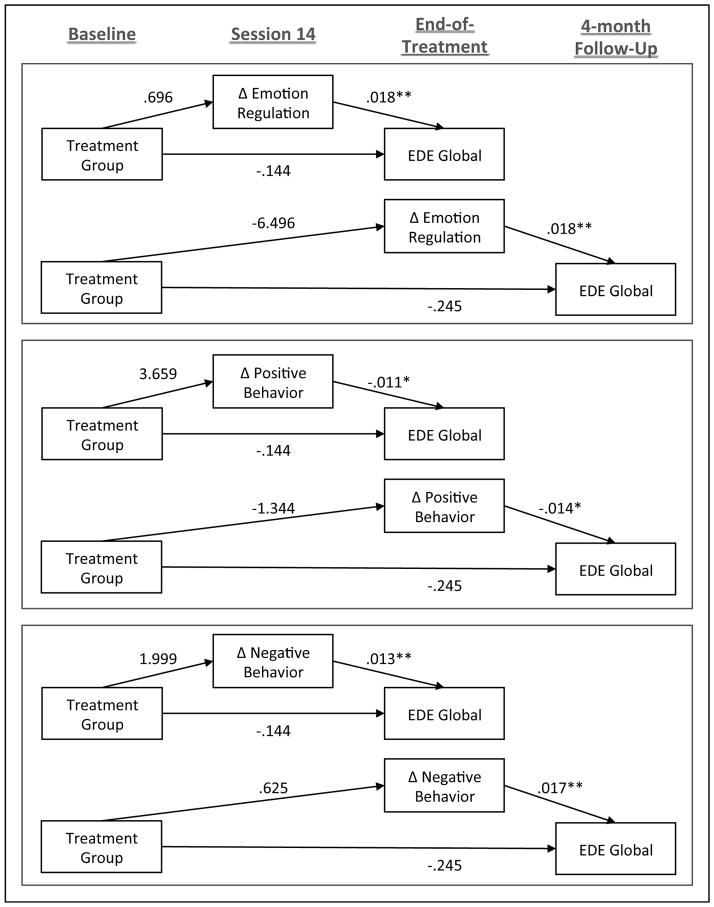
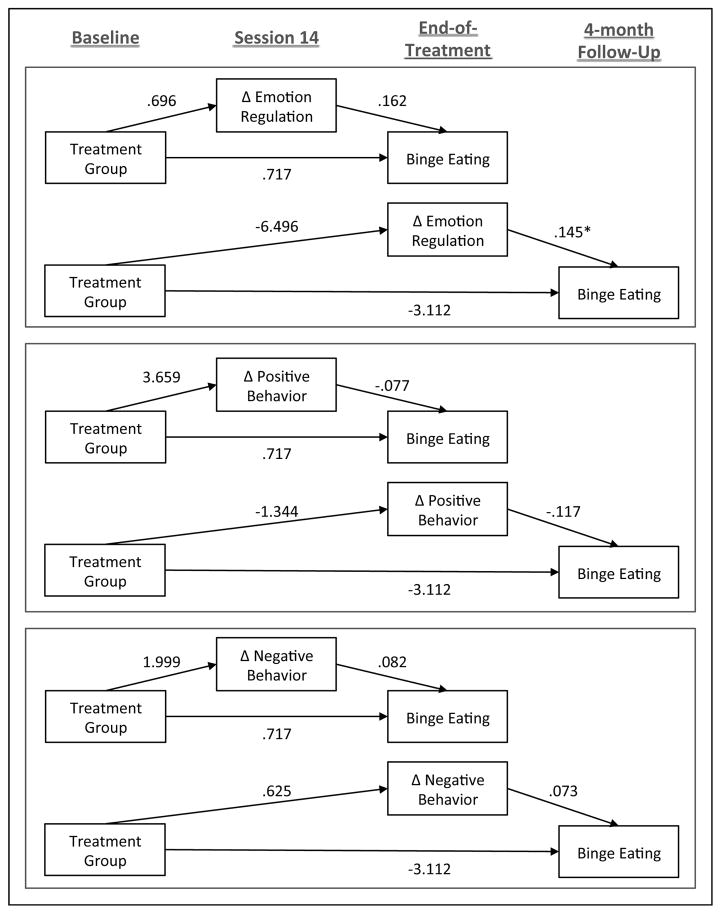
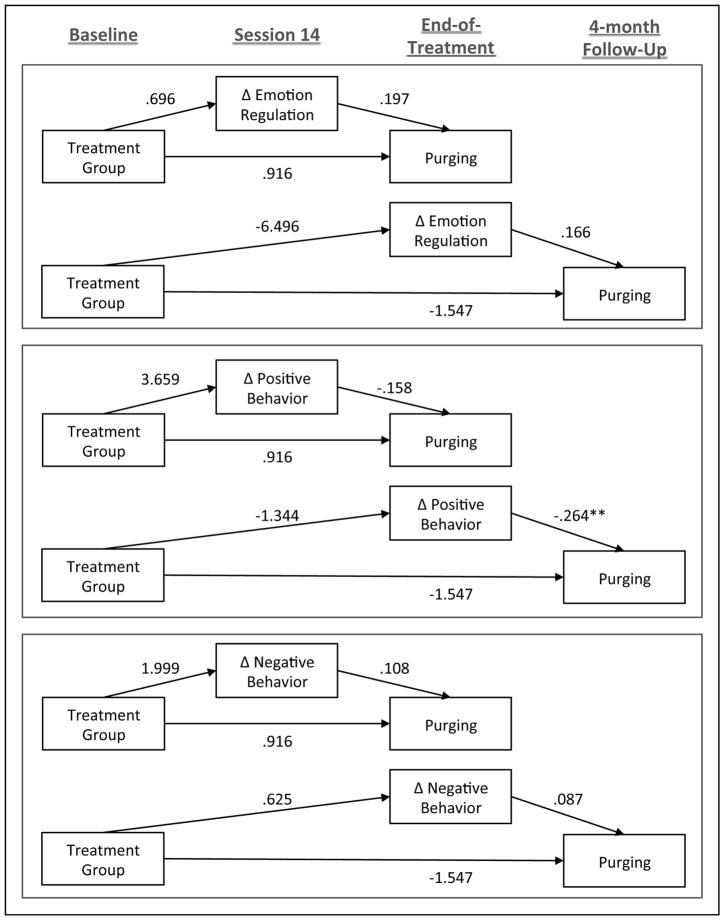
Results: No significant differences in outcome between treatment conditions were observed, and no significant direct or indirect effects were found. Examination of the individual paths within the indirect effects models revealed comparable treatment effects. Across treatments, improvements in emotion regulation and self-directed behavior between baseline and mid-treatment predicted improvements in global eating disorder scores but not binge eating and purging frequency at end of treatment. Baseline to end of treatment improvements in emotion regulation and self-directed behavior also predicted improvements in global eating disorder scores at follow-up. Baseline to end of treatment improvements in emotion regulation predicted improvements in binge eating and baseline to end of treatment increases in positive self-directed behavior predicted improvements in purging at follow-up.
Discussion: These findings suggest that emotion regulation and self-directed behavior are important treatment targets and that ICAT-BN and CBT-E are comparable in modifying these psychological processes among individuals with BN.
Trial registration: ClinicalTrials.gov NCT00773617.
Keywords: bulimia nervosa; cognitive-behavioral therapy; emotion regulation; emotion-focused therapy; integrative cognitive-affective therapy.
© 2017 Wiley Periodicals, Inc.
Figures
References
-
- National Institute for Clinical Excellence. NICE Clinical Guideline No. 9. London: NICE; 2004. Eating Disorders – Core interventions in the treatment and management of anorexia nervosa, bulimia nervosa, related eating disorders.
-
- Fairburn CG, Marcus MD, Wilson GT. Cognitive-behavioral therapy for binge eating and bulimia nervosa: A comprehensive treatment manual. In: Fairburn CG, Wilson GT, editors. Binge Eating: Nature, Assessment, and Treatment. New York: Guilford Press; 1993. pp. 361–404.
-
- Fairburn CG. Cognitive behavior therapy and eating disorders. New York: Guilford; 2008.
MeSH terms
Associated data
Grants and funding
LinkOut - more resources
Full Text Sources
Other Literature Sources
Medical
