


Chlorin e6-Mediated Photodynamic Therapy Suppresses P. acnes-Induced Inflammatory Response via NFκB and MAPKs Signaling Pathway
- PMID: 28118375
- PMCID: PMC5261614
- DOI: 10.1371/journal.pone.0170599
Chlorin e6-Mediated Photodynamic Therapy Suppresses P. acnes-Induced Inflammatory Response via NFκB and MAPKs Signaling Pathway
Abstract
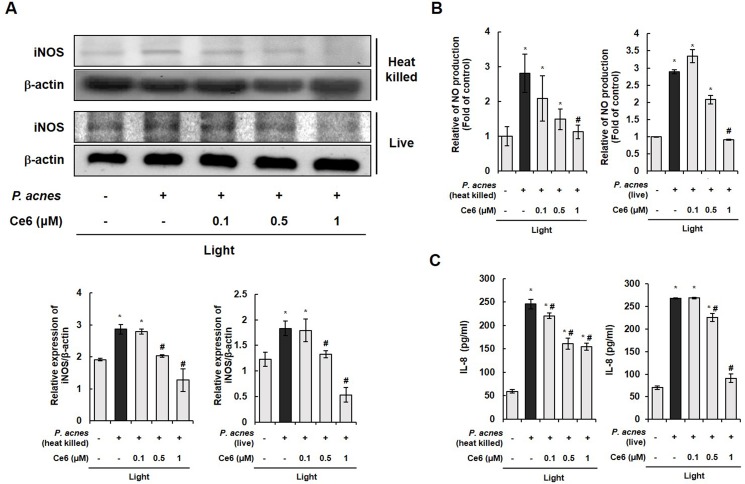
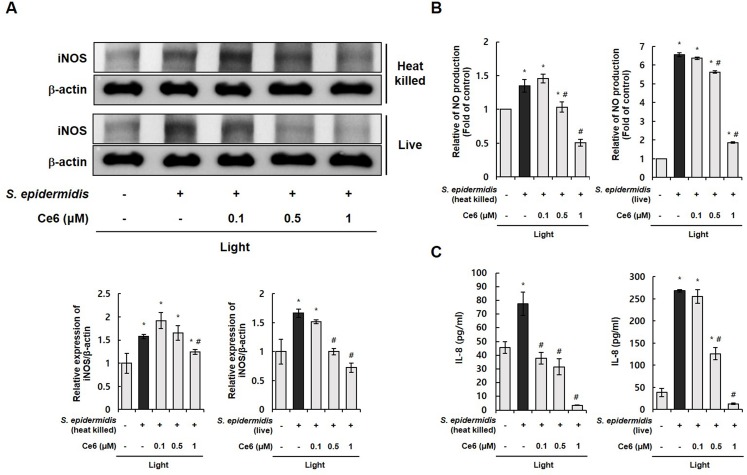
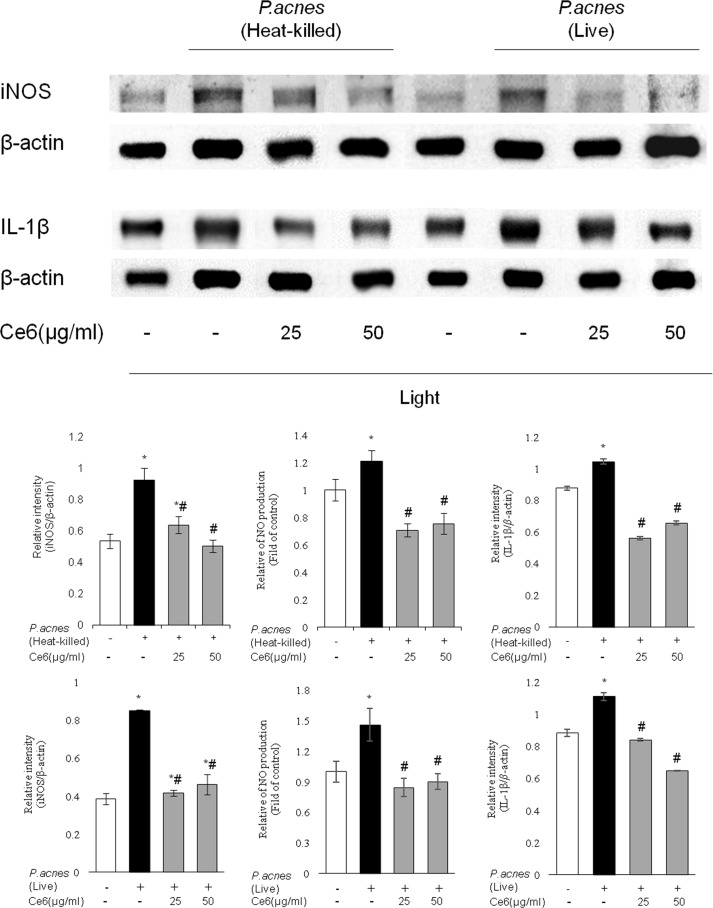
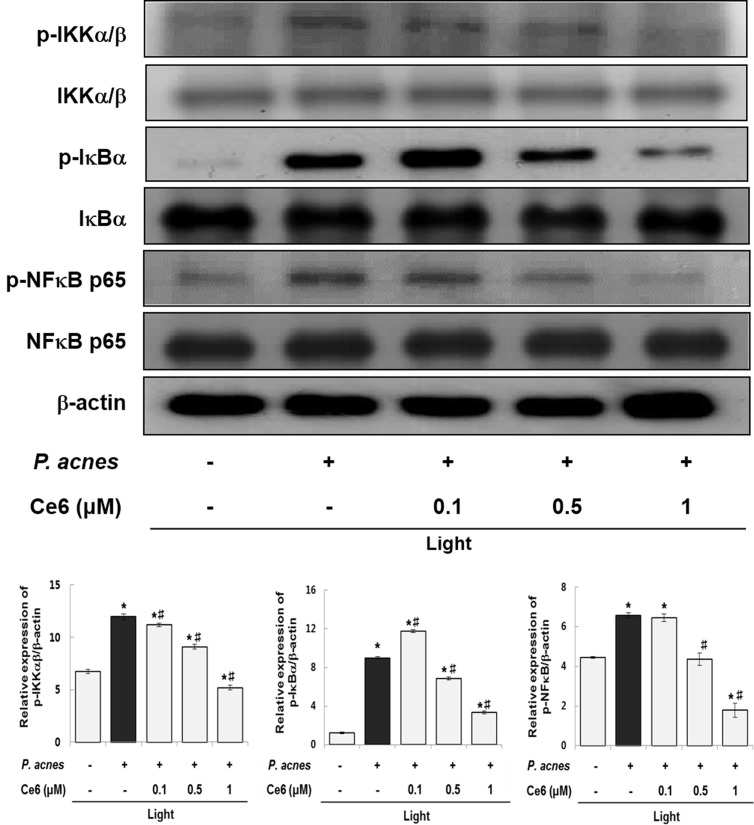
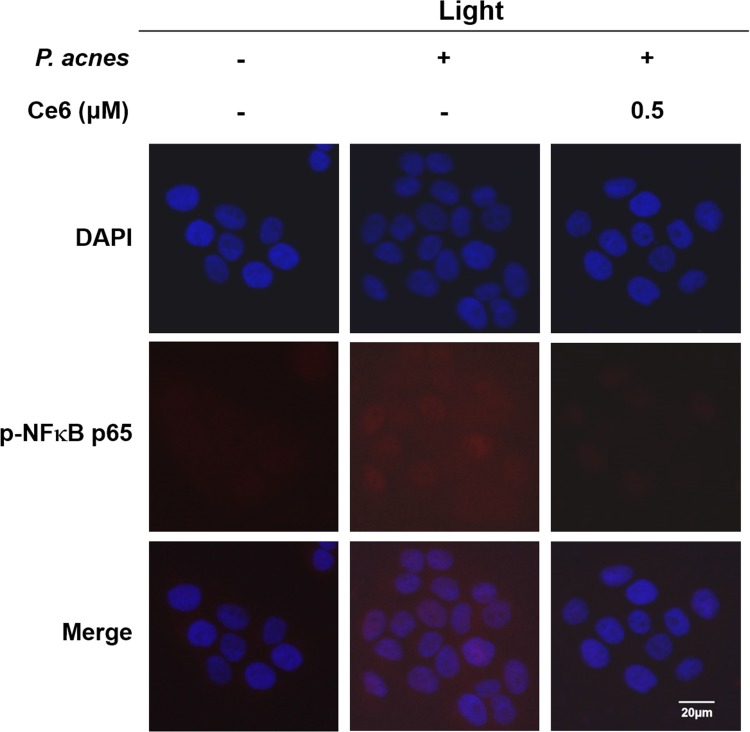
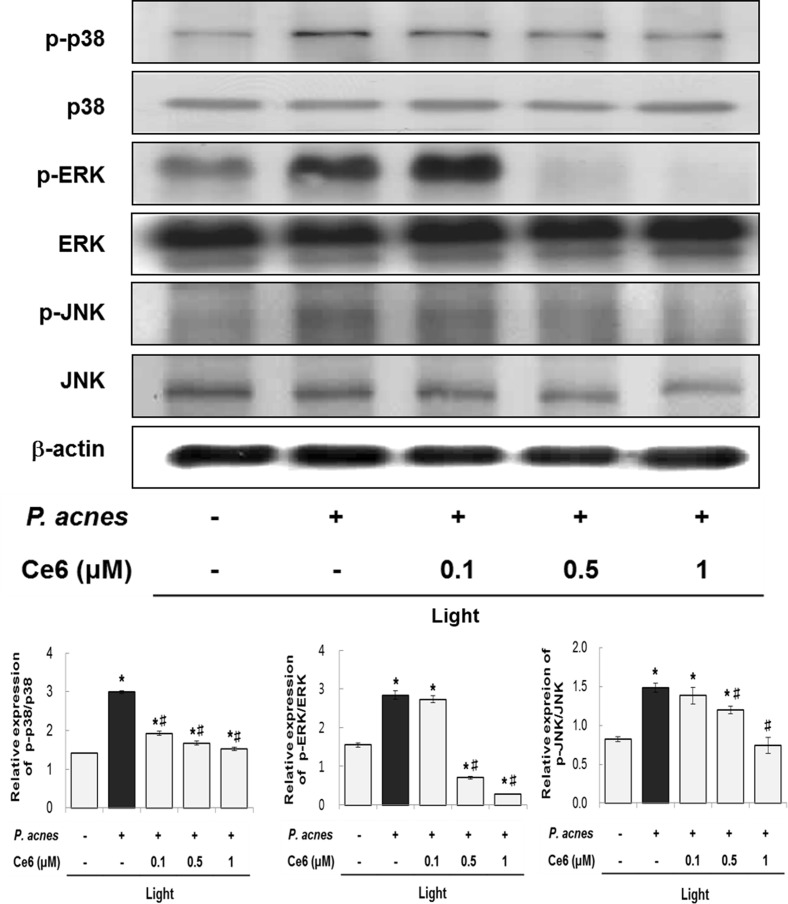
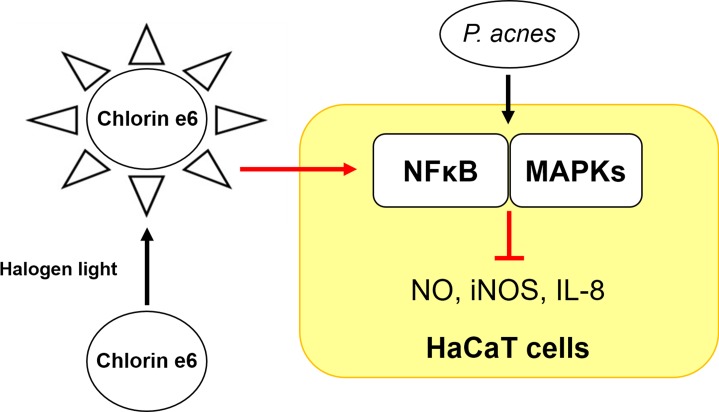
Photodynamic therapy (PDT), consisting of photosensitizer, light, and oxygen has been used for the treatment of various diseases including cancers, microbial infections and skin disorders. In this study, we examined the anti-inflammatory effect of chlorin e6-mediated PDT in P. acnes-infected HaCaT cells using photosensitizer chlorin e6 (Ce6) and halogen light. The live and heat-killed P. acnes triggered an upregulation of inflammatory molecules such as iNOS, NO, and inflammatory cytokine in HaCaT cells and mouse model. Ce6-mediated PDT notably downregulated the expression of these inflammatory molecules in vitro and in vivo. Similarly, chlorin e6-mediated PDT was capable of regulating inflammatory response in both live and heat killed S. epidermidis exposed HaCaT cells. Moreover, phosphorylation of p38, JNK, and ERK were reduced by Ce6-mediated PDT. Ce6-mediated PDT also reduced the phosphorylation of IKKα/β, IĸBα and NFκB p65 in P. acnes-stimulated HaCaT cells. In addition, the dramatic increase in the nuclear translocation of NFκB p65 observed upon stimulation with P. acnes was markedly impaired by Ce6-based PDT. This is the first suggestion that Ce6-mediated PDT suppresses P. acnes-induced inflammation through modulating NFκB and MAPKs signaling pathways.
Conflict of interest statement
The authors have declared that no competing interests exist.
Figures
References
-
- Global Burden of Disease Study 2013 Collaborators. Global, regional, and national incidence, prevalence, and years lived with disability for 301 acute and chronic diseases and injuries in 188 countries, 1990–2013: a systematic analysis for the global burden of disease study 2013. Lancet. 2015; 386:743–800. 10.1016/S0140-6736(15)60692-4 - DOI - PMC - PubMed
-
- Kim J. Review of the innate immune response in acne vulgaris: activation of Toll-like receptor 2 in acne triggers inflammatory cytokine responses. Dermatol. 2005; 211:193–198. - PubMed
MeSH terms
Substances
LinkOut - more resources
Full Text Sources
Other Literature Sources
Medical
Research Materials
Miscellaneous
