


Asphyxia in the Newborn: Evaluating the Accuracy of ICD Coding, Clinical Diagnosis and Reimbursement: Observational Study at a Swiss Tertiary Care Center on Routinely Collected Health Data from 2012-2015
- PMID: 28118380
- PMCID: PMC5261744
- DOI: 10.1371/journal.pone.0170691
Asphyxia in the Newborn: Evaluating the Accuracy of ICD Coding, Clinical Diagnosis and Reimbursement: Observational Study at a Swiss Tertiary Care Center on Routinely Collected Health Data from 2012-2015
Abstract
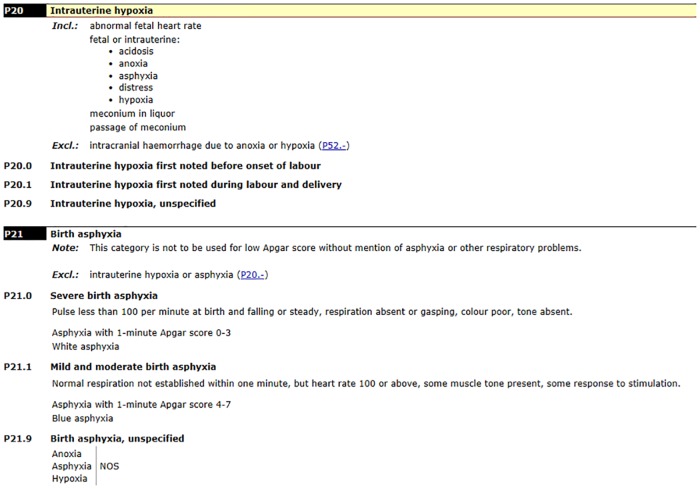
Background: The ICD-10 categories of the diagnosis "perinatal asphyxia" are defined by clinical signs and a 1-minute Apgar score value. However, the modern conception is more complex and considers metabolic values related to the clinical state. A lack of consistency between the former clinical and the latter encoded diagnosis poses questions over the validity of the data. Our aim was to establish a refined classification which is able to distinctly separate cases according to clinical criteria and financial resource consumption. The hypothesis of the study is that outdated ICD-10 definitions result in differences between the encoded diagnosis asphyxia and the medical diagnosis referring to the clinical context.
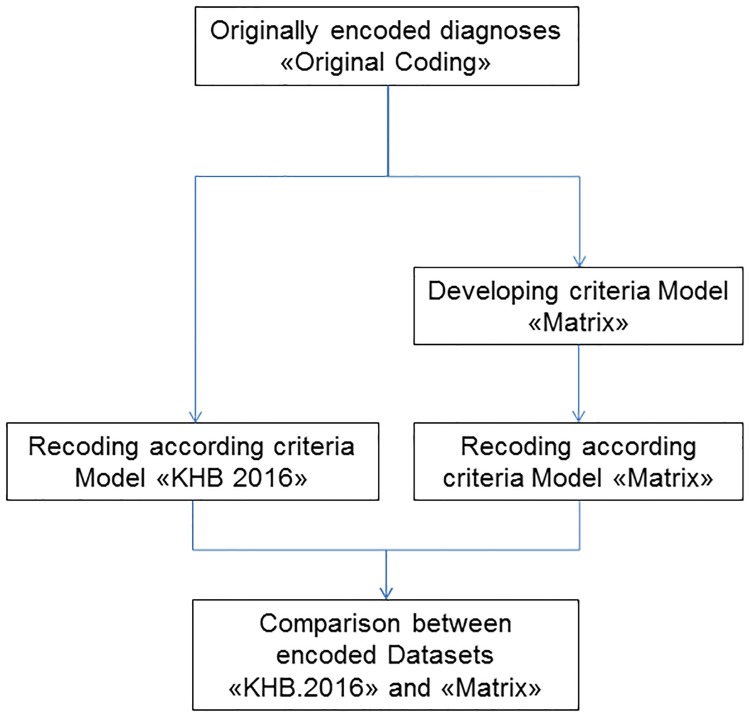
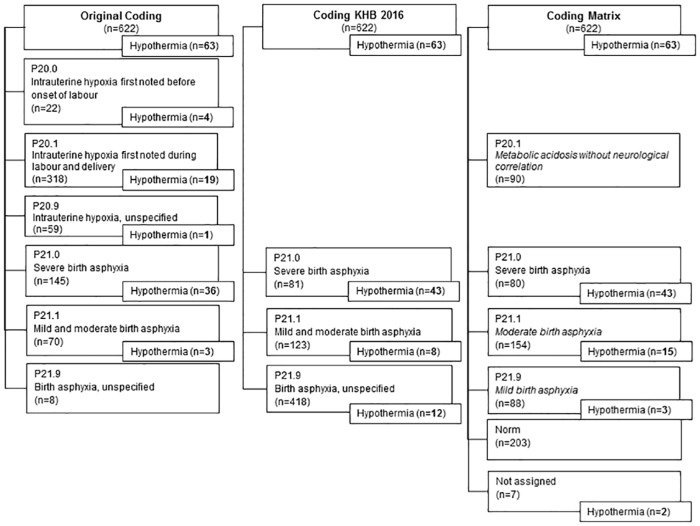
Methods: Routinely collected health data (encoding and financial data) of the University Hospital of Bern were used. The study population was chosen by selected ICD codes, the encoded and the clinical diagnosis were analyzed and each case was reevaluated. The new method categorizes the diagnoses of perinatal asphyxia into the following groups: mild, moderate and severe asphyxia, metabolic acidosis and normal clinical findings. The differences of total costs per case were determined by using one-way analysis of variance.
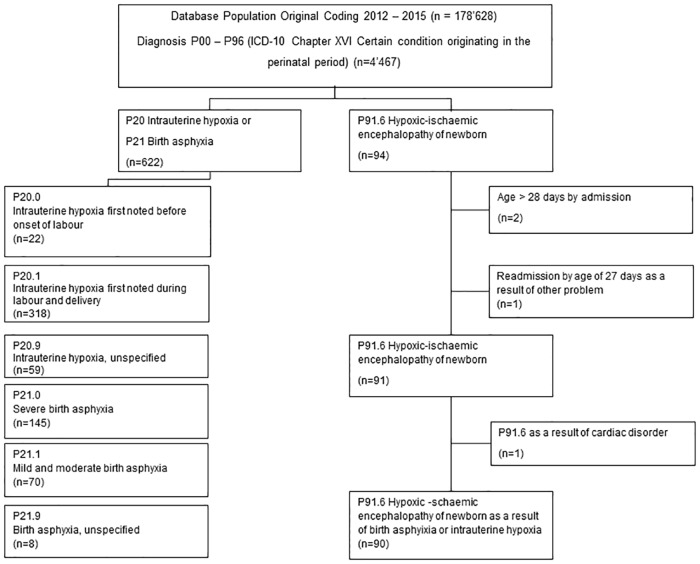
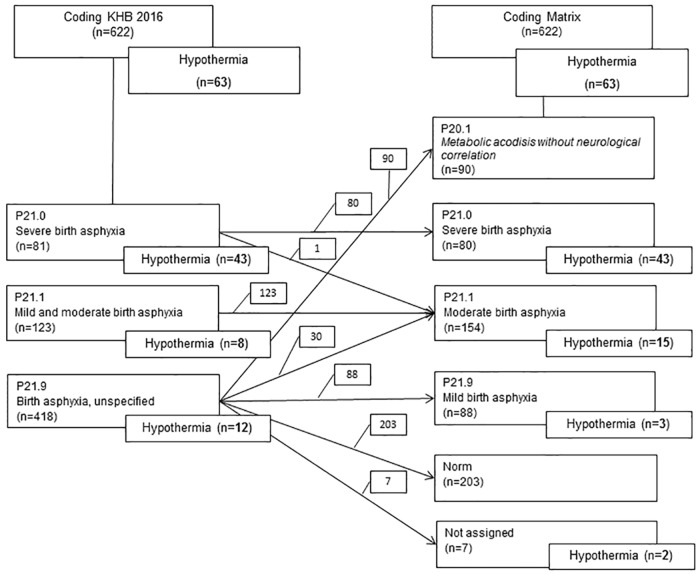
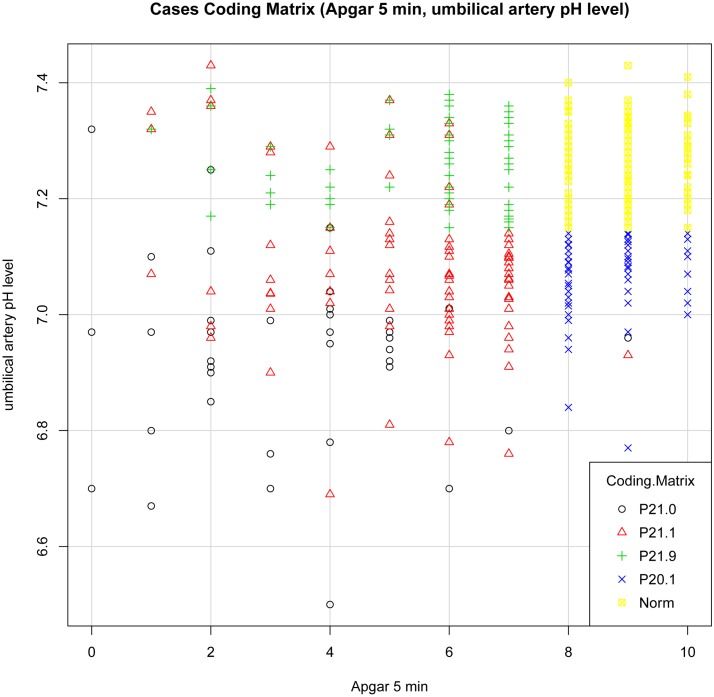
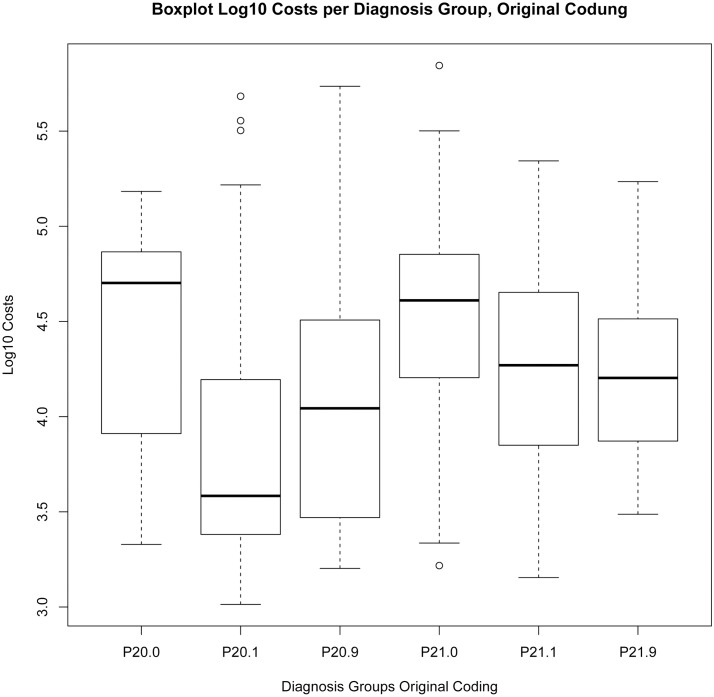
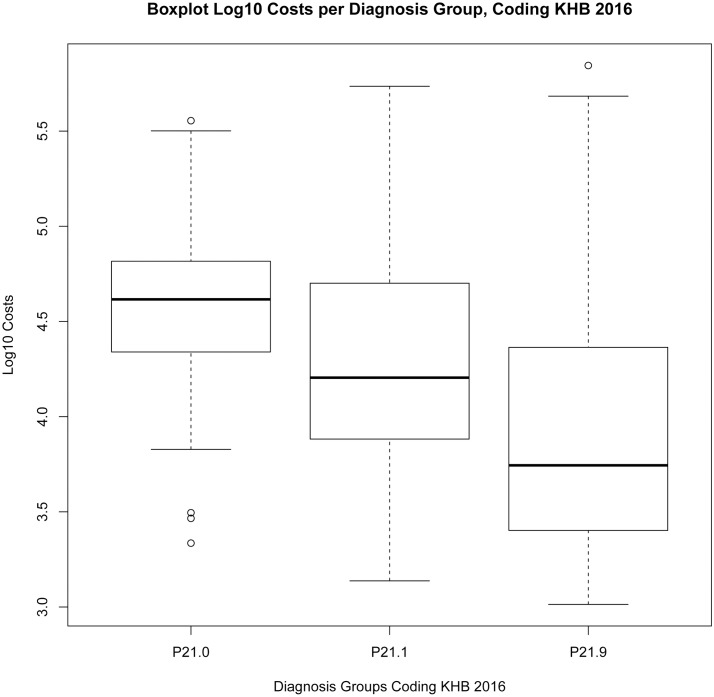
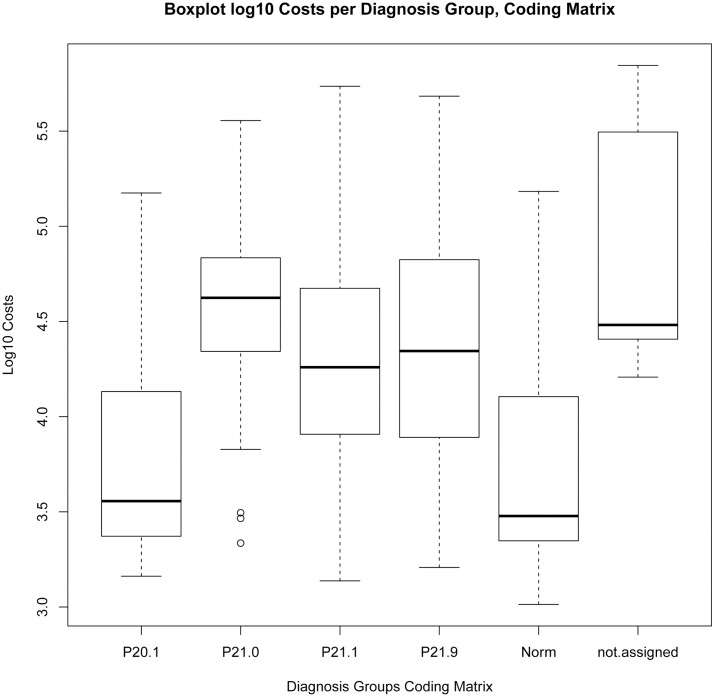
Results: The study population included 622 cases (P20 "intrauterine hypoxia" 399, P21 "birth asphyxia" 233). By applying the new method, the diagnosis asphyxia could be ruled out with a high probability in 47% of cases and the variance of case related costs (one-way ANOVA: F (5, 616) = 55.84, p < 0.001, multiple R-squared = 0.312, p < 0.001) could be best explained. The classification of the severity of asphyxia could clearly be linked to the complexity of cases.
Conclusion: The refined coding method provides clearly defined diagnoses groups and has the strongest effect on the distribution of costs. It improves the diagnosis accuracy of perinatal asphyxia concerning clinical practice, research and reimbursement.
Conflict of interest statement
The authors have declared that no competing interests exist.
Figures
References
-
- Vance GA, Niederhauser A, Chauhan SP, Magann EF, Dahlke JD, Muraskas JK, et al. Does the International Classification of Disease (ICD-9) code accurately identify neonates who clinically have hypoxic-ischemic encephalopathy? Gynecol Obstet Invest. 2011;71(3):202–6. Epub 2010/12/17. 10.1159/000318204 - DOI - PubMed
-
- BFS. Swiss Federal Statistical Office (SFSO) [Internet]. 2016 [cited 2016 07.04.2016]. Internet]. http://www.bfs.admin.ch/bfs/portal/de/index/infothek/nomenklaturen/blank....
-
- World Health Organisation. Basis newborn resuscitation: a practical guide 1999 [cited 2016 April 2016]. http://apps.who.int/iris/bitstream/10665/63953/1/WHO_RHT_MSM_98.1.pdf.
-
- World Health Organisation. ICD-10 Version:2016 2016 [cited 2016 7 April]. http://apps.who.int/classifications/icd10/browse/2016/en#/P20.
Publication types
MeSH terms
LinkOut - more resources
Full Text Sources
Other Literature Sources
