


Metformin during ovulation induction with gonadotrophins followed by timed intercourse or intrauterine insemination for subfertility associated with polycystic ovary syndrome
- PMID: 28118681
- PMCID: PMC6464837
- DOI: 10.1002/14651858.CD009090.pub2
Metformin during ovulation induction with gonadotrophins followed by timed intercourse or intrauterine insemination for subfertility associated with polycystic ovary syndrome
Abstract
Background: Clomiphene citrate (CC) is generally considered first-line treatment in women with anovulation due to polycystic ovary syndrome (PCOS). Ovulation induction with follicle-stimulating hormone (FSH; gonadotrophins) is second-line treatment for women who do not ovulate or conceive while taking CC. Metformin may increase the effectiveness of ovulation induction with gonadotrophins and may promote safety by preventing multiple pregnancy.
Objectives: To determine the effectiveness and safety of metformin co-treatment during ovulation induction with gonadotrophins with respect to rates of live birth and multiple pregnancy in women with PCOS.
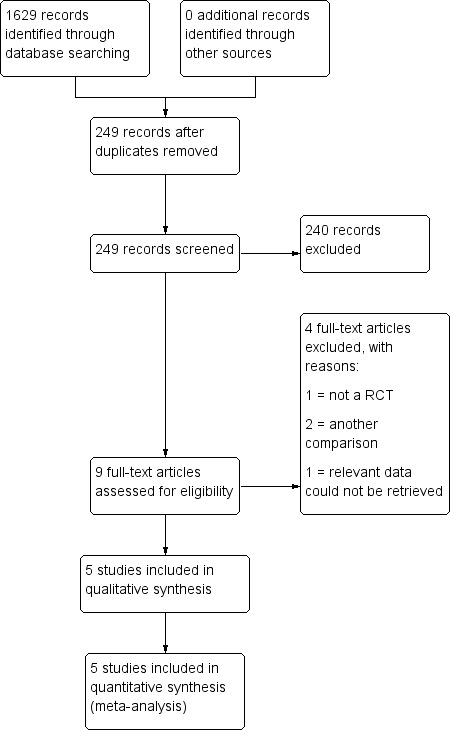
Search methods: We searched the Cochrane Gynaecology and Fertility (CGF) Group specialised register, the Cochrane Central Register of Controlled Trials (CENTRAL), MEDLINE, Embase, PsycINFO and the Cumulative Index to Nursing and Allied Health Literature (CINAH) on 8 June 2016, and the reference lists of included and other relevant studies. We searched ongoing trials registries in the World Health Organization (WHO) portal and on clinicaltrials.gov on 4 September 2016.
Selection criteria: We included randomised controlled trials (RCTs) reporting data on comparison of clinical outcomes in women with PCOS undergoing ovulation induction with gonadotrophins plus metformin versus gonadotrophins alone or gonadotrophins plus placebo.
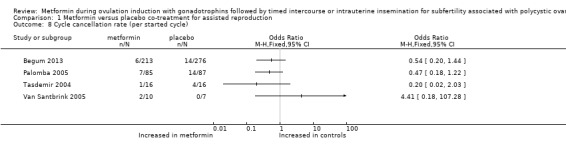
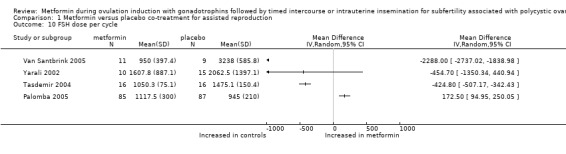
Data collection and analysis: We used standard methodological procedures recommended by Cochrane. Primary review outcomes were live birth rate and multiple pregnancy rate. Secondary outcomes were ovulation rate, clinical pregnancy rate, ovarian hyperstimulation syndrome (OHSS) rate, miscarriage rate, cycle cancellation rate and adverse effects.
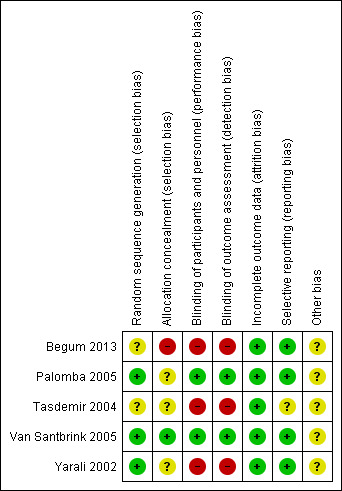
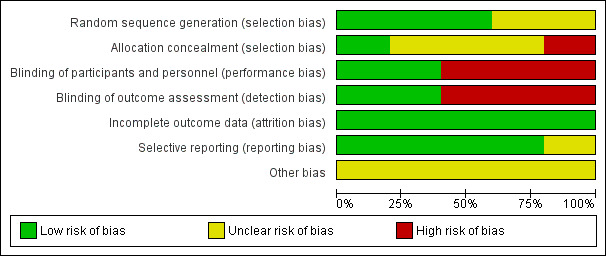
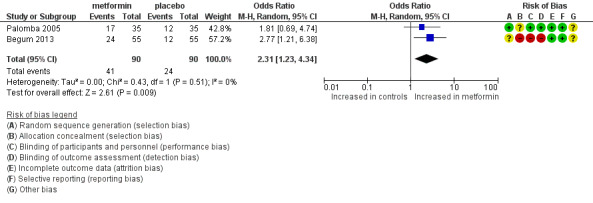
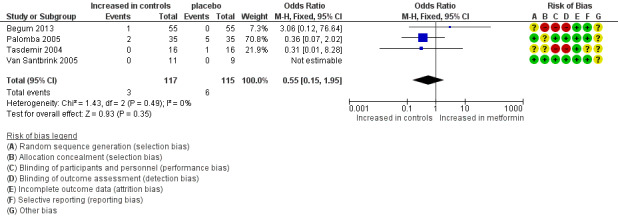
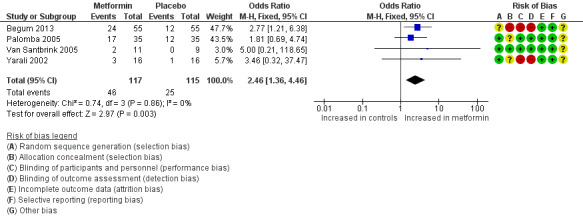
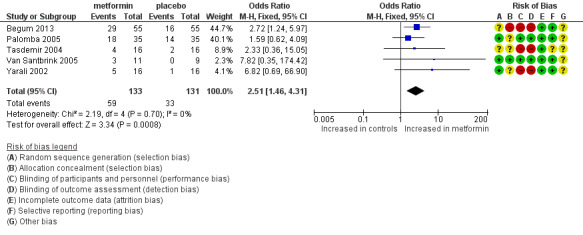
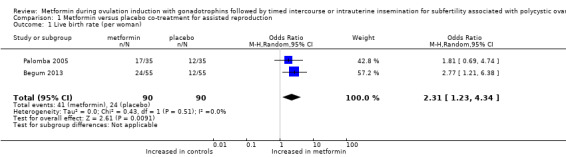
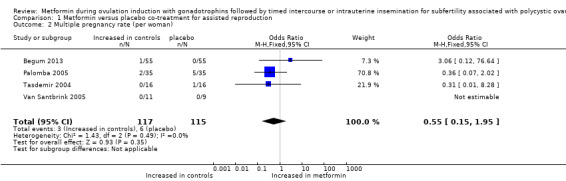
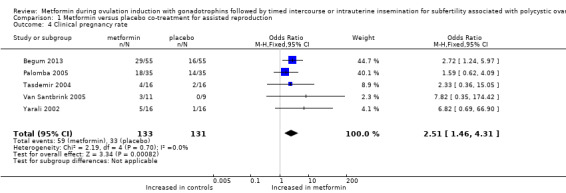
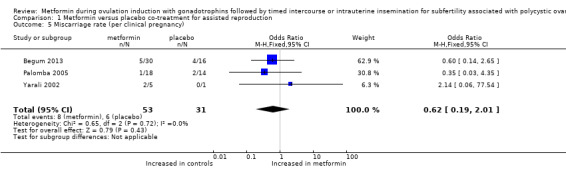
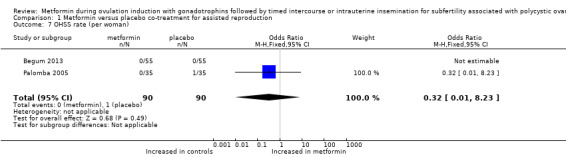
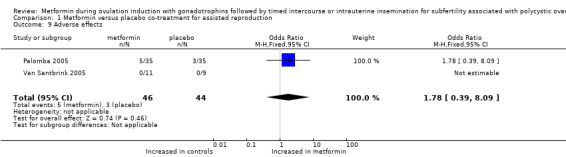
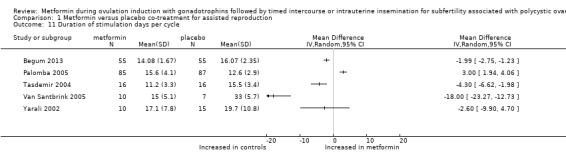
Main results: We included five RCTs (with 264 women) comparing gonadotrophins plus metformin versus gonadotrophins. The gonadotrophin used was recombinant FSH in four studies and highly purified FSH in one study. Evidence was of low quality: The main limitations were serious risk of bias due to poor reporting of study methods and blinding of participants and outcome assessors. Live birth Metformin plus FSH was associated with a higher cumulative live birth rate when compared with FSH (odds ratio (OR) 2.31, 95% confidence interval (CI) 1.23 to 4.34; two RCTs, n = 180; I2 = 0%; low-quality evidence). This suggests that if the chance of live birth after FSH is assumed to be 27%, then the chance after addition of metformin would be between 32% and 60%. Other pregnancy outcomes Metformin use was associated with a higher ongoing pregnancy rate (OR 2.46, 95% CI 1.36 to 4.46; four RCTs, n = 232; I2 = 0%; low-quality evidence) and a higher clinical pregnancy rate (OR 2.51, 95% CI 1.46 to 4.31; five RCTs, n = 264; I2 = 0%; low-quality evidence). Multiple pregnancy Results showed no evidence of a difference in multiple pregnancy rates between metformin plus FSH and FSH (OR 0.55, 95% CI 0.15 to 1.95; four RCTs, n = 232; I2 = 0%; low-quality evidence) and no evidence of a difference in rates of miscarriage or OHSS. Other adverse effects Evidence was inadequate as the result of limited available data on adverse events after metformin compared with after no metformin (OR 1.78, 95% CI 0.39 to 8.09; two RCTs, n = 91; I2 = 0%; very low-quality evidence).
Authors' conclusions: Preliminary evidence suggests that metformin may increase the live birth rate among women undergoing ovulation induction with gonadotrophins. At this moment, evidence is insufficient to show an effect of metformin on multiple pregnancy rates and adverse events. Additional trials are necessary before we can provide further conclusions that may affect clinical practice.
Conflict of interest statement
MC has received travel costs and honoraria from Merck Sharp and Dohme (MSD) and Merck Serono to attend ART Scientific Meetings to present papers on topics not related to this review. He is a shareholder at a private fertility clinic and undertakes private practice within that facility. FV has received occasional payment for lectures for ESHRE unrelated to the topic of this review. BM and his institution have received payment for consultancy from ObsEva Geneva. BM has received payment for review preparation from the
EB and LT have no interests to declare.
Figures

Update of
References
References to studies included in this review
Begum 2013 {published data only}
-
- Begum MR, Akhter S, Ehsan M, Begum MS, Khan F. Pretreatment and co‐administration of oral anti‐diabetic agent with clomiphene citrate or rFSH for ovulation induction in clomiphene‐citrate‐resistant polycystic ovary syndrome. Journal of Obstetrics and Gynaecology Research 2013;39:966‐73. - PubMed
Palomba 2005 {published data only}
-
- Palomba S, Falbo A, Orio F Jr, Manguso F, Russo T, Tolino A, et al. A randomized controlled trial evaluating metformin pre‐treatment and co‐administration in non‐obese insulin‐resistant women with polycystic ovary syndrome treated with controlled ovarian stimulation plus timed intercourse or intrauterine insemination. Human Reproduction 2005;20(10):2879‐86. - PubMed
Tasdemir 2004 {published data only}
-
- Tasdemir S, Ficicioglu C, Yalti S, Gurbuz B, Basaran T, Yildirim G. The effect of metformin treatment to ovarian response in cases with PCOS. Archives of Gynecology and Obstetrics 2004;269(2):121‐4. - PubMed
Van Santbrink 2005 {published data only}
-
- Santbrink EJ, Hohmann FP, Eijkemans MJ, Laven JS, Fauser BC. Does metformin modify ovarian responsiveness during exogenous FSH ovulation induction in normogonadotrophic anovulation? A placebo‐controlled double‐blind assessment. European Journal of Endocrinology 2005;152(4):611‐7. - PubMed
Yarali 2002 {published data only}
-
- Yarali H, Yildiz B. Metformin and FSH for induction of ovulation in women with polycystic ovary syndrome. Human Reproduction 2002;17(11):3007‐8. - PubMed
References to studies excluded from this review
Cheng 2010 {published data only}
-
- Cheng J, Lv J, Li CY, Xue Y, Huang Z, Zheng W. Clinical outcomes of ovulation induction with metformin, clomiphene citrate and human menopausal gonadotrophin in polycystic ovary syndrome. Journal of Internal Medicine Research 2010;38(4):1250‐8. - PubMed
de Leo 1999 {published data only}
-
- Leo V, Marca A, Ditto A, Morgante G, Cianci A. Effects of metformin on gonadotropin‐induced ovulation in women with polycystic ovary syndrome. Fertility and Sterility 1999;72(2):282‐5. - PubMed
Raffone 2010 {published data only}
-
- Raffone E, Rizzo P, Benedetto V. Insulin sensitiser agents alone and in co‐treatment with r‐FSH for ovulation induction in PCOS women. Gynecological Endocrinology 2010;26(4):275‐80. - PubMed
Shihibara 2007 {published data only}
-
- Shibahara H, Kikuchi K, Hirano Y, Suzuki T, Takamizawa S, Suzuki M. Increase of multiple pregnancies caused by ovulation induction with gonadotropin in combination with metformin in infertile women with polycystic ovary syndrome. Fertility and Sterility 2007;87:1487‐90. - PubMed
Additional references
Asuncion 2000
-
- Asunción M, Calvo RM, San Millán JL, Sancho J, Avila S, Escobar‐Morreale HF. A prospective study of the prevalence of the polycystic ovary syndrome in unselected Caucasian women from Spain. Journal of Clinical Endocrinology and Metabolism 2000;85:2434‐8. - PubMed
Barbieri 1986
-
- Barbieri RL, Makris A, Randall RW, Daniels G, Kistner RW, Ryan KW. Insulin stimulates androgen accumulation in incubations of ovarian stroma obtained from women with hyperandrogenism. Journal of Clinical Endocrinology and Metabolism 1986;62:904‐10. - PubMed
Dunn 1995
-
- Dunn CJ, Peters DH. Metformin. A review of its pharmacological properties and therapeutic use in non‐insulin‐dependent diabetes mellitus. Drugs 1995;49:721‐49. - PubMed
ESHRE/ASRM 2004
-
- The Rotterdam ESHRE/ASRM‐Sponsored PCOS Consensus Workshop Group. Revised 2003 consensus on diagnostic criteria and long‐term health risks related to polycystic ovary syndrome (PCOS). Human Reproduction 2004;19(1):41. - PubMed
Higgins 2011
-
- Higgins JPT, Green S (editors). Cochrane Handbook for Systematic Reviews of Interventions Version 5.1.0 [updated March 2011]. The Cochrane Collaboration, 2011. www.cochrane‐handbook.org.
Hojlund 2008
-
- Højlund K, Glintborg D, Andersen NR, Birk JB, Treebak JT, Frøsig C, et al. Impaired insulin‐stimulated phosphorylation of Akt and AS160 in skeletal muscle of women with polycystic ovary syndrome is reversed by pioglitazone treatment. Diabetes 2008;57:357‐66. - PubMed
Moll 2007
-
- Moll E, Veen F, Wely M. The role of metformin in polycystic ovary syndrome: a systematic review. Human Reproduction Update 2007;13:527‐37. - PubMed
Moll 2008
Nardo 2001
-
- Nardo LG, Rai R. Metformin therapy in the management of polycystic ovary syndrome: endocrine, metabolic and reproductive effects. Gynecological Endocrinology 2001;15:373‐80. - PubMed
Nestler 2002
-
- Nestler JE. Should patients with polycystic ovarian syndrome be treated with metformin? An enthusiastic endorsement. Human Reproduction 2002;17:1950‐3. - PubMed
NICE 2014
-
- National Institute for Health and Clinical Excellence. 11 Clinical guideline. Fertility: assessment and treatment for people with fertility problems. London, 2014.
Palomba 2014
Tang 2012
-
- Tang T, Lord JM, Norman RJ, Yasmin E, Balen AH. Insulin‐sensitising drugs (metformin, rosiglitazone, pioglitazone, D‐chiro‐inositol) for women with polycystic ovary syndrome, oligo amenorrhoea and subfertility. Cochrane Database of Systematic Reviews 2012, Issue 5. [DOI: 10.1002/14651858.CD003053] - DOI - PubMed
Publication types
MeSH terms
Substances
LinkOut - more resources
Full Text Sources
Other Literature Sources
Medical
