


Behavioural adaptations to flight into thin air
- PMID: 28120805
- PMCID: PMC5095188
- DOI: 10.1098/rsbl.2016.0432
Behavioural adaptations to flight into thin air
Abstract
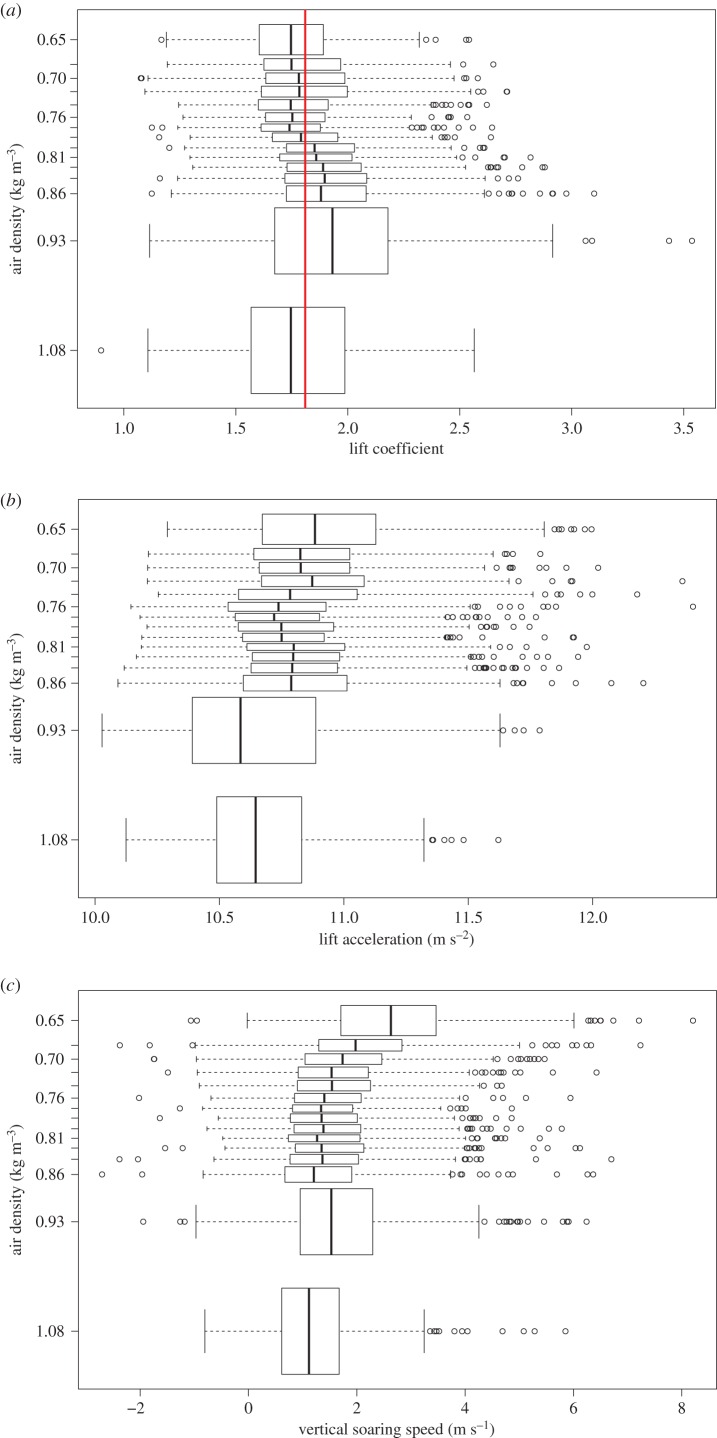
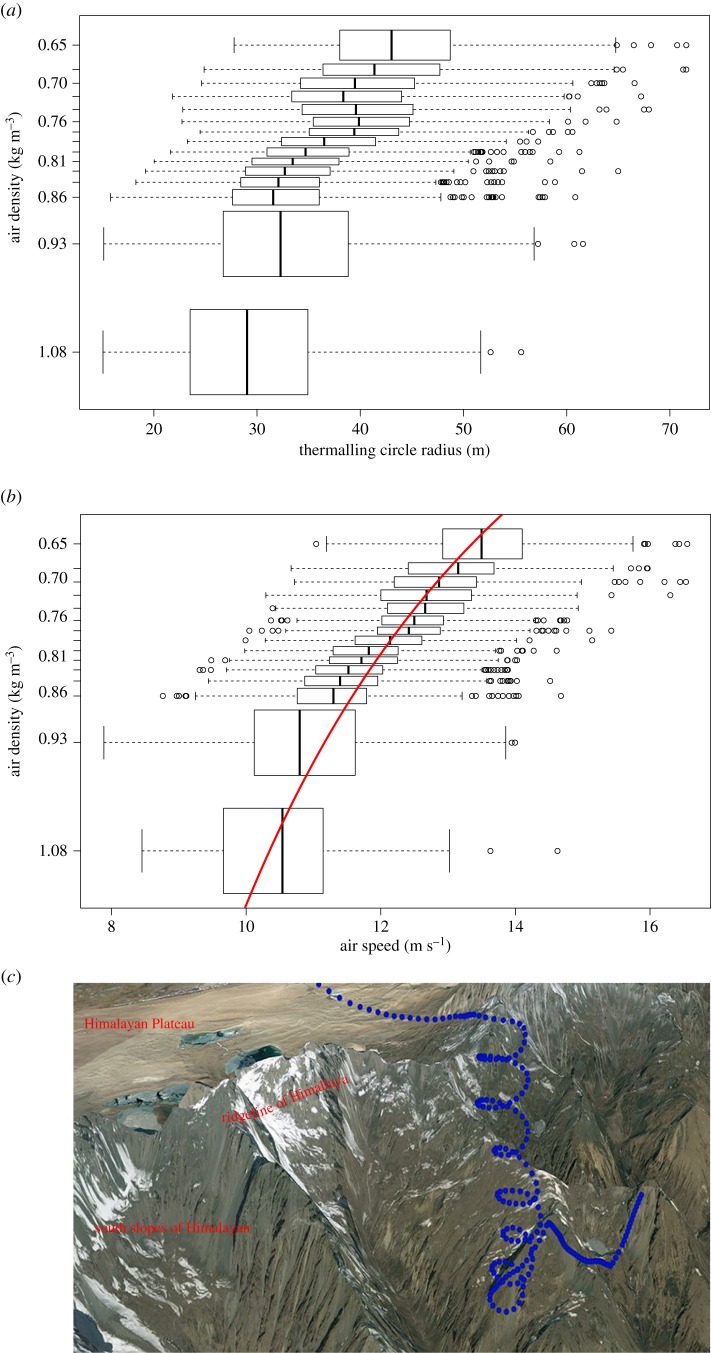
Soaring raptors can fly at high altitudes of up to 9000 m. The behavioural adjustments to high-altitude flights are largely unknown. We studied thermalling flights of Himalayan vultures (Gyps himalayensis) from 50 to 6500 m above sea level, a twofold range of air densities. To create the necessary lift to support the same weight and maintain soaring flight in thin air birds might modify lift coefficient by biophysical changes, such as wing posture and increasing the power expenditure. Alternatively, they can change their flight characteristics. We show that vultures use the latter and increase circle radius by 35% and airspeed by 21% over their flight altitude range. These simple behavioural adjustments enable vultures to move seamlessly during their annual migrations over the Himalaya without increasing energy output for flight at high elevations.
Keywords: aerodynamic; movement ecology; non-powered flight; thermalling.
© 2016 The Authors.
Figures
References
-
- Chai P, Harrykissoon R, Dudley R. 1996. Hummingbird hovering performance in hyperoxic heliox: effects of body mass and sex. J. Exp. Biol. 199, 2745–2755. - PubMed
MeSH terms
LinkOut - more resources
Full Text Sources
Other Literature Sources
