Functional Neuroanatomy for Posture and Gait Control
- PMID: 28122432
- PMCID: PMC5288669
- DOI: 10.14802/jmd.16062
Functional Neuroanatomy for Posture and Gait Control
Abstract
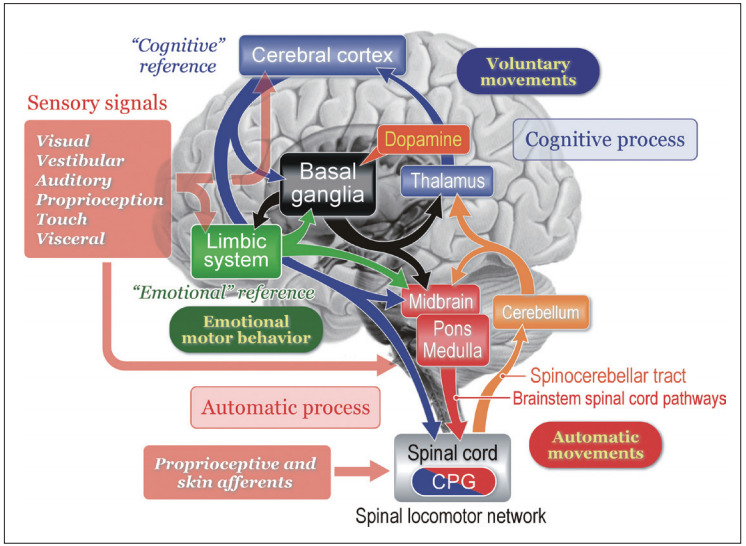
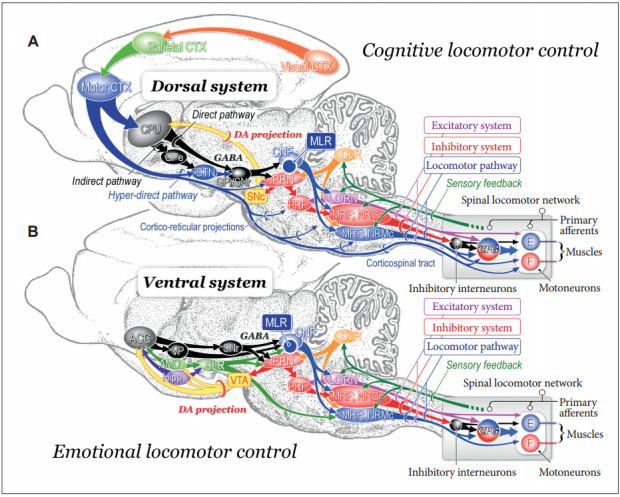
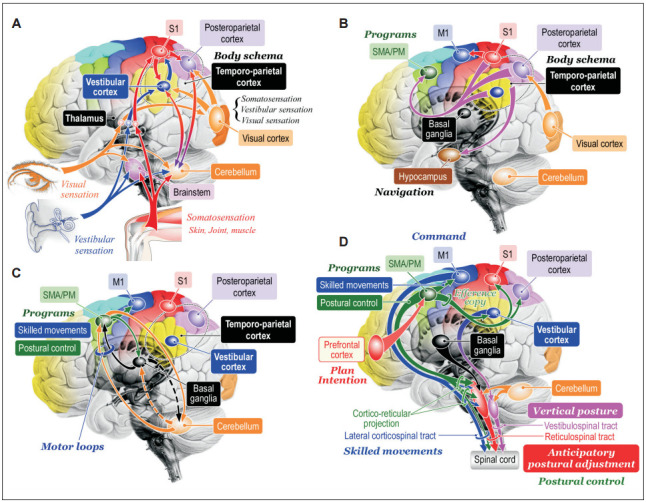
Here we argue functional neuroanatomy for posture-gait control. Multi-sensory information such as somatosensory, visual and vestibular sensation act on various areas of the brain so that adaptable posture-gait control can be achieved. Automatic process of gait, which is steady-state stepping movements associating with postural reflexes including headeye coordination accompanied by appropriate alignment of body segments and optimal level of postural muscle tone, is mediated by the descending pathways from the brainstem to the spinal cord. Particularly, reticulospinal pathways arising from the lateral part of the mesopontine tegmentum and spinal locomotor network contribute to this process. On the other hand, walking in unfamiliar circumstance requires cognitive process of postural control, which depends on knowledges of self-body, such as body schema and body motion in space. The cognitive information is produced at the temporoparietal association cortex, and is fundamental to sustention of vertical posture and construction of motor programs. The programs in the motor cortical areas run to execute anticipatory postural adjustment that is optimal for achievement of goal-directed movements. The basal ganglia and cerebellum may affect both the automatic and cognitive processes of posturegait control through reciprocal connections with the brainstem and cerebral cortex, respectively. Consequently, impairments in cognitive function by damages in the cerebral cortex, basal ganglia and cerebellum may disturb posture-gait control, resulting in falling.
Keywords: Multisensory information; Parkinson’s disease.; body schema; midbrain locomotor region; motor programs; reticulospinal system.
Conflict of interest statement
The author has no financial conflicts of interest.
Figures
References
-
- Grillner S. In: Handbook of physiology. The nervous system II. Brookhart JM, Mountcastle VB, editors. Bethesda, MD: American Physiological Society; 1981. Control of locomotion in bipeds, tetrapods, and fish; pp. 1179–1236.
-
- Takakusaki K. Forebrain control of locomotor behaviors. Brain Res Rev. 2008;57:192–198. - PubMed
-
- Sinnamon HM. Preoptic and hypothalamic neurons and the initiation of locomotion in the anesthetized rat. Prog Neurobiol. 1993;41:323–344. - PubMed
-
- Takakusaki K, Tomita N, Yano M. Substrates for normal gait and pathophysiology of gait disturbances with respect to the basal ganglia dysfunction. J Neurol. 2008;255 Suppl 4:19–29. - PubMed
Publication types
LinkOut - more resources
Full Text Sources
Other Literature Sources