


Animal lectins: potential receptors for ginseng polysaccharides
- PMID: 28123316
- PMCID: PMC5223067
- DOI: 10.1016/j.jgr.2015.12.006
Animal lectins: potential receptors for ginseng polysaccharides
Abstract
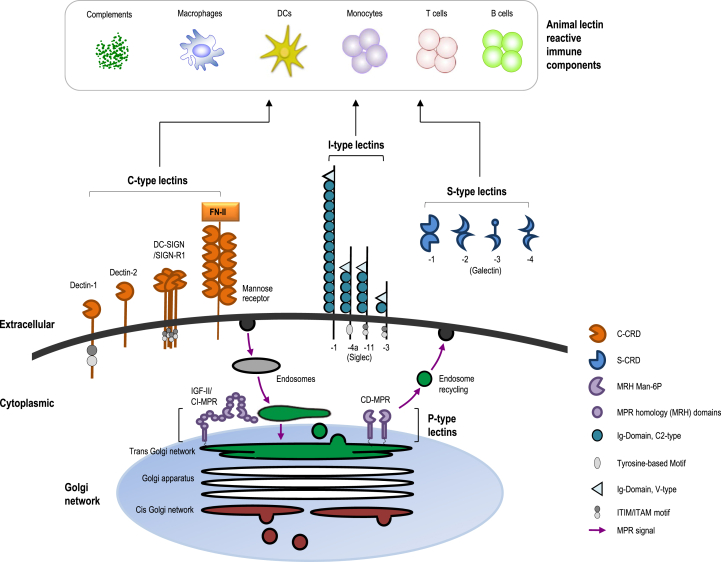
Panax ginseng Meyer, belonging to the genus Panax of the family Araliaceae, is known for its human immune system-related effects, such as immune-boosting effects. Ginseng polysaccharides (GPs) are the responsible ingredient of ginseng in immunomodulation, and are classified as acidic and neutral GPs. Although GPs participate in various immune reactions including the stimulation of immune cells and production of cytokines, the precise function of GPs together with its potential receptor(s) and their signal transduction pathways have remained largely unknown. Animal lectins are carbohydrate-binding proteins that are highly specific for sugar moieties. Among many different biological functions in vivo, animal lectins especially play important roles in the immune system by recognizing carbohydrates that are found exclusively on pathogens or that are inaccessible on host cells. This review summarizes the immunological activities of GPs and the diverse roles of animal lectins in the immune system, suggesting the possibility of animal lectins as the potential receptor candidates of GPs and giving insights into the development of GPs as therapeutic biomaterials for many immunological diseases.
Keywords: Panax ginseng; animal lectins; ginseng polysaccharides; immune system; therapeutic biomaterials.
Figures
References
-
- Hofseth L.J., Wargovich M.J. Inflammation, cancer, and targets of ginseng. J Nutr. 2007;137:183S–185S. - PubMed
-
- Angelova N., Kong H.W., van der Heijden R., Yang S.Y., Choi Y.H., Kim H.K., Wang M., Hankemeier T., van der Greef J., Xu G. Recent methodology in the phytochemical analysis of ginseng. Phytochem Anal. 2008;19:2–16. - PubMed
-
- Wang L., Yu X., Yang X., Li Y., Yao Y., Lui E.M., Ren G. Structural and anti-inflammatory characterization of a novel neutral polysaccharide from North American ginseng (Panax quinquefolius) Int J Biol Macromol. 2014;74C:12–17. - PubMed
-
- Ni Xiu-zhen, Wang Bing-qing, Zhi Yuan, Wei Ning-ning, Zhang Xu, Li Shan-shan, Tai Gui-hua, Zhou Yi-fa, Zhao Ji-ming. Total fractionation and analysis of polysaccharides from leaves of Panax ginseng C.A. Meyer. Chem Res Chniese Universities. 2010;26:230–234.
-
- Borchers A.T., Keen C.L., Stern J.S., Gershwin M.E. Inflammation and native American medicine: the role of botanicals. Am J Clin Nutr. 2000;72:339–347. - PubMed
Publication types
LinkOut - more resources
Full Text Sources
Other Literature Sources
