


Determination of ginsenosides in Asian and American ginsengs by liquid chromatography-quadrupole/time-of-flight MS: assessing variations based on morphological characteristics
- PMID: 28123317
- PMCID: PMC5223068
- DOI: 10.1016/j.jgr.2015.12.004
Determination of ginsenosides in Asian and American ginsengs by liquid chromatography-quadrupole/time-of-flight MS: assessing variations based on morphological characteristics
Abstract
Background: Asian ginseng and American ginseng are functional foods that share a close genetic relationship and are well-known worldwide. This article aims to investigate the correlation between morphological characteristics and the inherent quality of Asian and American ginsengs.
Methods: In this study, an ultra-HPLC-quadrupole/time-of-flight MS (UHPLC-Q/TOF-MS) method was established for the quantitative analysis of 45 ginseng samples. The method developed for determination was precise and accurate.
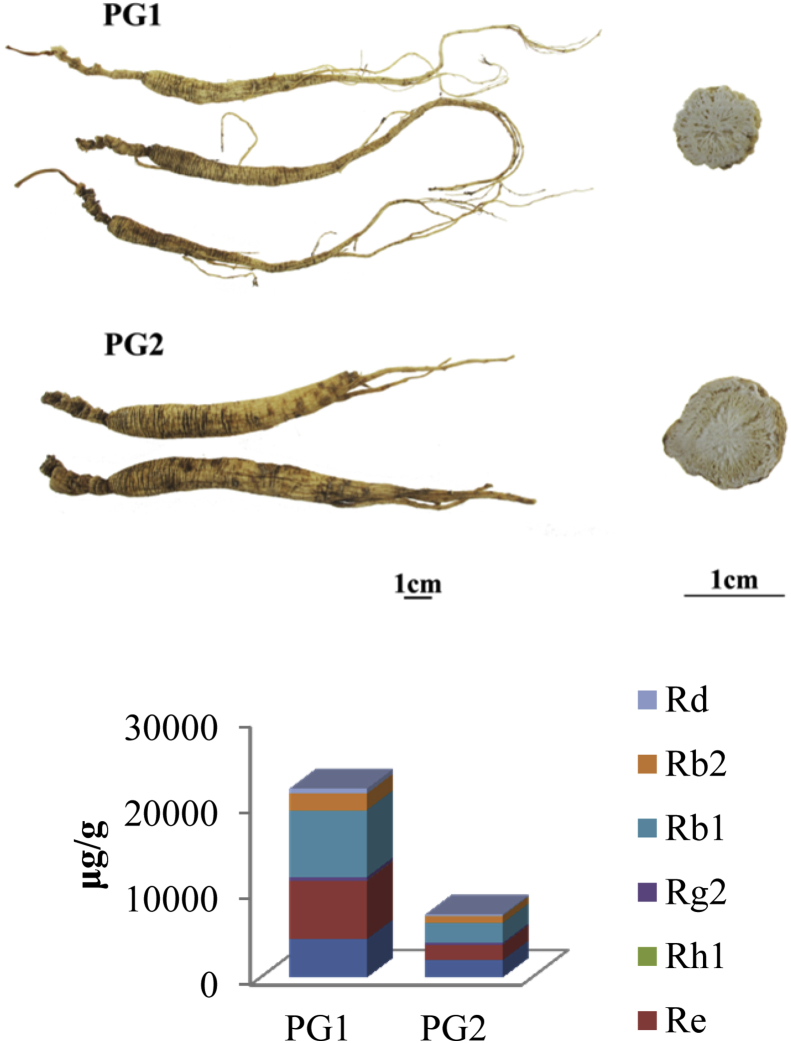
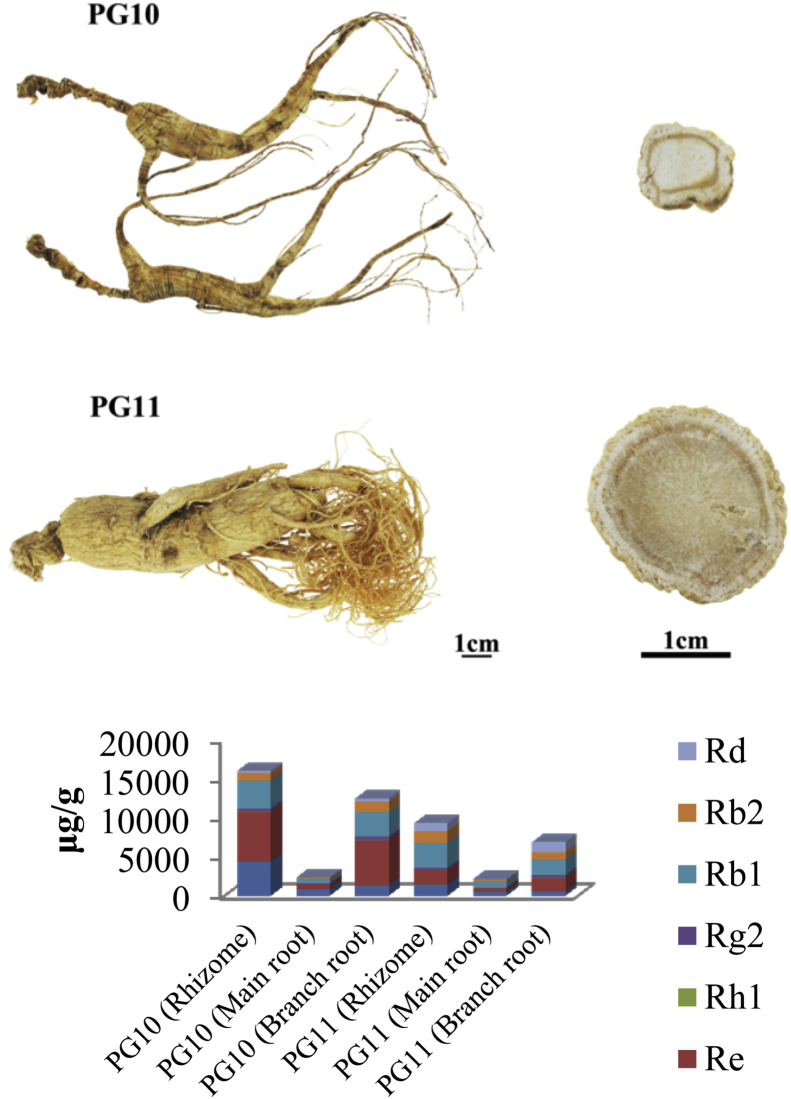
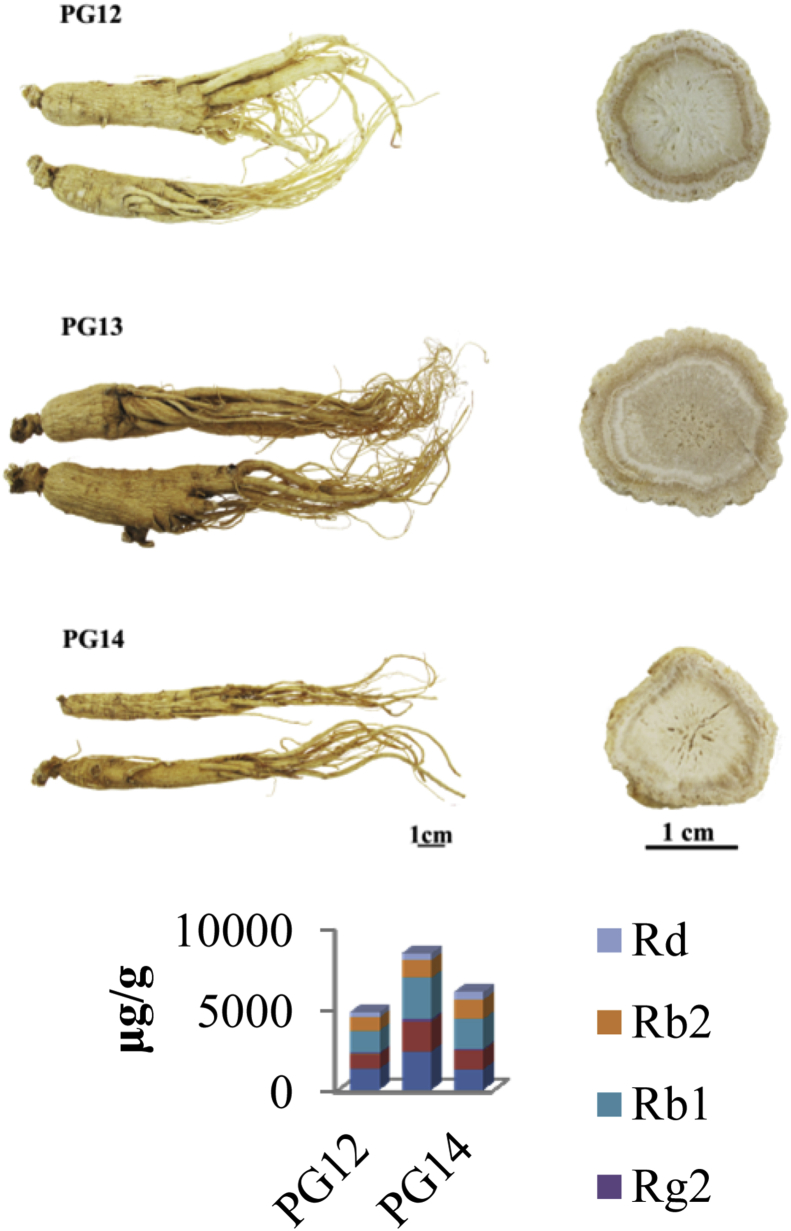
Results: The results showed that Asian ginseng samples with the same growing time (with the same or similar number of stem scars) that had a thinner main root, a longer rhizome and more branch roots contained greater amounts of ginsenosides. For American ginseng, two tendencies were observed in the relationship between the diameter of the main root and contents of ginsenosides. One tendency was that samples with thinner main roots tended to contain higher levels of ginsenosides, which was observed in the samples sold under the commercial name pao-shen. Another tendency was that samples with thicker main roots contained higher contents of ginsenosides, which was observed in the samples sold under the commercial name pao-mian, as well as in samples of American ginseng cultivated in Jilin, China.
Conclusion: An approach using ultra-HPLC-quadrupole/time-of-flight MS was successfully established to link morphology and active components for evaluating the quality of Asian and American ginsengs. Clear correlation between visible morphological features and quality of Asian and American ginsengs was found. People can see the difference; this means consumers and vendors can evaluate ginseng by themselves.
Keywords: Panax ginseng; Panax quinquefolius; determination of ginsenosides; morphological characteristics; ultra-HPLC–quadrupole/time-of-flight MS.
Figures




References
-
- State Pharmacopoeia Committee . China Medical Science and Technology Press; Beijing: 2010. Pharmacopoeia of the People's Republic of China.
-
- Angelova N., Kong H.W., Van Der Heijden R., Yang S.Y., Choi Y.H., Kim H., Wang M., Hankemeier T., Van Der Greef J., Xu G. Recent methodology in the phytochemical analysis of ginseng. Phytochem Anal. 2008;19:2–16. - PubMed
-
- Attele A.S., Wu J.A., Yuan C.S. Ginseng pharmacology: multiple constituents and multiple actions. Biochem Pharmacol. 1999;58:1685–1693. - PubMed
LinkOut - more resources
Full Text Sources
Other Literature Sources
