


The effectiveness of rapid sequence intubation (RSI) versus non-RSI in emergency department: an analysis of multicenter prospective observational study
- PMID: 28124199
- PMCID: PMC5267589
- DOI: 10.1186/s12245-017-0129-8
The effectiveness of rapid sequence intubation (RSI) versus non-RSI in emergency department: an analysis of multicenter prospective observational study
Abstract
Background: Although rapid sequence intubation (RSI) is the method of choice in emergency department (ED) airway management, data to support the use of RSI remain scarce. We sought to compare the effectiveness of airway management between RSI and non-RSI (intubation with sedative agents only or without medications) in the ED.
Methods: Secondary analysis of the data from a multicenter prospective observational registry at 13 Japanese EDs. All non-cardiac-arrest patients who underwent intubation with RSI or non-RSI were included for the analysis. Outcomes of interest were the success rate of intubation and intubation-related complications.
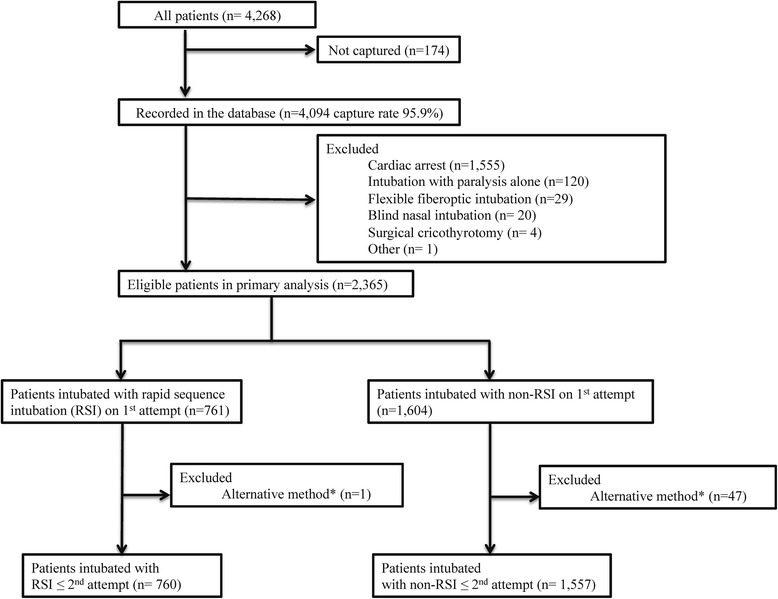
Results: Of 2365 eligible patients, 761 (32%) underwent intubations with RSI and 1,604 (68%) with non-RSI. Intubations with RSI had a higher success rate on the first attempt compared to those with non-RSI (73 vs. 63%; P < 0.0001). By contrast, the complication rates did not differ significantly between RSI and non-RSI groups (12 vs. 13%; P = 0.59). After adjusting for age, sex, estimated weight, principal indication, device, specialties and training level of the intubator, and clustering of patients within EDs, intubation with RSI was associated with a significantly higher success rate on the first attempt (OR, 2.3; 95% CI, 1.8-2.9; P < 0.0001) while that with RSI was not associated with the risk of complications (OR, 0.9; 95% CI, 0.6-1.2; P = 0.31).
Conclusions: In this large multicenter study of ED airway management, we found that intubation with RSI was independently associated with a higher success rate on the first attempt but not with the risk of complications.
Keywords: Airway management; Complications of intubation; Emergency department; Intubation; Intubation success; Rapid sequence intubation; Resuscitation.
Figures
References
LinkOut - more resources
Full Text Sources
Other Literature Sources
Medical
