


A predictive model for obstructive sleep apnea and Down syndrome
- PMID: 28124477
- PMCID: PMC9933889
- DOI: 10.1002/ajmg.a.38137
A predictive model for obstructive sleep apnea and Down syndrome
Abstract
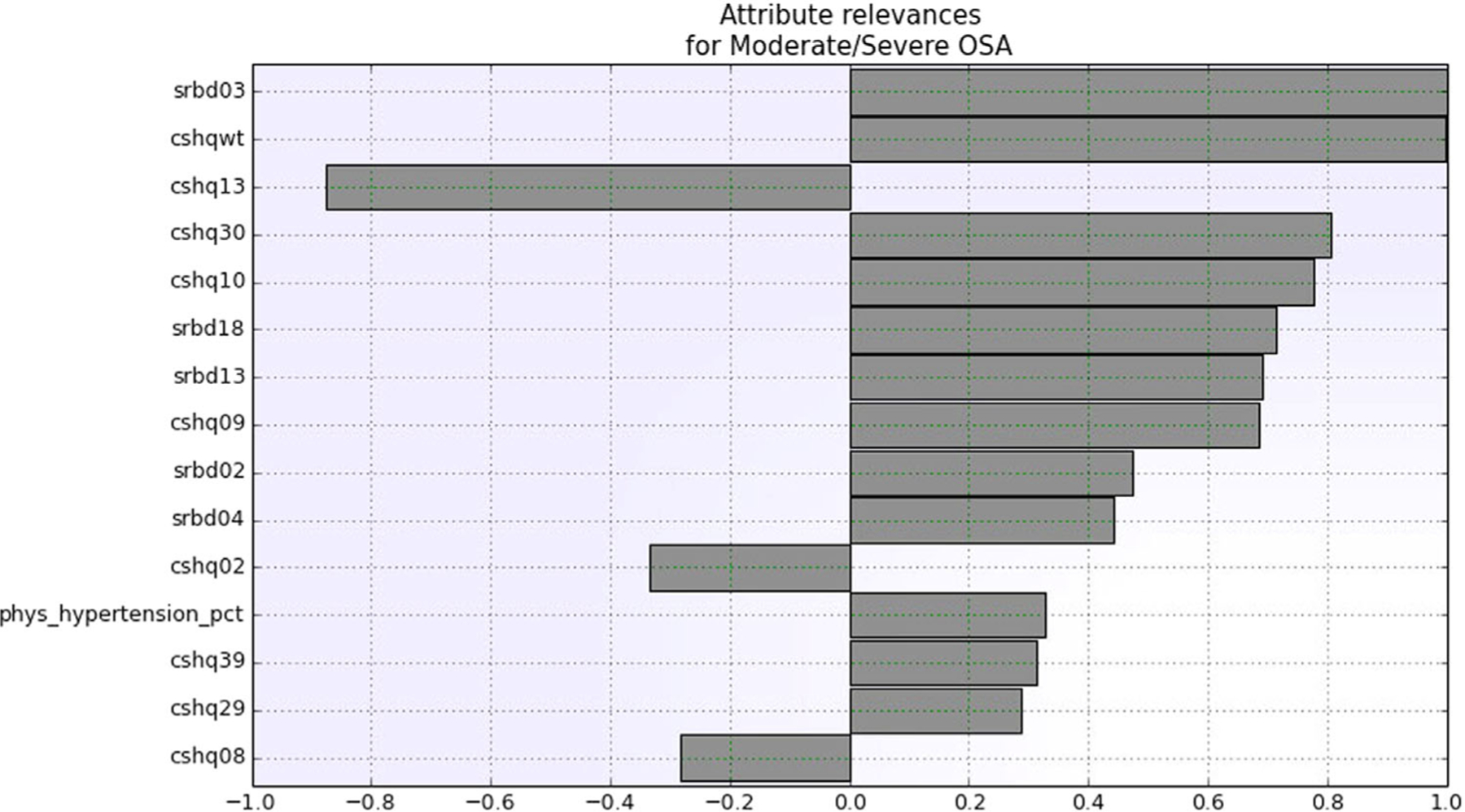
Obstructive sleep apnea (OSA) occurs frequently in people with Down syndrome (DS) with reported prevalences ranging between 55% and 97%, compared to 1-4% in the neurotypical pediatric population. Sleep studies are often uncomfortable, costly, and poorly tolerated by individuals with DS. The objective of this study was to construct a tool to identify individuals with DS unlikely to have moderate or severe sleep OSA and in whom sleep studies might offer little benefit. An observational, prospective cohort study was performed in an outpatient clinic and overnight sleep study center with 130 DS patients, ages 3-24 years. Exclusion criteria included previous adenoid and/or tonsil removal, a sleep study within the past 6 months, or being treated for apnea with continuous positive airway pressure. This study involved a physical examination/medical history, lateral cephalogram, 3D photograph, validated sleep questionnaires, an overnight polysomnogram, and urine samples. The main outcome measure was the apnea-hypopnea index. Using a Logic Learning Machine, the best model had a cross-validated negative predictive value of 73% for mild obstructive sleep apnea and 90% for moderate or severe obstructive sleep apnea; positive predictive values were 55% and 25%, respectively. The model included variables from survey questions, medication history, anthropometric measurements, vital signs, patient's age, and physical examination findings. With simple procedures that can be collected at minimal cost, the proposed model could predict which patients with DS were unlikely to have moderate to severe obstructive sleep apnea and thus may not need a diagnostic sleep study.
Keywords: Down syndrome; obstructive sleep apnea; trisomy 21.
© 2017 Wiley Periodicals, Inc.
Conflict of interest statement
CONFLICT OF INTEREST
The authors have no financial conflict of interests related to the content of this study. B.G.S. serves in a non-paid capacity on the Board of Directors for the Band of Angels Foundation, a non-profit organization, and on the Medical and Science Advisory Board for the Massachusetts Down Syndrome Congress. He is a non-paid clinical advisory to the National Center for Prenatal and Postnatal Down Syndrome Diagnoses Resources. B.G.S. occasionally gets remunerated from Down syndrome non-profit organizations for speaking engagements about Down syndrome. He receives research support from Hoffmann-La Roche, Inc. B.G.S. receives annual royalties from Woodbine House, Inc., for the publication of his book
Figures
References
-
- American Academy of Sleep Medicine. (2015). Manual for the scoring of sleep and associated events.
-
- Andreou G, Galanopoulou C, Gourgoulianis K, Karapetsas A, & Molyvdas P (2002). Cognitive status in Down syndrome individuals with sleep disordered breathing deficits (SDB). Brain and Cognition, 50, 145–149. - PubMed
-
- Austeng ME, Overland B, Kvaerner KJ, Andersson EM, Axelsson S,Abdelnoor M, & Akre H (2014). Obstructive sleep apnea in younger school children with Down syndrome. International Journal of Pediatric Otorhinolaryngology, 78, 1026–1029. - PubMed
-
- Bradley TD, & Phillipson EA (1985). Pathogenesis and pathophysiology of the obstructive sleep apnea syndrome. Medical Clinics of North America, 69, 1169–1185. - PubMed
-
- Breslin J, Spano G, Bootzin R, Anand P, Nadel L, & Edgin J (2014). Obstructive sleep apnea syndrome and cognition in Down syndrome. Developmental Medicine & Child Neurology, 56, 657–664. - PubMed
Publication types
MeSH terms
Grants and funding
LinkOut - more resources
Full Text Sources
Other Literature Sources
Medical
Miscellaneous
