Endophytes from medicinal plants and their potential for producing indole acetic acid, improving seed germination and mitigating oxidative stress
- PMID: 28124841
- PMCID: PMC5296229
- DOI: 10.1631/jzus.B1500271
Endophytes from medicinal plants and their potential for producing indole acetic acid, improving seed germination and mitigating oxidative stress
Abstract
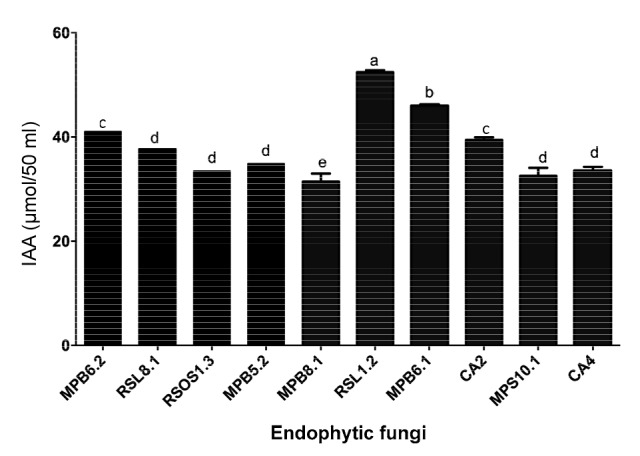
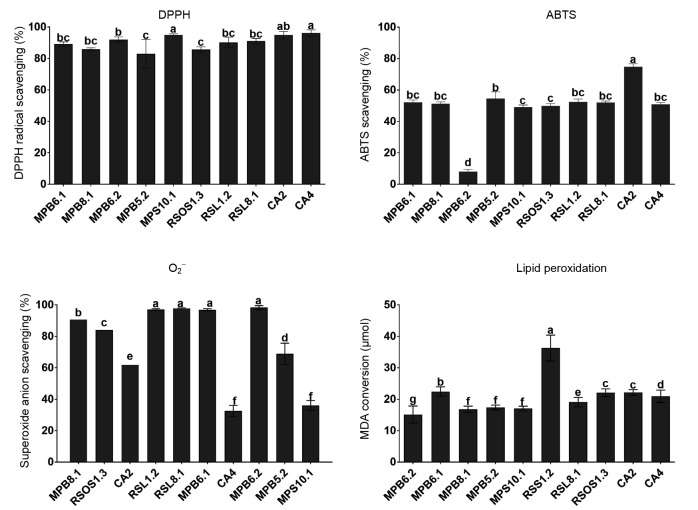
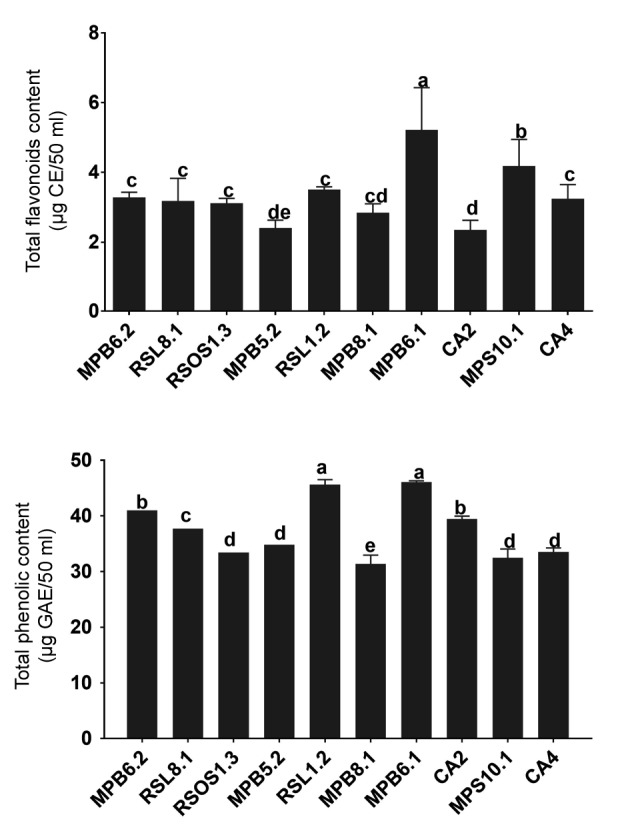
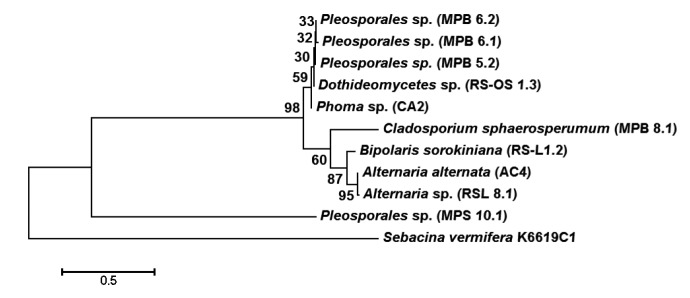
Medicinal plants have been used by marginal communities to treat various ailments. However, the potential of endophytes within these bio-prospective medicinal plants remains unknown. The present study elucidates the endophytic diversity of medicinal plants (Caralluma acutangula, Rhazya stricta, and Moringa peregrina) and the endophyte role in seed growth and oxidative stress. Various organs of medicinal plants yielded ten endophytes, which were identified as Phoma sp. (6 isolates), Alternaria sp. (2), Bipolaris sp. (1), and Cladosporium sp. (1) based on 18S rDNA sequencing and phylogenetic analysis. The culture filtrates (CFs; 25%, 50%, and 100% concentrations) from these endophytes were tested against the growth of normal and dwarf mutant rice lines. Endophytic CF exhibited dose-dependent growth stimulation and suppression effects. CF (100%) of Phoma sp. significantly increased rice seed germination and growth compared to controls and other endophytes. This growth-promoting effect was due to the presence of indole acetic acid in endophytic CF. The gas chromatography/mass spectrometry (GC/MS) analysis showed the highest indole acetic acid content ((54.31±0.21) µmol/L) in Bipolaris sp. In addition, the isolate of Bipolaris sp. exhibited significantly higher radical scavenging and anti-lipid peroxidation activity than the other isolates. Bipolaris sp. and Phoma sp. also exhibited significantly higher flavonoid and phenolic contents. The medicinal plants exhibited the presence of bio-prospective endophytic strains, which could be used for the improvement of crop growth and the mitigation of oxidative stresses.
Keywords: Fungal endophytes; Diversity; Medicinal plants; Antioxidants; Indole acetic acid.
Conflict of interest statement
Compliance with ethics guidelines: Wen-xu LI, San-ling WU, Yan-hua LIU, Gu-lei JIN, Hai-jun ZHAO, Long-jiang FAN, and Qing-yao SHU declare that they have no conflict of interest. This article does not contain any studies with human or animal subjects performed by any of the authors.
Figures
References
-
- Ansari MW, Trivedi DK, Sahoo RK, et al. A critical review on fungi mediated plant responses with special emphasis to Piriformospora indica on improved production and protection of crops. Plant Physiol Biochem. 2013;70:403–410. (Available from: http://dx.doi.org/10.1016/j.plaphy.2013.06.005) - DOI - PubMed
-
- Arnold AE, Lutzoni F. Diversity and host range of foliar fungal endophytes: are tropical leaves biodiversity hotspots. Ecology. 2007;88(3):541–549. (Available from: http://dx.doi.org/10.1890/05-1459) - DOI - PubMed
-
- Chen J, Hu KX, Hou XQ, et al. Endophytic fungi assemblages from 10 Dendrobium medicinal plants (Orchidaceae) World J Microbiol Biotechnol. 2011;27(5):1009–1016. (Available from: http://dx.doi.org/10.1007/s11274-010-0544-y) - DOI
-
- Chutima R, Lumyong S. Production of indole-3-acetic acid by Thai native orchid-associated fungi. Symbiosis. 2012;56(1):35–44. (Available from: http://dx.doi.org/10.1007/s13199-012-0158-2) - DOI
-
- de Hoog GS, Horre R. Molecular taxonomy of the Alternaria and Ulocladium species from humans and their identification in the routine laboratory. Mycoses. 2002;45(7-8):259–276. (Available from: http://dx.doi.org/10.1046/j.1439-0507.2002.00747.x) - DOI - PubMed
MeSH terms
Substances
LinkOut - more resources
Full Text Sources
Other Literature Sources
Miscellaneous