


Molecular Bases Underlying the Hepatoprotective Effects of Coffee
- PMID: 28124992
- PMCID: PMC5295129
- DOI: 10.3390/nu9010085
Molecular Bases Underlying the Hepatoprotective Effects of Coffee
Abstract
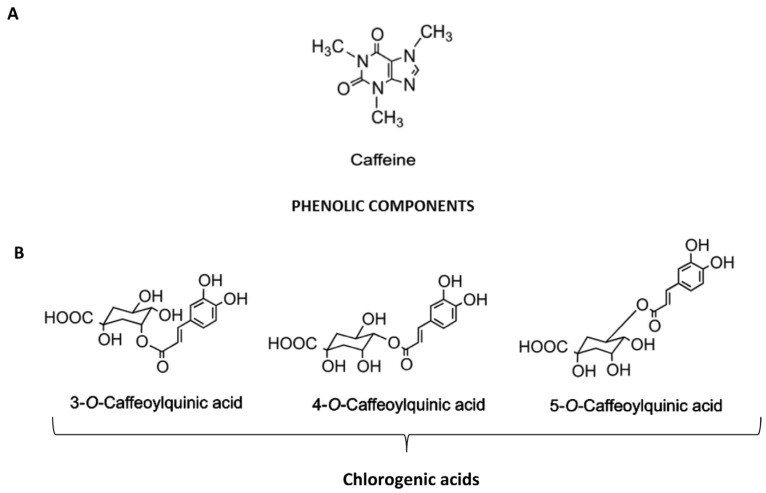
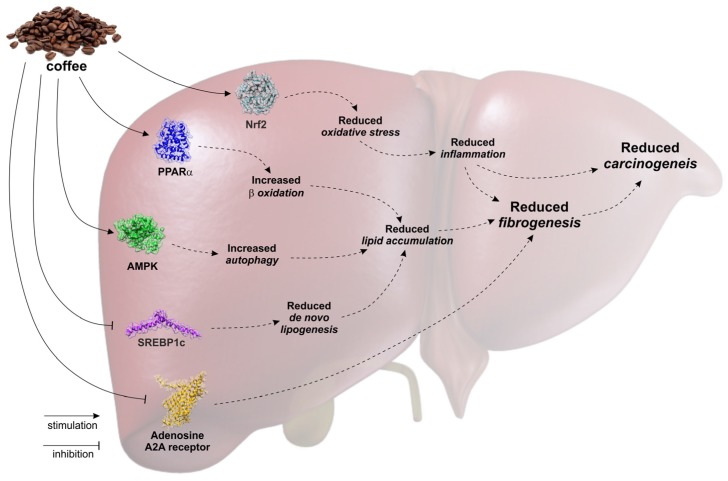
Coffee is the most consumed beverage worldwide. Epidemiological studies with prospective cohorts showed that coffee intake is associated with reduced cardiovascular and all-cause mortality independently of caffeine content. Cohort and case-control studies reported an inverse association between coffee consumption and the degree of liver fibrosis as well as the development of liver cancer. Furthermore, the beneficial effects of coffee have been recently confirmed by large meta-analyses. In the last two decades, various in vitro and in vivo studies evaluated the molecular determinants for the hepatoprotective effects of coffee. In the present article, we aimed to critically review experimental evidence regarding the active components and the molecular bases underlying the beneficial role of coffee against chronic liver diseases. Almost all studies highlighted the beneficial effects of this beverage against liver fibrosis with the most solid results indicating a pivot role for both caffeine and chlorogenic acids. In particular, in experimental models of fibrosis, caffeine was shown to inhibit hepatic stellate cell activation by blocking adenosine receptors, and emerging evidence indicated that caffeine may also favorably impact angiogenesis and hepatic hemodynamics. On the other side, chlorogenic acids, potent phenolic antioxidants, suppress liver fibrogenesis and carcinogenesis by reducing oxidative stress and counteract steatogenesis through the modulation of glucose and lipid homeostasis in the liver. Overall, these molecular insights may have translational significance and suggest that coffee components need clinical evaluation.
Keywords: caffeine; chlorogenic acid; liver cancer; liver fibrosis; liver steatosis.
Conflict of interest statement
The authors declare no conflict of interest.
Figures
References
-
- Ding M., Satija A., Bhupathiraju S.N., Hu Y., Sun Q., Han J., Lopez-Garcia E., Willett W., van Dam R.M., Hu F.B. Association of coffee consumption with total and cause-specific mortality in 3 large prospective cohorts. Circulation. 2015;132:2305–2315. doi: 10.1161/CIRCULATIONAHA.115.017341. - DOI - PMC - PubMed
-
- Grosso G., Micek A., Godos J., Sciacca S., Pajak A., Martinez-Gonzalez M.A., Giovannucci E.L., Galvano F. Coffee consumption and risk of all-cause, cardiovascular, and cancer mortality in smokers and non-smokers: A dose-response meta-analysis. Eur. J. Epidemiol. 2016 doi: 10.1007/s10654-016-0202-2. - DOI - PubMed
-
- Setiawan V.W., Wilkens L.R., Lu S.C., Hernandez B.Y., Le Marchand L., Henderson B.E. Association of coffee intake with reduced incidence of liver cancer and death from chronic liver disease in the us multiethnic cohort. Gastroenterology. 2015;148:118–125. doi: 10.1053/j.gastro.2014.10.005. - DOI - PMC - PubMed
Publication types
MeSH terms
Substances
LinkOut - more resources
Full Text Sources
Other Literature Sources
Medical
