


Inhaled Pollutants: The Molecular Scene behind Respiratory and Systemic Diseases Associated with Ultrafine Particulate Matter
- PMID: 28125025
- PMCID: PMC5343780
- DOI: 10.3390/ijms18020243
Inhaled Pollutants: The Molecular Scene behind Respiratory and Systemic Diseases Associated with Ultrafine Particulate Matter
Abstract
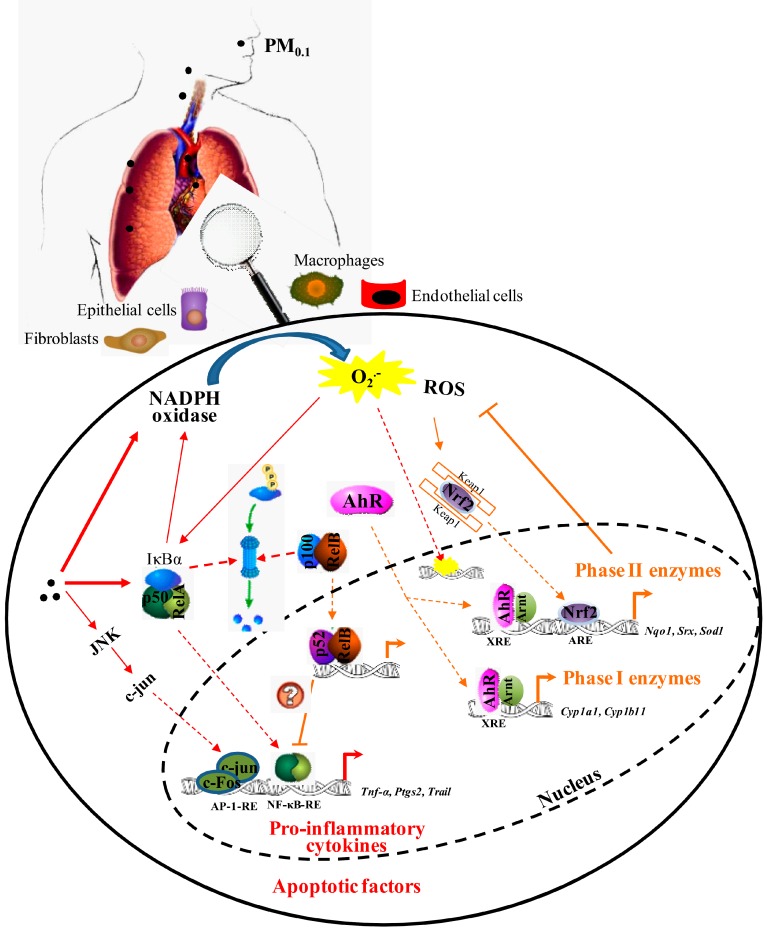
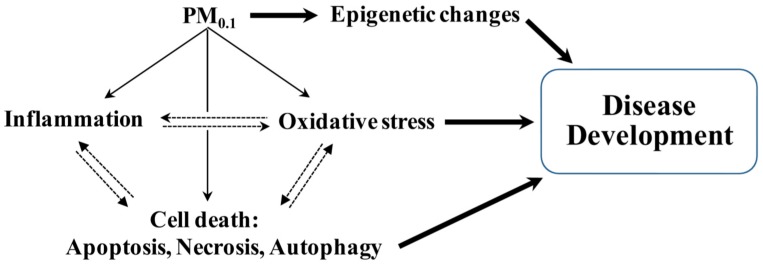
Air pollution of anthropogenic origin is largely from the combustion of biomass (e.g., wood), fossil fuels (e.g., cars and trucks), incinerators, landfills, agricultural activities and tobacco smoke. Air pollution is a complex mixture that varies in space and time, and contains hundreds of compounds including volatile organic compounds (e.g., benzene), metals, sulphur and nitrogen oxides, ozone and particulate matter (PM). PM0.1 (ultrafine particles (UFP)), those particles with a diameter less than 100 nm (includes nanoparticles (NP)) are considered especially dangerous to human health and may contribute significantly to the development of numerous respiratory and cardiovascular diseases such as chronic obstructive pulmonary disease (COPD) and atherosclerosis. Some of the pathogenic mechanisms through which PM0.1 may contribute to chronic disease is their ability to induce inflammation, oxidative stress and cell death by molecular mechanisms that include transcription factors such as nuclear factor κB (NF-κB) and nuclear factor (erythroid-derived 2)-like 2 (Nrf2). Epigenetic mechanisms including non-coding RNA (ncRNA) may also contribute towards the development of chronic disease associated with exposure to PM0.1. This paper highlights emerging molecular concepts associated with inhalational exposure to PM0.1 and their ability to contribute to chronic respiratory and systemic disease.
Keywords: air pollution; aryl hydrocarbon receptor; chronic obstructive pulmonary disease; epigenetics; nuclear factor-κB; particulate matter.
Conflict of interest statement
The authors declare no conflict of interest.
Figures
References
-
- Valavanidis A., Fiotakis K., Vlachogianni T. Airborne particulate matter and human health: Toxicological assessment and importance of size and composition of particles for oxidative damage and carcinogenic mechanisms. J. Environ. Sci. Health C Environ. Carcinog. Ecotoxicol. Rev. 2008;26:339–362. doi: 10.1080/10590500802494538. - DOI - PubMed
Publication types
MeSH terms
Substances
LinkOut - more resources
Full Text Sources
Other Literature Sources
Medical
Miscellaneous
