


Antibiotic prescribing by general dentists in the United States, 2013
- PMID: 28126225
- PMCID: PMC6814255
- DOI: 10.1016/j.adaj.2016.11.020
Antibiotic prescribing by general dentists in the United States, 2013
Abstract
Background: Dentists prescribe approximately 10% of outpatient antibiotics, but little is known about dentists' antibiotic prescribing patterns. The authors conducted a study to characterize prescribing by dentists according to antibiotic agent and category, patient demographic characteristics, and geographic region in the United States.
Methods: The authors identified oral antibiotic prescriptions dispensed during 2013 in the Xponent (QuintilesIMS) database. The authors used the total number of prescriptions and county-level census population denominators to calculate prescribing rates. In addition, the authors analyzed prescribing according to individual agent, drug category, and patient demographic characteristics and the total number of prescriptions calculated for general dentists overall.
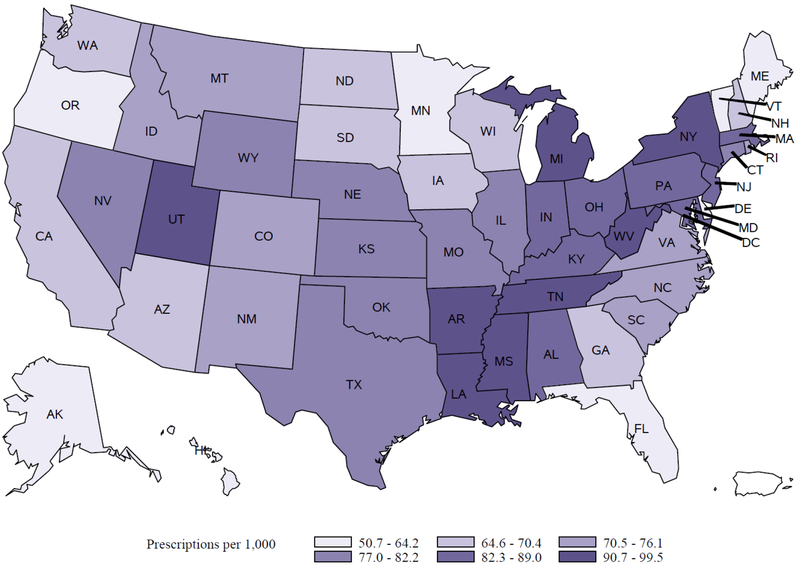
Results: Dentists prescribed 24.5 million courses of antibiotics in 2013, a prescribing rate of 77.5 prescriptions per 1,000 people. Penicillins were the most commonly prescribed antibiotic category. Dentists prescribed most antibiotics for adults older than 19 years. The Northeast census region had the highest prescribing rate per 1,000 people. The District of Columbia had the highest prescribing rate of 99.5 per 1,000 people, and Delaware had the lowest prescribing rate of 50.7 per 1,000 people.
Conclusions: Dentists prescribe large quantities of antibiotics in outpatient settings, and there is considerable geographic variability. Additional study is needed to better understand the reasons for this variability and identify areas of possible intervention and improvement.
Practical implications: Continued efforts to combat antibiotic resistance will require all prescribers, including dentists, to examine prescribing behaviors for appropriateness and the effectiveness of guidelines to identify opportunities to optimize antibiotic use.
Keywords: Antibiotics; dentistry; prophylaxis; treatment.
Published by Elsevier Inc.
Figures
References
-
- Antibiotic Resistance Threats in the United States. Atlanta, Ga.: U.S. Department of Health and Human Services, Centers for Disease Control and Prevention; 2013. http://www.cdc.gov/drugresistance/threat-report-2013/pdf/ar-threats-2013.... Accessed September 29, 2016.
-
- Turnidge J, Christiansen K. Antibiotic use and resistance--proving the obvious. Lancet 2005;365(9459):548–9. - PubMed
-
- Shehab N, Patel PR, Srinivasan A, et al. Emergency department visits for antibiotic-associated adverse events. Clin Infect Dis 2008;47(6):735–43. - PubMed
MeSH terms
Substances
Grants and funding
LinkOut - more resources
Full Text Sources
Other Literature Sources
Medical
