Review
. 2017 Jan 27;17(2):93-115.
doi: 10.1038/nrc.2016.138.

Cell cycle proteins as promising targets in cancer therapy

Affiliations
Review

Cell cycle proteins as promising targets in cancer therapy

Tobias Otto et al. Nat Rev Cancer. .

Abstract

Cancer is characterized by uncontrolled tumour cell proliferation resulting from aberrant activity of various cell cycle proteins. Therefore, cell cycle regulators are considered attractive targets in cancer therapy. Intriguingly, animal models demonstrate that some of these proteins are not essential for proliferation of non-transformed cells and development of most tissues. By contrast, many cancers are uniquely dependent on these proteins and hence are selectively sensitive to their inhibition. After decades of research on the physiological functions of cell cycle proteins and their relevance for cancer, this knowledge recently translated into the first approved cancer therapeutic targeting of a direct regulator of the cell cycle. In this Review, we focus on proteins that directly regulate cell cycle progression (such as cyclin-dependent kinases (CDKs)), as well as checkpoint kinases, Aurora kinases and Polo-like kinases (PLKs). We discuss the role of cell cycle proteins in cancer, the rationale for targeting them in cancer treatment and results of clinical trials, as well as the future therapeutic potential of various cell cycle inhibitors.


Figures

Figure 1
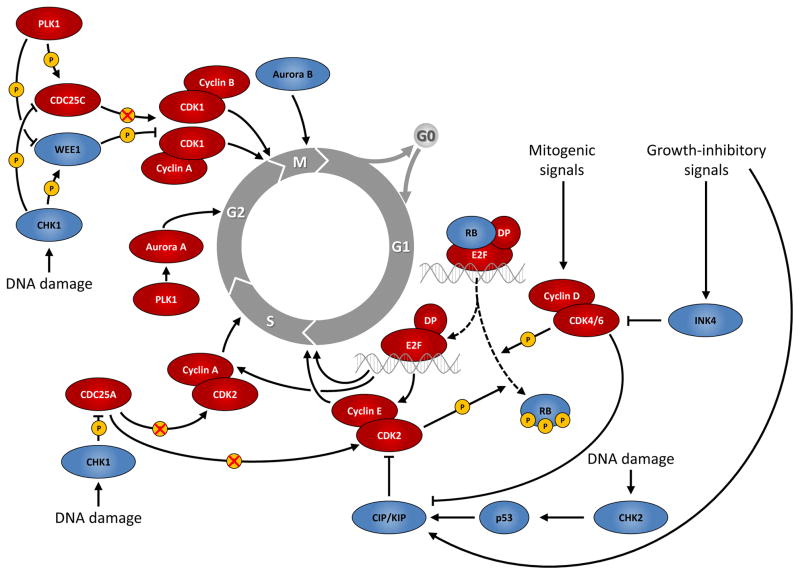
Figure 1. Cell cycle progression and major regulatory proteins
Mitogenic signals activate complexes of cyclins and cyclin-dependent kinases (CDKs) that promote progression from the G1 phase into S phase mainly by phosphorylating the retinoblastoma protein (RB) and subsequent activation of transcription by the E2F family of transcription factors. Growth-inhibitory signals antagonize G1-S progression by upregulating CDK inhibitors of the INK4 and CIP/KIP families. Progression through S phase and from G2 phase into mitosis (M phase) is also controlled by cyclin-CDK complexes, together with a variety of other proteins, such as Polo-like kinase 1 (PLK1) and Aurora kinases (Aurora A/B). Cells can also exit the cell cycle and enter a reversible or permanent cell cycle arrest (G0 phase). In addition, DNA damage is sensed by several specialized proteins and triggers cell cycle arrest via checkpoint kinase 2 (CHK2) and p53 in G1 phase or via checkpoint kinase 1 (CHK1) in S or G2 phase. Red and blue ovals denote positive and negative regulators of cell cycle progression, respectively. CDC25, cell division cycle 25; CIP, CDK-interacting protein; G1, gap 1; G2, gap 2; INK4, inhibitor of CDK4; KIP, kinase-inhibitory protein.
Figure 2
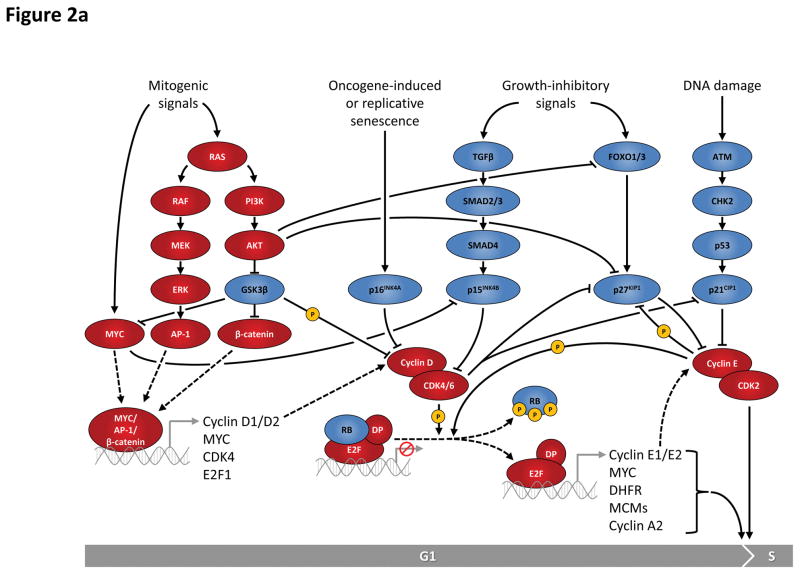
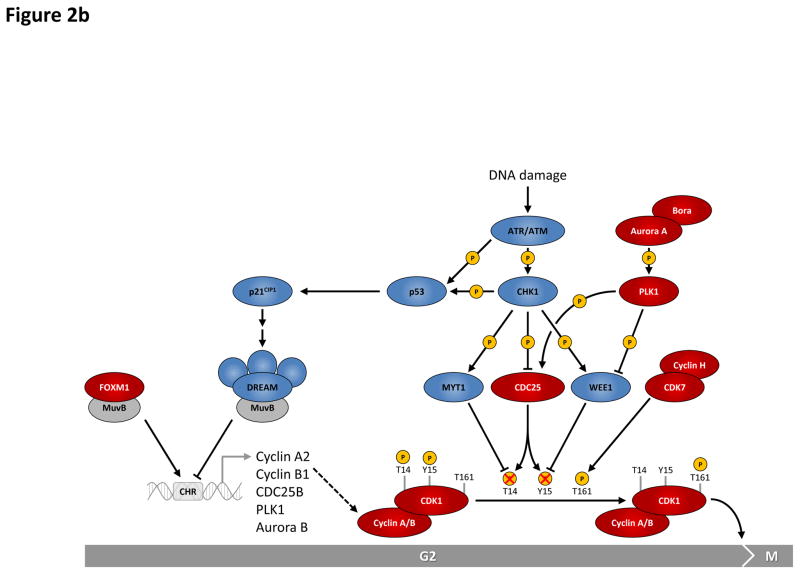
Figure 2. Regulation of G1-S and G2-M cell cycle transitions is controlled by multiple proteins and pathways
a: Entry into the cell cycle is typically induced in response to mitogenic signals that activate signalling pathways such as the RAS pathway. These pathways eventually impinge on transcriptions factors such as MYC, AP-1 or β-catenin and lead to induction of a number of cell cycle proteins including D-type cyclins. Formation of active complexes of D-type cyclins and cyclin-dependent kinases (CDKs) 4 and 6 drives phosphorylation of the RB (retinoblastoma) protein and is antagonized by the INK4 family (p16INK4A and p15INK4B) in response to senescence-inducing or growth-inhibitory signals, such as the transforming growth factor β (TGFβ). Upon RB phosphorylation, E2F transcription factors are able to activate transcription of a plethora of S phase-promoting genes, including cyclins E1 and E2. Cyclin E-CDK2 complexes are kept inactive by interaction with inhibitors p27KIP1 and p21CIP1 that are regulated by growth-inhibitory signals and the p53-dependent G1 DNA damage checkpoint. Activation of cyclin E-CDK2 involves several mechanisms including the sequestration of p27KIP1 and p21CIP1 by cyclin D-CDK4/6 complexes, and phosphorylation of p27KIP1 by cyclin E-CDK2 kinase. Active cyclin E-CDK2 complexes further phosphorylate RB, as well as many other targets culminating in S phase entry. b: During G2 phase, the MuvB complex associates with the transcription factor FOXM1 and binds promoters containing cell cycle genes homology region (CHR) elements, thereby inducing transcription of genes required for entry into and progression through mitosis (M phase), including B-type cyclins. Activation of cyclin B-CDK1 kinase requires phosphorylation of CDK1 at Thr-161 by the cyclin H-CDK7 complex (CAK, CDK-activating kinase) as well as dephosphorylation of Thr-14 and Tyr-15 on CDK1 by cell division cycle 25 (CDC25) family phosphatases, the latter process being antagonized by protein kinases MYT1 and WEE1. Activation of CDK1 is prevented in response to activation of the CHK1-dependent G2 DNA damage checkpoint. Upon recovery from DNA damage, Polo-like kinase 1 (PLK1) is essential to re-activate CDK1. Activation of cyclin A/B-CDK1 complexes is required and sufficient for entry into mitosis. Red and blue ovals denote positive and negative regulators of cell cycle transitions, respectively. AKT, v-akt murine thymoma viral oncogene homolog (kinase); AP-1, activator protein 1; ATM, ataxia telangiectasia mutated (kinase); ATR, ataxia telangiectasia and Rad3 related (kinase); CHK, checkpoint kinase; DHFR, dihydrofolate reductase; DREAM, multiprotein complex consisting of p107/p130, E2F4/E2F5, DP1 and MuvB; ERK, extracellular signal-regulated kinase; FOXM1, forkhead box M1; FOXO, forkhead box O; GSK3β, glycogen synthase kinase 3 beta; MEK, mitogen-activated protein kinase kinase; MCMs, minichromosome maintenance complex component proteins (DNA helicases); MuvB, synthetic multivulva class B complex; PI3K, phosphatidylinositol-4,5-bisphosphate 3-kinase; SMAD, SMAD family of transcription factors.
Figure 2
Figure 2. Regulation of G1-S and G2-M cell cycle transitions is controlled by multiple proteins and pathways
a: Entry into the cell cycle is typically induced in response to mitogenic signals that activate signalling pathways such as the RAS pathway. These pathways eventually impinge on transcriptions factors such as MYC, AP-1 or β-catenin and lead to induction of a number of cell cycle proteins including D-type cyclins. Formation of active complexes of D-type cyclins and cyclin-dependent kinases (CDKs) 4 and 6 drives phosphorylation of the RB (retinoblastoma) protein and is antagonized by the INK4 family (p16INK4A and p15INK4B) in response to senescence-inducing or growth-inhibitory signals, such as the transforming growth factor β (TGFβ). Upon RB phosphorylation, E2F transcription factors are able to activate transcription of a plethora of S phase-promoting genes, including cyclins E1 and E2. Cyclin E-CDK2 complexes are kept inactive by interaction with inhibitors p27KIP1 and p21CIP1 that are regulated by growth-inhibitory signals and the p53-dependent G1 DNA damage checkpoint. Activation of cyclin E-CDK2 involves several mechanisms including the sequestration of p27KIP1 and p21CIP1 by cyclin D-CDK4/6 complexes, and phosphorylation of p27KIP1 by cyclin E-CDK2 kinase. Active cyclin E-CDK2 complexes further phosphorylate RB, as well as many other targets culminating in S phase entry. b: During G2 phase, the MuvB complex associates with the transcription factor FOXM1 and binds promoters containing cell cycle genes homology region (CHR) elements, thereby inducing transcription of genes required for entry into and progression through mitosis (M phase), including B-type cyclins. Activation of cyclin B-CDK1 kinase requires phosphorylation of CDK1 at Thr-161 by the cyclin H-CDK7 complex (CAK, CDK-activating kinase) as well as dephosphorylation of Thr-14 and Tyr-15 on CDK1 by cell division cycle 25 (CDC25) family phosphatases, the latter process being antagonized by protein kinases MYT1 and WEE1. Activation of CDK1 is prevented in response to activation of the CHK1-dependent G2 DNA damage checkpoint. Upon recovery from DNA damage, Polo-like kinase 1 (PLK1) is essential to re-activate CDK1. Activation of cyclin A/B-CDK1 complexes is required and sufficient for entry into mitosis. Red and blue ovals denote positive and negative regulators of cell cycle transitions, respectively. AKT, v-akt murine thymoma viral oncogene homolog (kinase); AP-1, activator protein 1; ATM, ataxia telangiectasia mutated (kinase); ATR, ataxia telangiectasia and Rad3 related (kinase); CHK, checkpoint kinase; DHFR, dihydrofolate reductase; DREAM, multiprotein complex consisting of p107/p130, E2F4/E2F5, DP1 and MuvB; ERK, extracellular signal-regulated kinase; FOXM1, forkhead box M1; FOXO, forkhead box O; GSK3β, glycogen synthase kinase 3 beta; MEK, mitogen-activated protein kinase kinase; MCMs, minichromosome maintenance complex component proteins (DNA helicases); MuvB, synthetic multivulva class B complex; PI3K, phosphatidylinositol-4,5-bisphosphate 3-kinase; SMAD, SMAD family of transcription factors.
Figure 3
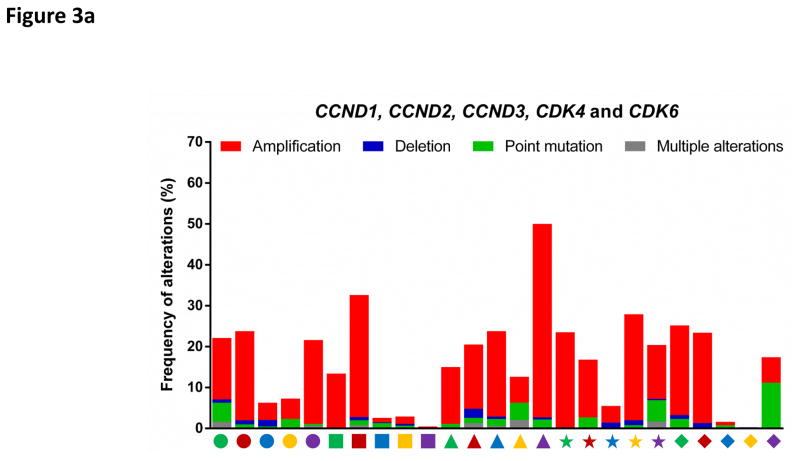
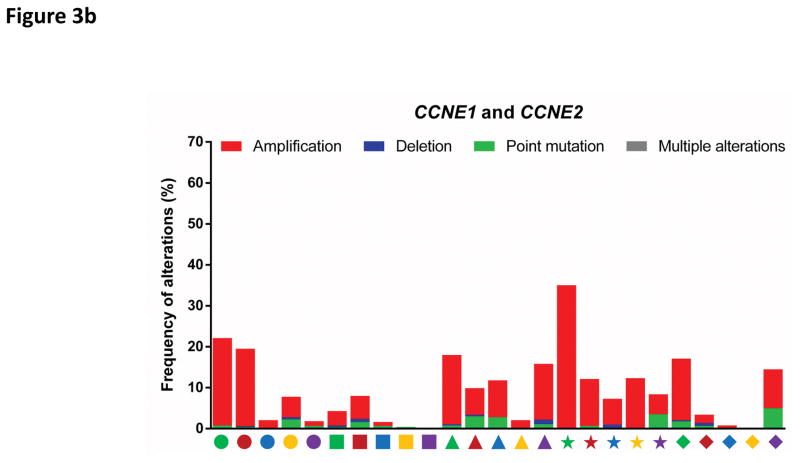
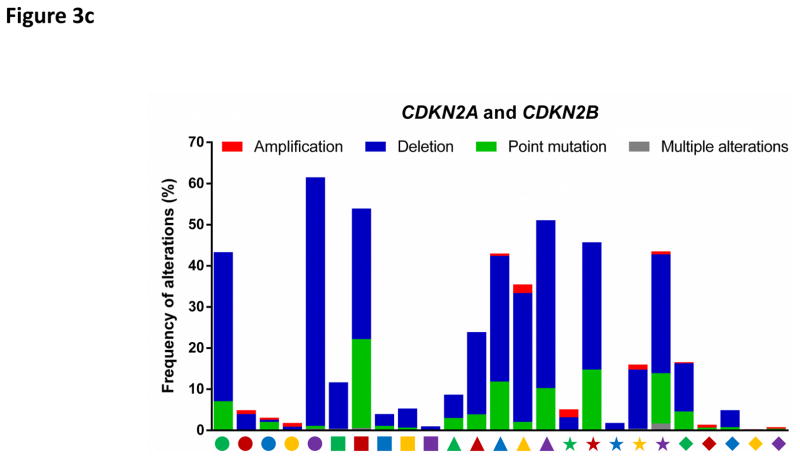
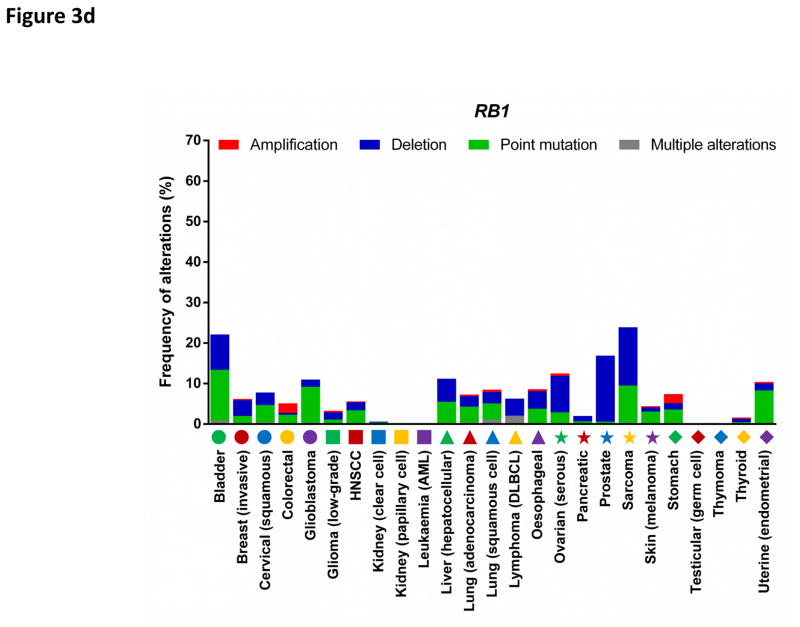
Figure 3. Deregulation of cell cycle proteins in human cancers
The frequencies of genetic alterations within genes encoding major cell cycle regulators across 25 types of human cancers. Genetic alterations include amplifications (red bars), deletions (blue bars), point mutations (green bars) and multiple alterations (grey bars). Each cancer type is denoted by a symbol with unique shape and colour below the graph (for symbol legend, see FIG. 3d). Data were obtained from The Cancer Genome Atlas (TCGA) and accessed through the cBioPortal for Cancer Genomics (http://www.cbioportal.org/) (26th August 2016). For each cancer type, the TCGA data set with the highest number of tumours was selected. The figures summarize genetic alterations from 48 (for lymphoma) to 1105 (for breast cancer) individual tumours (median of 479 individual tumours per cancer type). More detailed information for each cancer type is available via the cBioPortal for Cancer Genomics. a: Alterations of cyclin D1 (CCND1), D2 (CCND2), D3 (CCND3) and cyclin-dependent kinase 4 (CDK4) and 6 (CDK6) genes. b: Alterations of cyclin E1 (CCNE1) and cyclin E2 (CCNE2) genes. c: Alterations of genes encoding CDK inhibitors p15INK4B (CDKN2B) and p16INK4A (CDKN2A); the latter locus also encodes p14ARF (alternate reading frame protein), which inhibits ubiquitin ligase MDM2 and stabilizes p53. d: Alterations of the retinoblastoma gene (RB1). AML, acute myeloid leukaemia; DLBCL, diffuse large B-cell lymphoma; HNSCC; head and neck squamous cell carcinoma.
Figure 3
Figure 3. Deregulation of cell cycle proteins in human cancers
The frequencies of genetic alterations within genes encoding major cell cycle regulators across 25 types of human cancers. Genetic alterations include amplifications (red bars), deletions (blue bars), point mutations (green bars) and multiple alterations (grey bars). Each cancer type is denoted by a symbol with unique shape and colour below the graph (for symbol legend, see FIG. 3d). Data were obtained from The Cancer Genome Atlas (TCGA) and accessed through the cBioPortal for Cancer Genomics (http://www.cbioportal.org/) (26th August 2016). For each cancer type, the TCGA data set with the highest number of tumours was selected. The figures summarize genetic alterations from 48 (for lymphoma) to 1105 (for breast cancer) individual tumours (median of 479 individual tumours per cancer type). More detailed information for each cancer type is available via the cBioPortal for Cancer Genomics. a: Alterations of cyclin D1 (CCND1), D2 (CCND2), D3 (CCND3) and cyclin-dependent kinase 4 (CDK4) and 6 (CDK6) genes. b: Alterations of cyclin E1 (CCNE1) and cyclin E2 (CCNE2) genes. c: Alterations of genes encoding CDK inhibitors p15INK4B (CDKN2B) and p16INK4A (CDKN2A); the latter locus also encodes p14ARF (alternate reading frame protein), which inhibits ubiquitin ligase MDM2 and stabilizes p53. d: Alterations of the retinoblastoma gene (RB1). AML, acute myeloid leukaemia; DLBCL, diffuse large B-cell lymphoma; HNSCC; head and neck squamous cell carcinoma.
Figure 3
Figure 3. Deregulation of cell cycle proteins in human cancers
The frequencies of genetic alterations within genes encoding major cell cycle regulators across 25 types of human cancers. Genetic alterations include amplifications (red bars), deletions (blue bars), point mutations (green bars) and multiple alterations (grey bars). Each cancer type is denoted by a symbol with unique shape and colour below the graph (for symbol legend, see FIG. 3d). Data were obtained from The Cancer Genome Atlas (TCGA) and accessed through the cBioPortal for Cancer Genomics (http://www.cbioportal.org/) (26th August 2016). For each cancer type, the TCGA data set with the highest number of tumours was selected. The figures summarize genetic alterations from 48 (for lymphoma) to 1105 (for breast cancer) individual tumours (median of 479 individual tumours per cancer type). More detailed information for each cancer type is available via the cBioPortal for Cancer Genomics. a: Alterations of cyclin D1 (CCND1), D2 (CCND2), D3 (CCND3) and cyclin-dependent kinase 4 (CDK4) and 6 (CDK6) genes. b: Alterations of cyclin E1 (CCNE1) and cyclin E2 (CCNE2) genes. c: Alterations of genes encoding CDK inhibitors p15INK4B (CDKN2B) and p16INK4A (CDKN2A); the latter locus also encodes p14ARF (alternate reading frame protein), which inhibits ubiquitin ligase MDM2 and stabilizes p53. d: Alterations of the retinoblastoma gene (RB1). AML, acute myeloid leukaemia; DLBCL, diffuse large B-cell lymphoma; HNSCC; head and neck squamous cell carcinoma.
Figure 3
Figure 3. Deregulation of cell cycle proteins in human cancers
The frequencies of genetic alterations within genes encoding major cell cycle regulators across 25 types of human cancers. Genetic alterations include amplifications (red bars), deletions (blue bars), point mutations (green bars) and multiple alterations (grey bars). Each cancer type is denoted by a symbol with unique shape and colour below the graph (for symbol legend, see FIG. 3d). Data were obtained from The Cancer Genome Atlas (TCGA) and accessed through the cBioPortal for Cancer Genomics (http://www.cbioportal.org/) (26th August 2016). For each cancer type, the TCGA data set with the highest number of tumours was selected. The figures summarize genetic alterations from 48 (for lymphoma) to 1105 (for breast cancer) individual tumours (median of 479 individual tumours per cancer type). More detailed information for each cancer type is available via the cBioPortal for Cancer Genomics. a: Alterations of cyclin D1 (CCND1), D2 (CCND2), D3 (CCND3) and cyclin-dependent kinase 4 (CDK4) and 6 (CDK6) genes. b: Alterations of cyclin E1 (CCNE1) and cyclin E2 (CCNE2) genes. c: Alterations of genes encoding CDK inhibitors p15INK4B (CDKN2B) and p16INK4A (CDKN2A); the latter locus also encodes p14ARF (alternate reading frame protein), which inhibits ubiquitin ligase MDM2 and stabilizes p53. d: Alterations of the retinoblastoma gene (RB1). AML, acute myeloid leukaemia; DLBCL, diffuse large B-cell lymphoma; HNSCC; head and neck squamous cell carcinoma.
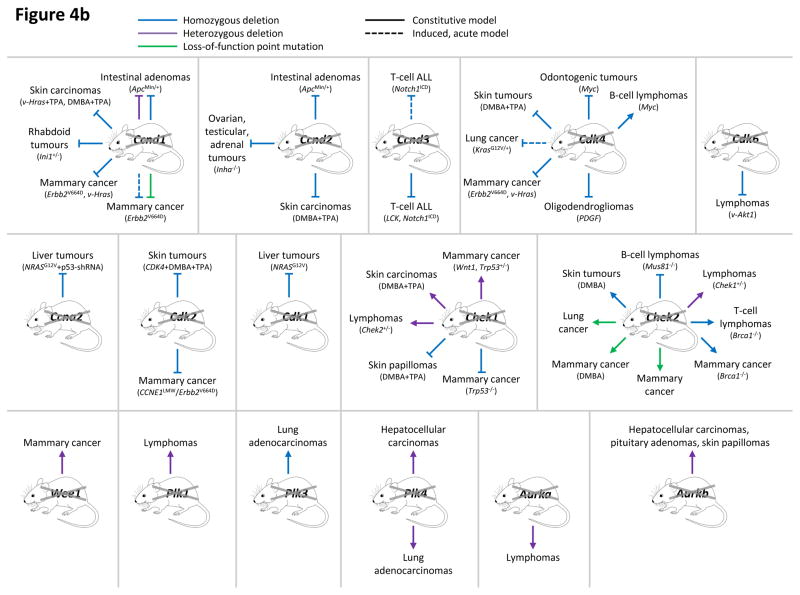
Figure 4
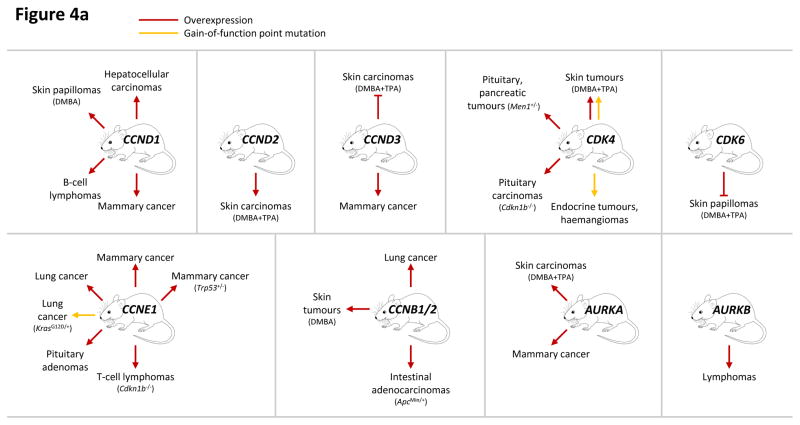
Figure 4. Analyses of cell cycle proteins in cancer using genetically engineered mouse models
This figure summarizes genetic mouse models used to investigate the role of cell cycle proteins in tumorigenesis. In case of transgenic overexpression, enhanced cancer formation is depicted by red arrows, inhibition of tumorigenesis by red inhibition symbols. Orange arrows indicate cancer formation induced by gain-of-function point mutations. In case of loss-of-function mutations (depicted by crossed out gene symbols), blue inhibition symbols indicate that homozygous ablation of a given gene prevented tumorigenesis, thereby revealing the requirement for this cell cycle protein in cancer formation. Blue dashed inhibition symbols depict an inducible, acute shutdown of Ccnd1, Ccnd3 or Cdk4, used to demonstrate a critical role for these proteins in tumour progression. Arrows indicate that homozygous (blue) or heterozygous (violet) deletion of a cell cycle gene accelerated tumorigenesis. In case of loss-of-function point mutations (as opposed to gene inactivation by deletion described above), enhanced cancer formation is depicted by green arrows, suppressed cancer formation by green inhibition symbols. For tumours induced by a cooperating event (i.e. overexpression or mutation of oncogenes, loss of tumour suppressors or carcinogen treatment), this cooperating event is indicated in parentheses. a: Genetic mouse models with increased activity of cell cycle proteins, i.e. cyclin D1 (CCND1), D2 (CCND2), D3 (CCND3), CDK4, CDK6, cyclin E1 (CCNE1), cyclin B1 or B2 (CCNB1/2), Aurora A (AURKA) and Aurora B (AURKB). b: Genetic mouse models with reduced or abolished activity of cell cycle proteins, i.e. cyclin D1 (Ccnd1), D2 (Ccnd2), D3 (Ccnd3), CDK4, CDK6, cyclin A2 (Ccna2), CDK2, CDK1, checkpoint kinase 1 (Chek1) and 2 (Chek2), WEE1, Polo-like kinases 1 (Plk1), 3 (Plk3) and 4 (Plk4), Aurora A (Aurka) and Aurora B (Aurka). AKT1, thymoma viral proto-oncogene 1; ALL, acute lymphoblastic leukaemia; APC, adenomatosis polyposis coli; BRCA1, breast cancer 1; CDKN1B, CDK inhibitor 1b (p27KIP1); DMBA, 7,12-Dimethylbenz[a]anthracene (a carcinogen); ERBB2 (HER2), erb-b2 receptor tyrosine kinase 2; HRAS, Harvey rat sarcoma virus oncogene; INHA, Inhibin alpha; INI1 (SMARCB1), SWI/SNF related, matrix associated, actin dependent regulator of chromatin, subfamily b, member 1; KRAS, Kirsten rat sarcoma viral oncogene homolog; LCK, lymphocyte protein tyrosine kinase; MEN1, multiple endocrine neoplasia 1; MUS81, MUS81 endonuclease homolog; MYC, myelocytomatosis oncogene; NRAS, neuroblastoma ras oncogene; p53-shRNA, short hairpin RNA targeting p53; PDGFB, platelet derived growth factor, B polypeptide; TPA, 12-O-Tetradecanoylphorbol-13-acetate (a tumour promoter); TRP53, transformation related protein 53 (p53); WNT1, wingless-type MMTV integration site family, member 1.
CCND1 gain:Hepatocellular carcinomas; Skin papillomas (DMBA); B-cell lymphomas; Mammary cancer
CCND2 gain:Skin carcinomas (DMBA+TPA)
CCND3 gain:Skin carcinomas (DMBA+TPA); Mammary cancer
CDK4 gain:Skin tumours (DMBA+TPA), ; Pituitary, pancreatic tumours (Men1+/−); Pituitary carcinomas (Cdkn1b−/−); Endocrine tumours, haemangiomas
CDK6 gain:Skin papillomas (DMBA+TPA)
CCNE1 gain:Mammary cancer (Trp53+/−); Mammary cancer; Lung cancer; Lung cancer (KrasG12D/+); Pituitary adenomas; T-cell lymphomas (Cdkn1b−/−)
CCNB1/2 gain:Lung cancer; Skin tumours (DMBA); Intestinal adenocarcinomas (ApcMin/+)
AURKA gain:Skin carcinomas (DMBA+TPA); Mammary cancer
AURKB gain:Lymphomas
Ccnd1 loss:Intestinal adenomas (ApcMin/+); Skin carcinomas (v-Hras+TPA, DMBA+TPA); Rhabdoid tumours (Ini1+/−); Mammary cancer (Erbb2V664D, v-Hras), ; Mammary cancer (Erbb2V664D),
Ccnd2 loss:Intestinal adenomas (ApcMin/+); Ovarian, testicular, adrenal tumours (Inha−/−); Skin carcinomas (DMBA+TPA)
Ccnd3 loss:T-cell ALL (Notch1ICD); T-cell ALL (LCK, Notch1ICD)
Cdk4 loss:Odontogenic tumours (Myc); Skin tumours (DMBA+TPA); Lung cancer (KrasG12V/+); Mammary cancer (Erbb2V664D, v-Hras), , ; Oligodendrogliomas (PDGF); B-cell lymphomas (Myc)
Cdk6 loss:Lymphomas (v-Akt1)
Ccna2 loss:Liver tumours (NRASG12V+53-shRNA)
Cdk2 loss:Skin tumours (CDK4+DMBA+TPA); Mammary cancer (CCNE1LMW, Erbb2V664D),
Cdk1 loss:Liver tumours (NRASG12V)
Chek1 loss:Mammary cancer (Wnt1, Trp53+/−), ; Skin carcinomas (DMBA+TPA); Lymphomas (Chek2+/−); Skin papillomas (DMBA+TPA); Mammary cancer (Trp53+/−)
Chek2 loss:B-cell lymphomas (Mus81−/−); Skin tumours (DMBA); Lung cancer; Mammary cancer (DMBA); Mammary cancer; Mammary cancer (Brca1−/−); T-cell lymphomas (Brca1−/−); Lymphomas (Chek1+/−)
Wee1 loss:Mammary cancer
Plk1 loss:Lymphomas
Plk3 loss:Lung adenocarcinomas
Plk4 loss:Hepatocellular carcinomas; Lung adenocarcinomas
Aurka loss:Lymphomas
Aurkb loss:Hepatocellular carcinomas, pituitary adenomas, skin papillomas
Figure 4
Figure 4. Analyses of cell cycle proteins in cancer using genetically engineered mouse models
This figure summarizes genetic mouse models used to investigate the role of cell cycle proteins in tumorigenesis. In case of transgenic overexpression, enhanced cancer formation is depicted by red arrows, inhibition of tumorigenesis by red inhibition symbols. Orange arrows indicate cancer formation induced by gain-of-function point mutations. In case of loss-of-function mutations (depicted by crossed out gene symbols), blue inhibition symbols indicate that homozygous ablation of a given gene prevented tumorigenesis, thereby revealing the requirement for this cell cycle protein in cancer formation. Blue dashed inhibition symbols depict an inducible, acute shutdown of Ccnd1, Ccnd3 or Cdk4, used to demonstrate a critical role for these proteins in tumour progression. Arrows indicate that homozygous (blue) or heterozygous (violet) deletion of a cell cycle gene accelerated tumorigenesis. In case of loss-of-function point mutations (as opposed to gene inactivation by deletion described above), enhanced cancer formation is depicted by green arrows, suppressed cancer formation by green inhibition symbols. For tumours induced by a cooperating event (i.e. overexpression or mutation of oncogenes, loss of tumour suppressors or carcinogen treatment), this cooperating event is indicated in parentheses. a: Genetic mouse models with increased activity of cell cycle proteins, i.e. cyclin D1 (CCND1), D2 (CCND2), D3 (CCND3), CDK4, CDK6, cyclin E1 (CCNE1), cyclin B1 or B2 (CCNB1/2), Aurora A (AURKA) and Aurora B (AURKB). b: Genetic mouse models with reduced or abolished activity of cell cycle proteins, i.e. cyclin D1 (Ccnd1), D2 (Ccnd2), D3 (Ccnd3), CDK4, CDK6, cyclin A2 (Ccna2), CDK2, CDK1, checkpoint kinase 1 (Chek1) and 2 (Chek2), WEE1, Polo-like kinases 1 (Plk1), 3 (Plk3) and 4 (Plk4), Aurora A (Aurka) and Aurora B (Aurka). AKT1, thymoma viral proto-oncogene 1; ALL, acute lymphoblastic leukaemia; APC, adenomatosis polyposis coli; BRCA1, breast cancer 1; CDKN1B, CDK inhibitor 1b (p27KIP1); DMBA, 7,12-Dimethylbenz[a]anthracene (a carcinogen); ERBB2 (HER2), erb-b2 receptor tyrosine kinase 2; HRAS, Harvey rat sarcoma virus oncogene; INHA, Inhibin alpha; INI1 (SMARCB1), SWI/SNF related, matrix associated, actin dependent regulator of chromatin, subfamily b, member 1; KRAS, Kirsten rat sarcoma viral oncogene homolog; LCK, lymphocyte protein tyrosine kinase; MEN1, multiple endocrine neoplasia 1; MUS81, MUS81 endonuclease homolog; MYC, myelocytomatosis oncogene; NRAS, neuroblastoma ras oncogene; p53-shRNA, short hairpin RNA targeting p53; PDGFB, platelet derived growth factor, B polypeptide; TPA, 12-O-Tetradecanoylphorbol-13-acetate (a tumour promoter); TRP53, transformation related protein 53 (p53); WNT1, wingless-type MMTV integration site family, member 1.
CCND1 gain:Hepatocellular carcinomas; Skin papillomas (DMBA); B-cell lymphomas; Mammary cancer
CCND2 gain:Skin carcinomas (DMBA+TPA)
CCND3 gain:Skin carcinomas (DMBA+TPA); Mammary cancer
CDK4 gain:Skin tumours (DMBA+TPA), ; Pituitary, pancreatic tumours (Men1+/−); Pituitary carcinomas (Cdkn1b−/−); Endocrine tumours, haemangiomas
CDK6 gain:Skin papillomas (DMBA+TPA)
CCNE1 gain:Mammary cancer (Trp53+/−); Mammary cancer; Lung cancer; Lung cancer (KrasG12D/+); Pituitary adenomas; T-cell lymphomas (Cdkn1b−/−)
CCNB1/2 gain:Lung cancer; Skin tumours (DMBA); Intestinal adenocarcinomas (ApcMin/+)
AURKA gain:Skin carcinomas (DMBA+TPA); Mammary cancer
AURKB gain:Lymphomas
Ccnd1 loss:Intestinal adenomas (ApcMin/+); Skin carcinomas (v-Hras+TPA, DMBA+TPA); Rhabdoid tumours (Ini1+/−); Mammary cancer (Erbb2V664D, v-Hras), ; Mammary cancer (Erbb2V664D),
Ccnd2 loss:Intestinal adenomas (ApcMin/+); Ovarian, testicular, adrenal tumours (Inha−/−); Skin carcinomas (DMBA+TPA)
Ccnd3 loss:T-cell ALL (Notch1ICD); T-cell ALL (LCK, Notch1ICD)
Cdk4 loss:Odontogenic tumours (Myc); Skin tumours (DMBA+TPA); Lung cancer (KrasG12V/+); Mammary cancer (Erbb2V664D, v-Hras), , ; Oligodendrogliomas (PDGF); B-cell lymphomas (Myc)
Cdk6 loss:Lymphomas (v-Akt1)
Ccna2 loss:Liver tumours (NRASG12V+53-shRNA)
Cdk2 loss:Skin tumours (CDK4+DMBA+TPA); Mammary cancer (CCNE1LMW, Erbb2V664D),
Cdk1 loss:Liver tumours (NRASG12V)
Chek1 loss:Mammary cancer (Wnt1, Trp53+/−), ; Skin carcinomas (DMBA+TPA); Lymphomas (Chek2+/−); Skin papillomas (DMBA+TPA); Mammary cancer (Trp53+/−)
Chek2 loss:B-cell lymphomas (Mus81−/−); Skin tumours (DMBA); Lung cancer; Mammary cancer (DMBA); Mammary cancer; Mammary cancer (Brca1−/−); T-cell lymphomas (Brca1−/−); Lymphomas (Chek1+/−)
Wee1 loss:Mammary cancer
Plk1 loss:Lymphomas
Plk3 loss:Lung adenocarcinomas
Plk4 loss:Hepatocellular carcinomas; Lung adenocarcinomas
Aurka loss:Lymphomas
Aurkb loss:Hepatocellular carcinomas, pituitary adenomas, skin papillomas

References

    1. Anders L, et al. A Systematic Screen for CDK4/6 Substrates Links FOXM1 Phosphorylation to Senescence Suppression in Cancer Cells. Cancer Cell. 2011;20:620–634. - PMC - PubMed
    1. Malumbres M, Barbacid M. Cell cycle, CDKs and cancer: a changing paradigm. Nat Rev Cancer. 2009;9:153–166. - PubMed
    1. Kollmann K, et al. A new kinase-independent function of CDK6 links the cell cycle to tumor angiogenesis. Cancer Cell. 2013;24 - PMC - PubMed
    1. Malumbres M, Barbacid M. To cycle or not to cycle: a critical decision in cancer. Nat Rev Cancer. 2001;1:222–231. - PubMed
    1. Sherr CJ, Roberts JM. Living with or without cyclins and cyclin-dependent kinases. Genes Dev. 2004;18:2699–711. - PubMed

MeSH terms