


Language and Speech in Autism
- PMID: 28127576
- PMCID: PMC5260808
- DOI: 10.1146/annurev-linguist-030514-124824
Language and Speech in Autism
Abstract
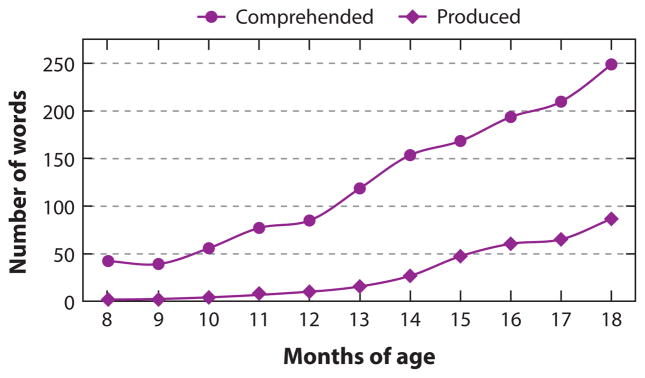
Autism is a developmental disability characterized by atypical social interaction, interests or body movements, and communication. Our review examines the empirical status of three communication phenomena believed to be unique to autism: pronoun reversal (using the pronoun you when the pronoun I is intended, and vice versa), echolalia (repeating what someone has said), and a reduced or even reversed production-comprehension lag (a reduction or reversal of the well-established finding that speakers produce less sophisticated language than they can comprehend). Each of these three phenomena has been claimed to be unique to autism; therefore, each has been proposed to be diagnostic of autism, and each has been interpreted in autism-centric ways (psychoanalytic interpretations of pronoun reversal, behaviorist interpretations of echolalia, and clinical lore about the production-comprehension lag). However, as our review demonstrates, none of these three phenomena is in fact unique to autism; none can or should serve as diagnostic of autism, and all call into question unwarranted assumptions about autistic persons and their language development and use.
Keywords: autism; behaviorism; echolalia; expressive language; language comprehension; language development; language production; pronoun reversal; psychoanalysis; receptive language.
Figures
References
-
- APA (American Psychiatric Association) Diagnostic and Statistical Manual of Mental Disorders. 3 Washington, DC: APA; 1980.
-
- APA. Diagnostic and Statistical Manual of Mental Disorders. 3. Washington, DC: APA; 1987. rev.
-
- APA. Diagnostic and Statistical Manual of Mental Disorders. 4 Washington, DC: APA; 1994.
Grants and funding
LinkOut - more resources
Full Text Sources
Other Literature Sources
Miscellaneous