


5-fluorouracil causes endothelial cell senescence: potential protective role of glucagon-like peptide 1
- PMID: 28127745
- PMCID: PMC5647192
- DOI: 10.1111/bph.13725
5-fluorouracil causes endothelial cell senescence: potential protective role of glucagon-like peptide 1
Abstract
Background and purpose: 5-fluorouracil (5FU) and its prodrug, capecitabine, can damage endothelial cells, whilst endothelial integrity is preserved by glucagon-like peptide 1 (GLP-1). Here, we studied the effect of 5FU on endothelial senescence and whether GLP-1 antagonizes it.
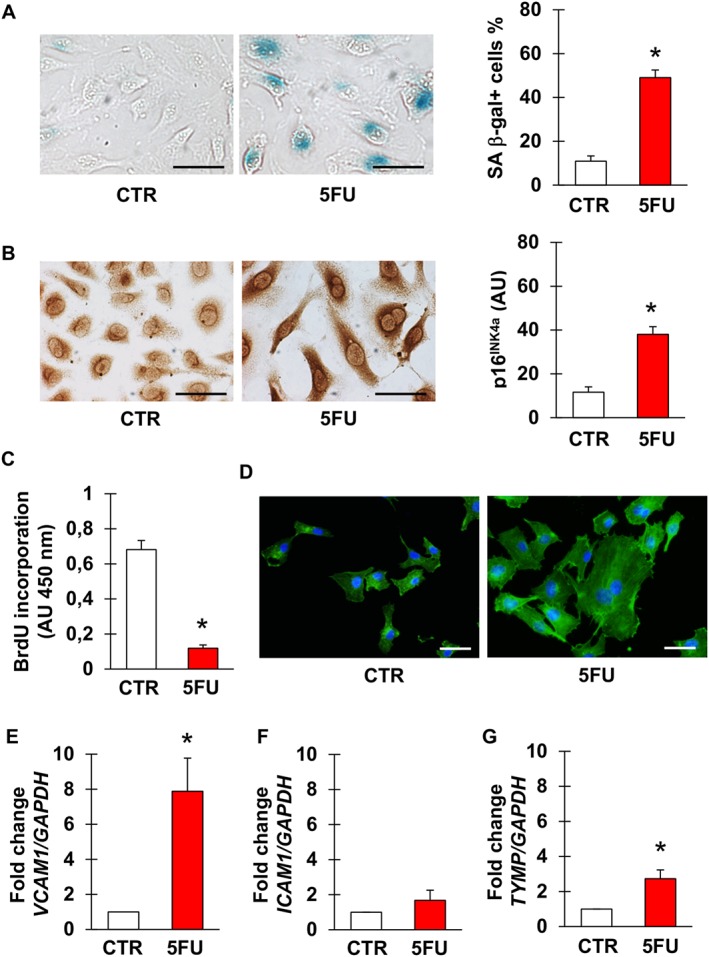
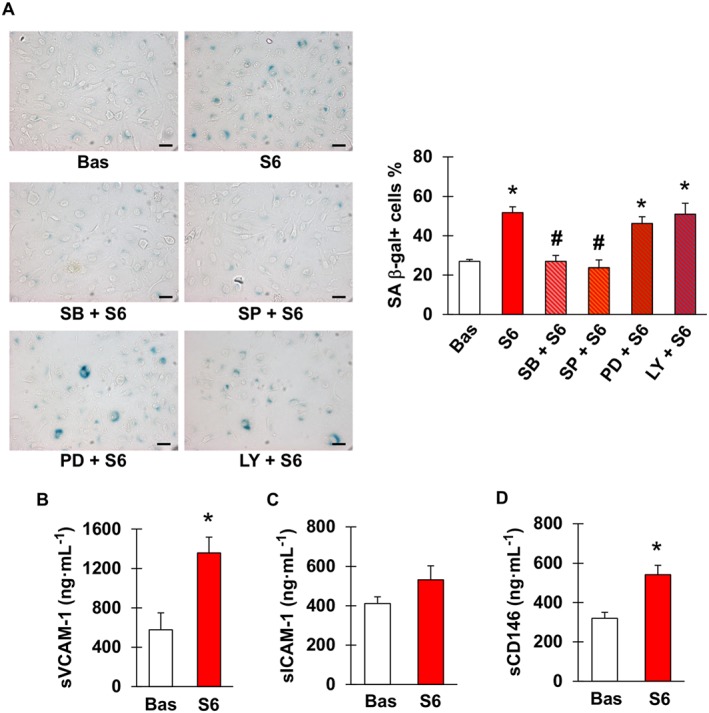
Experimental approach: EA.hy926 cells were exposed to 5FU or sera from patients taking capecitabine, with or without pre-incubation with GLP-1. Senescence was identified by expression of senescence-associated β-galactosidase and p16INK4a and reduced cell proliferation. Soluble vascular cell adhesion molecule-1 (sVCAM-1), soluble intercellular adhesion molecule-1 (sICAM-1) and CD146 (marker of endothelial injury) were measured by ELISA before and at completion of capecitabine chemotherapy. RT-PCR, western blotting, functional experiments with signalling inhibitors and ERK1/2 silencing were performed to characterize 5FU-induced phenotype and elucidate the pathways underlying 5FU and GLP-1 activity.
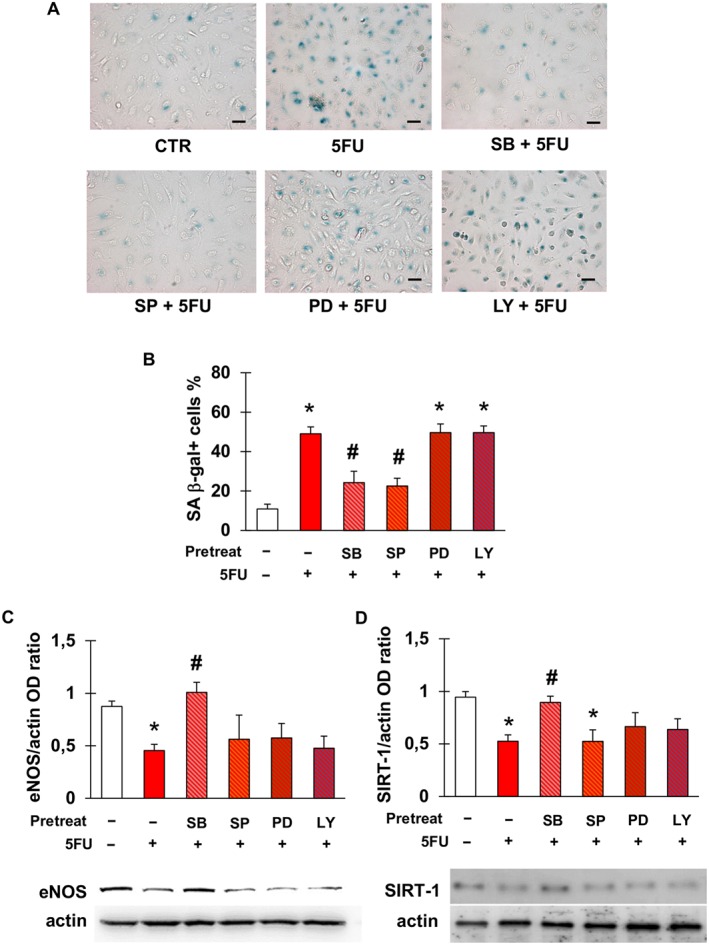
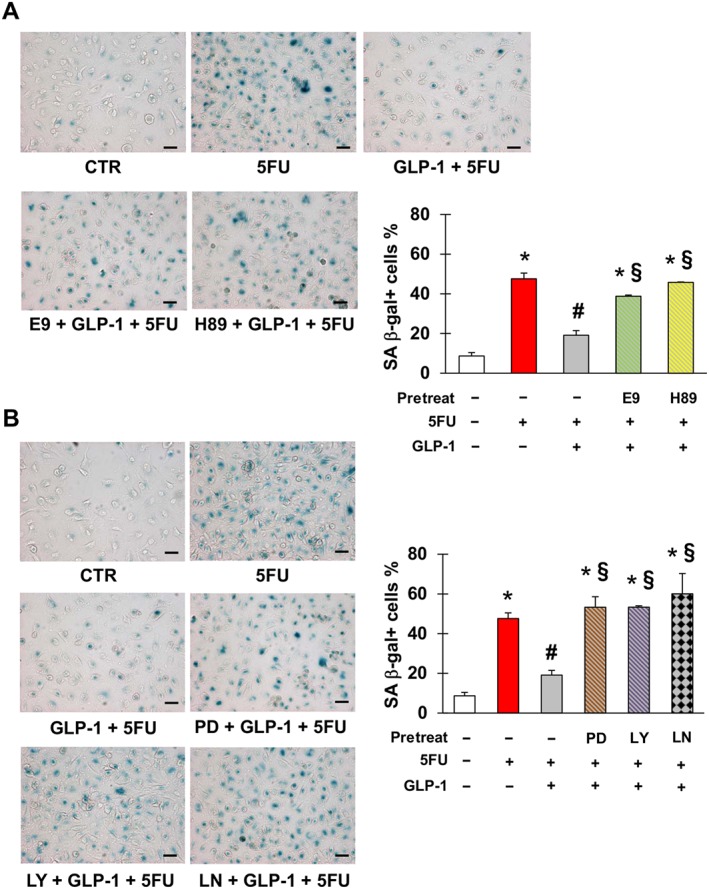
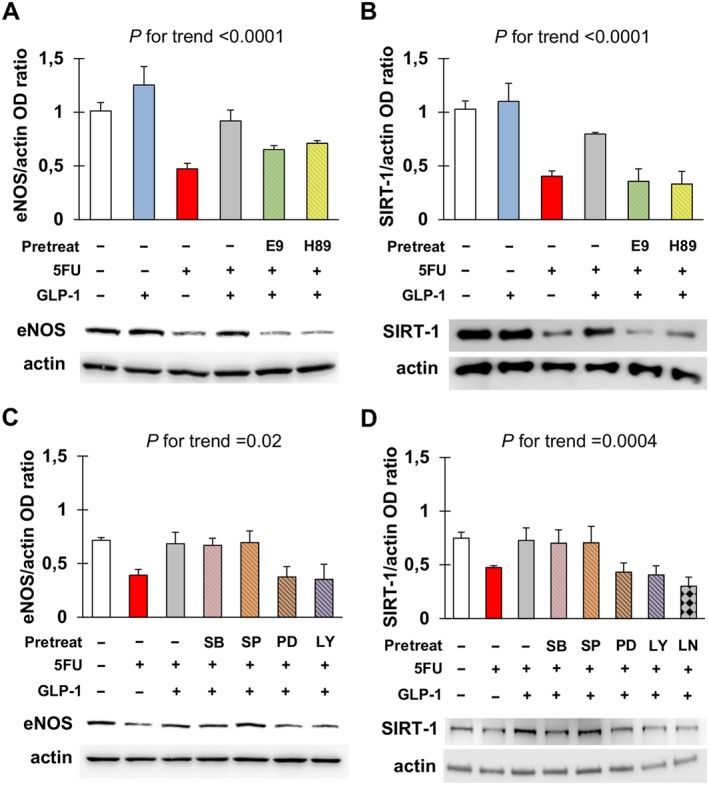
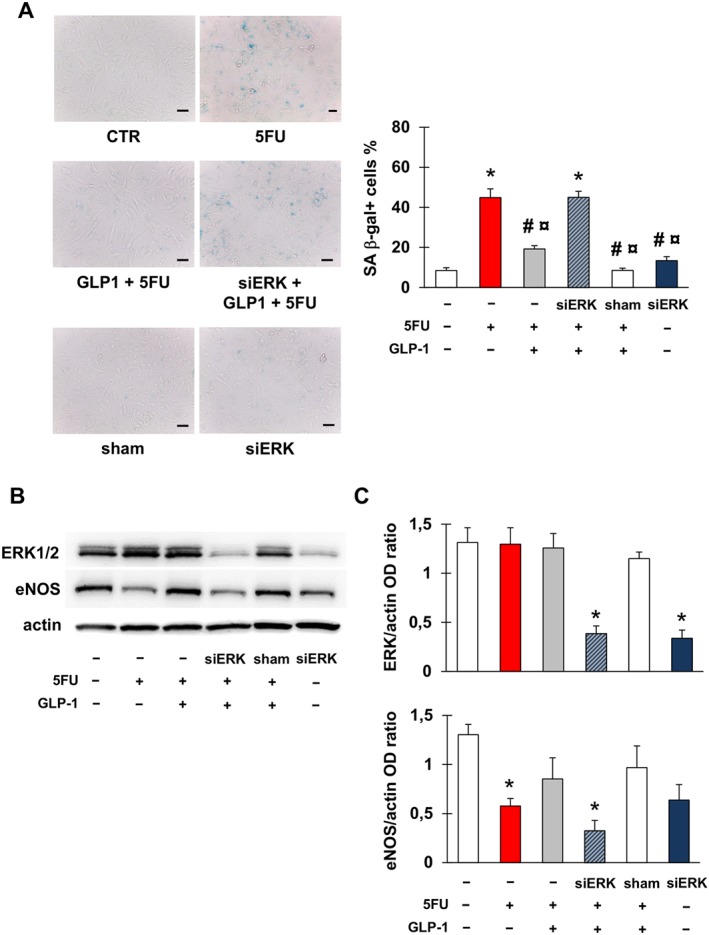
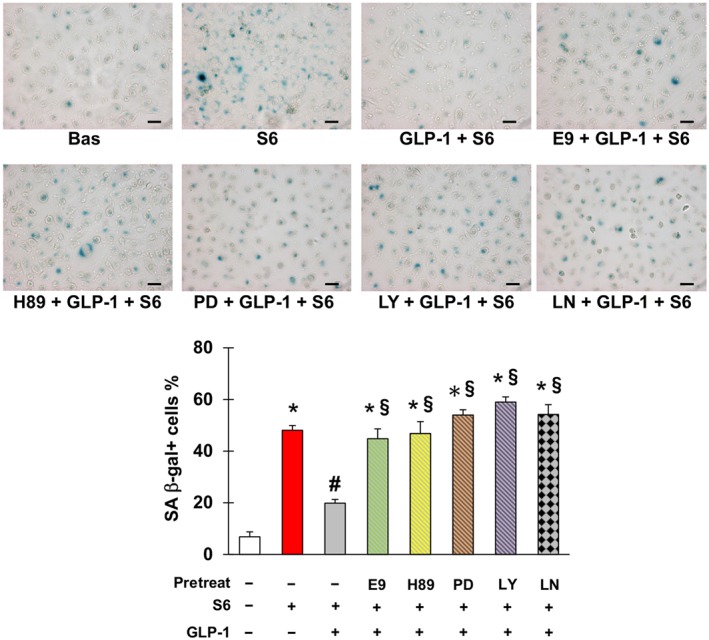
Key results: Both 5FU and sera from capecitabine-treated patients stimulated endothelial cell senescence. 5FU-elicited senescence occurred via activation of p38 and JNK, and was associated with decreased eNOS and SIRT-1 levels. Furthermore, 5FU up-regulated VCAM1 and TYMP (encodes enzyme activating capecitabine and 5FU), and sVCAM-1 and CD146 concentrations were higher after than before capecitabine chemotherapy. A non-significant trend for higher ICAM1 levels was also observed. GLP-1 counteracted 5FU-initiated senescence and reduced eNOS and SIRT-1 expression, this protection being mediated by GLP-1 receptor, ERK1/2 and, possibly, PKA and PI3K.
Conclusions and implications: 5FU causes endothelial cell senescence and dysfunction, which may contribute to its cardiovascular side effects. 5FU-triggered senescence was prevented by GLP-1, raising the possibility of using GLP-1 analogues and degradation inhibitors to treat 5FU and capecitabine vascular toxicity.
Linked articles: This article is part of a themed section on New Insights into Cardiotoxicity Caused by Chemotherapeutic Agents. To view the other articles in this section visit http://onlinelibrary.wiley.com/doi/10.1111/bph.v174.21/issuetoc.
© 2017 The British Pharmacological Society.
Figures
References
-
- Adamsen BL, Kravik KL, De Angelis PM (2011). DNA damage signaling in response to 5‐fluorouracil in three colorectal cancer cell lines with different mismatch repair and TP53 status. Int J Oncol 39: 673–682. - PubMed
-
- Azimzadeh O, Sievert W, Sarioglu H, Merl‐Pham J, Yentrapalli R, Bakshi MV et al. (2015). Integrative proteomics and targeted transcriptomics analyses in cardiac endothelial cells unravel mechanisms of long‐term radiation‐induced vascular dysfunction. J Proteome Res 14: 1203–1219. - PubMed
MeSH terms
Substances
LinkOut - more resources
Full Text Sources
Other Literature Sources
Research Materials
Miscellaneous
