


On the Fractality of Complex Networks: Covering Problem, Algorithms and Ahlfors Regularity
- PMID: 28128289
- PMCID: PMC5269725
- DOI: 10.1038/srep41385
On the Fractality of Complex Networks: Covering Problem, Algorithms and Ahlfors Regularity
Abstract
In this paper, we revisit the fractality of complex network by investigating three dimensions with respect to minimum box-covering, minimum ball-covering and average volume of balls. The first two dimensions are calculated through the minimum box-covering problem and minimum ball-covering problem. For minimum ball-covering problem, we prove its NP-completeness and propose several heuristic algorithms on its feasible solution, and we also compare the performance of these algorithms. For the third dimension, we introduce the random ball-volume algorithm. We introduce the notion of Ahlfors regularity of networks and prove that above three dimensions are the same if networks are Ahlfors regular. We also provide a class of networks satisfying Ahlfors regularity.
Conflict of interest statement
The authors declare no competing financial interests.
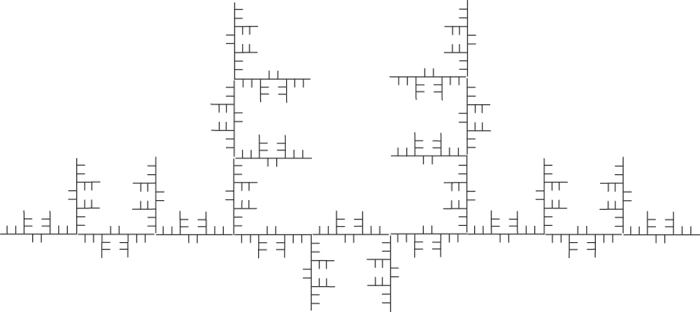
Figures




References
-
- Watts D. J. & Strogatz S. H. Collective dynamics of ‘small-world’ networks. Nature 393, 440–442 (1998). - PubMed
-
- Barabási A. L. & Albert R. Emergence of scaling in random networks. Science 286, 509–512 (1999). - PubMed
-
- Newman M. E. J. The structure and function of complex networks. Siam Review 45, 167–256 (2003).
-
- Newman M. E. J. Networks: An Introduction. Oxford, Oxford University Press (2010).
-
- Song C., Havlin S. & Makse H. A. Self-similarity of complex networks. Nature 433, 392–395 (2005). - PubMed
Publication types
LinkOut - more resources
Full Text Sources
Other Literature Sources
Miscellaneous
