


Clinical Proof of Concept for a Novel Hepatocyte-Targeting GalNAc-siRNA Conjugate
- PMID: 28129130
- PMCID: PMC5363199
- DOI: 10.1016/j.ymthe.2016.10.019
Clinical Proof of Concept for a Novel Hepatocyte-Targeting GalNAc-siRNA Conjugate
Abstract
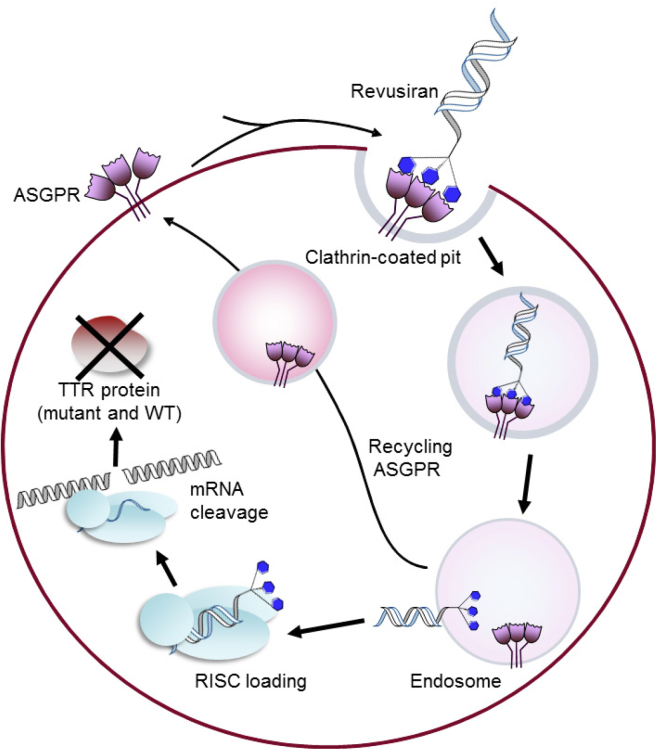
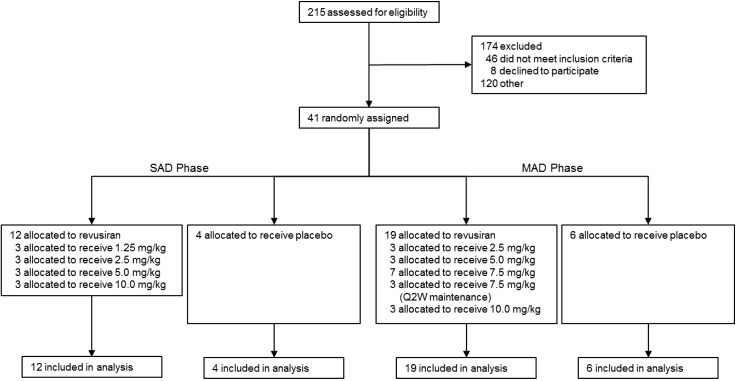
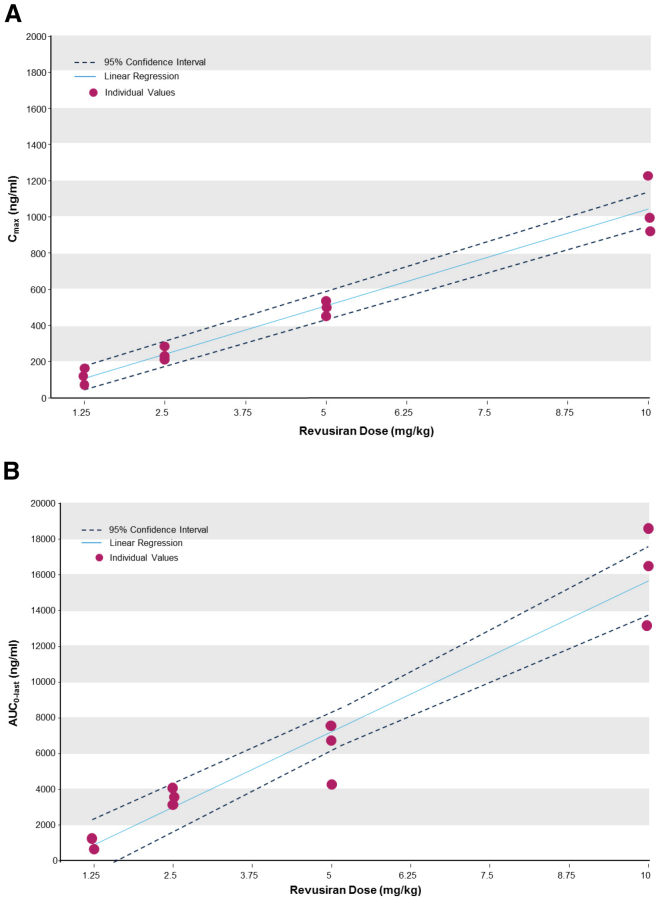
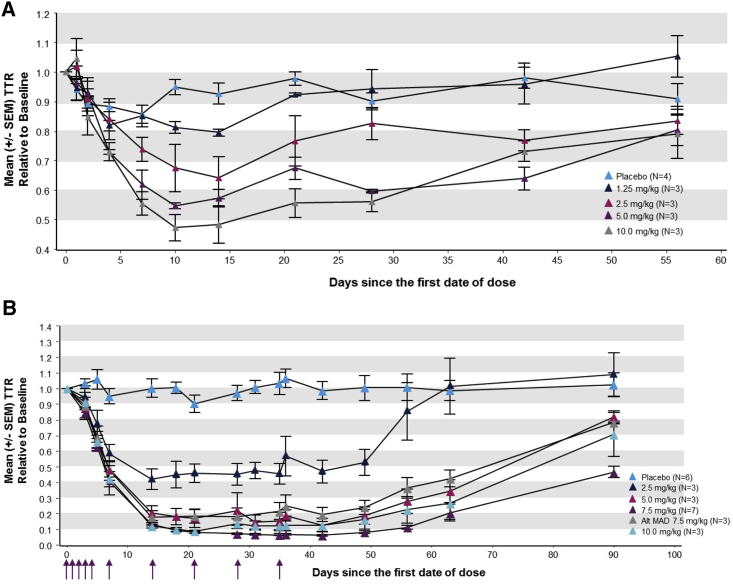
Advancement of RNAi-based therapeutics depends on effective delivery to the site of protein synthesis. Although intravenously administered, multi-component delivery vehicles have enabled small interfering RNA (siRNA) delivery and progression into clinical development, advances of single-component, systemic siRNA delivery have been challenging. In pre-clinical models, attachment of a triantennary N-acetylgalactosamine (GalNAc) ligand to an siRNA mediates hepatocyte uptake via the asialoglycoprotein receptor enabling RNAi-mediated gene silencing. In this phase 1 study, we assessed translation of this delivery approach by evaluating the safety, tolerability, pharmacokinetics, and pharmacodynamics of a GalNAc-siRNA conjugate, revusiran, targeting transthyretin (TTR). Subjects received a placebo or ascending doses of revusiran subcutaneously ranging from 1.25-10 mg/kg in the single and 2.5-10 mg/kg in the multiple ascending dose phases. Revusiran was generally well tolerated, with transient, mild to moderate injection site reactions the most common treatment-emergent adverse events. Doses of 2.5-10 mg/kg revusiran elicited a significant reduction of serum TTR versus the placebo (p < 0.01), with mean TTR reductions of approximately 90% observed with multiple dosing. These results demonstrate translation of this novel delivery platform, enabling clinical development of subcutaneously administered GalNAc-siRNAs for liver-based diseases.
Keywords: GalNAc-siRNA; RNAi; asialoglycoprotein receptor; revusiran.
Copyright © 2017 The American Society of Gene and Cell Therapy. Published by Elsevier Inc. All rights reserved.
Figures
References
-
- Dykxhoorn D.M., Novina C.D., Sharp P.A. Killing the messenger: short RNAs that silence gene expression. Nat. Rev. Mol. Cell Biol. 2003;4:457–467. - PubMed
-
- Elbashir S.M., Harborth J., Lendeckel W., Yalcin A., Weber K., Tuschl T. Duplexes of 21-nucleotide RNAs mediate RNA interference in cultured mammalian cells. Nature. 2001;411:494–498. - PubMed
-
- Coelho T., Adams D., Silva A., Lozeron P., Hawkins P.N., Mant T., Perez J., Chiesa J., Warrington S., Tranter E. Safety and efficacy of RNAi therapy for transthyretin amyloidosis. N. Engl. J. Med. 2013;369:819–829. - PubMed
-
- Wu J., Nantz M.H., Zern M.A. Targeting hepatocytes for drug and gene delivery: emerging novel approaches and applications. Front. Biosci. 2002;7:d717–d725. - PubMed
Publication types
MeSH terms
Substances
LinkOut - more resources
Full Text Sources
Other Literature Sources
Research Materials
Miscellaneous
