


Genomic analysis of urogenital and rectal Neisseria meningitidis isolates reveals encapsulated hyperinvasive meningococci and coincident multidrug-resistant gonococci
- PMID: 28137933
- PMCID: PMC5574384
- DOI: 10.1136/sextrans-2016-052781
Genomic analysis of urogenital and rectal Neisseria meningitidis isolates reveals encapsulated hyperinvasive meningococci and coincident multidrug-resistant gonococci
Abstract
Objective: Invasive meningococcal disease (IMD) outbreaks in men who have sex with men (MSM) have been associated with meningococcal colonisation of the urethra and rectum, but little is known about this colonisation or co-colonisation with the closely related gonococcus. Whole genome sequencing (WGS) was employed to explore these phenomena.
Methods: Meningococci isolated from the urogenital tract and rectum (n=23) and coincident gonococci (n=14) were analysed by WGS along with contemporary meningococci from IMD (n=11). All isolates were obtained from hospital admissions in Brighton, UK, 2011-2013. Assembled WGS were deposited in the PubMLST/neisseria database (http://pubmlst.org/neisseria) and compared at genomic loci common to gonococci or meningococci.
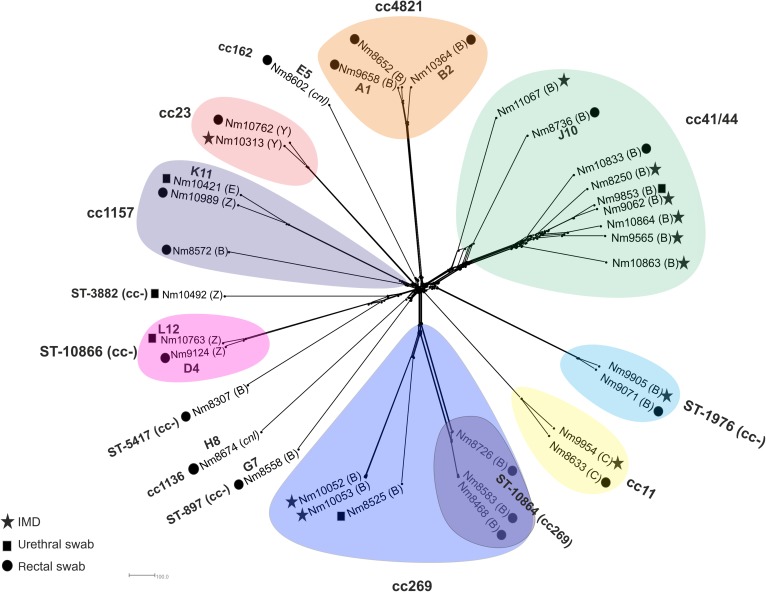
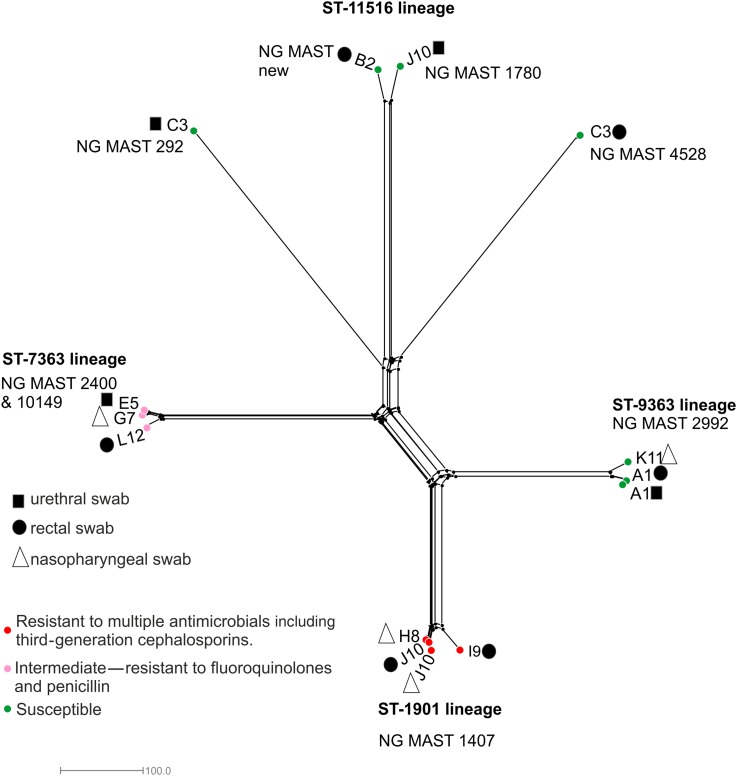
Results: As expected, most meningococci from IMD were encapsulated and belonged to hyperinvasive lineages. So too were meningococci found in the urogenital tract and rectum, contrasting to those asymptomatically carried in the nasopharynx where such meningococci are rare. Five hyperinvasive meningococcal lineages and four distinct gonococcal genotypes were recovered, including multiresistant ST-1901 (NG MAST-1407) gonococci.
Conclusions: These data were consistent with a predisposition for potentially virulent encapsulated hyperinvasive meningococci to colonise the urethra and rectum, which suggests their involvement in MSM IMD outbreaks. The coincidence of multiresistant gonococci raises wider public health concerns.
Keywords: INFECTIOUS DISEASES; MENINGITIS; NEISSERIA GONORRHOEA; NEISSERIA MENINGITIS.
Published by the BMJ Publishing Group Limited. For permission to use (where not already granted under a licence) please go to http://www.bmj.com/company/products-services/rights-and-licensing/.
Conflict of interest statement
Competing interests: None declared.
Figures
References
-
- Vieusseux G. Mémoire sur la maladie qui a regné a Genêve au printemps de 1805. J Med Chir Pharm 1806;11:163–82.
MeSH terms
Grants and funding
LinkOut - more resources
Full Text Sources
Other Literature Sources
Medical
Research Materials
