


Antibiotic susceptibility and molecular analysis of invasive Haemophilus influenzae in Canada, 2007 to 2014
- PMID: 28137937
- PMCID: PMC5890693
- DOI: 10.1093/jac/dkw565
Antibiotic susceptibility and molecular analysis of invasive Haemophilus influenzae in Canada, 2007 to 2014
Abstract
Background: Previously we studied the antibiotic susceptibility of invasive Haemophilus influenzae collected in Canada from 1990 to 2006 and characterized isolates by serotype, MLST and ftsI gene sequencing for significant PBP3 mutations.
Objectives: To provide an update based on isolates collected from 2007 to 2014.
Methods: A total of 882 case isolates were characterized by serotype using slide agglutination and PCR. MLST was carried out to determine ST. Isolates were tested for β-lactamase production, presence of significant PBP3 mutations and antibiotic susceptibility by disc diffusion against 14 antibiotics. MIC values of three antibiotics were determined for 316 isolates using microbroth dilution.
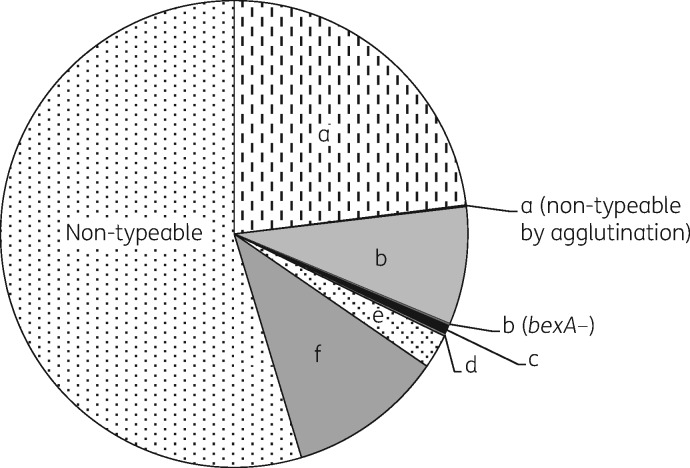
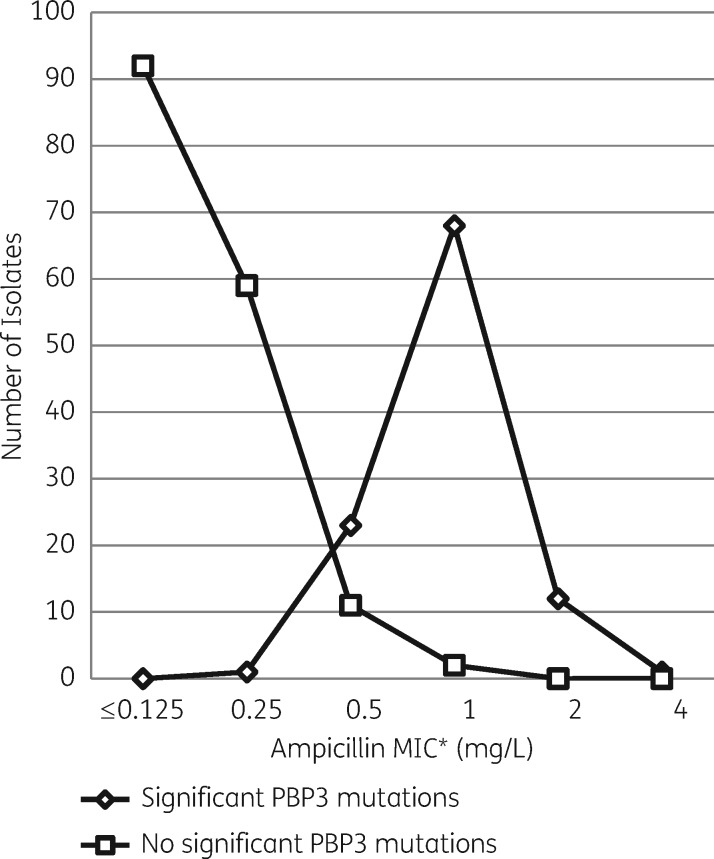
Results: Non-typeable H. influenzae accounted for 54.6% of the isolates and 45.4% were serotypeable, predominantly type a (23.1%), type b (8.3%) and type f (10.8%). The overall rate of ampicillin resistance due to β-lactamase production was 16.4% and increased from 13.5% in 2007-10 to 19% in 2011-14. Significant PBP3 mutations were identified in 129 isolates (14.6%) with 23 (2.6%) also producing β-lactamase. MLST identified related STs (ST-136, ST-14 and ST-367) associated exclusively with genetically β-lactamase-negative, ampicillin-resistant isolates and confirmed previously reported associations between significant PBP3 mutations and ST.
Conclusions: A significant increase in β-lactamase-producing isolates was observed from 2007 to 2014; the rate of significant PBP3 mutations has increased since previously reported and 52.5% of non-typeable H. influenzae now show resistance markers. Resistance to trimethoprim/sulfamethoxazole was common and no resistance to fluoroquinolones or third-generation cephalosporins was found.
© The Author 2017. Published by Oxford University Press on behalf of the British Society for Antimicrobial Chemotherapy. All rights reserved. For Permissions, please email: journals.permissions@oup.com.
Figures
References
-
- Watt JP, Wolfson LJ, O’Brien KL. et al. Burden of disease caused by Haemophilus influenzae type b in children younger than 5 years: global estimates. Lancet 2009; 394: 903–11. - PubMed
-
- Tsang RSW, Sill ML, Skinner SJ. et al. Characterization of invasive Haemophilus influenzae disease in Manitoba, Canada, 2000-2006: invasive disease due to non-type b strains. Clin Infect Dis 2007; 44: 1611–4. - PubMed
-
- Adam HJ, Richardson SE, Jamieson FB. et al. Changing epidemiology of invasive Haemophilus influenzae in Ontario, Canada: evidence for herd effects and strain replacement due to Hib vaccination. Vaccine 2010; 28: 4073–8. - PubMed
-
- Shuel M, Hoang L, Law DK. et al. Invasive Haemophilus influenzae in British Columbia: non-Hib and non-typeable strains causing disease in children and adults. Int J Infect Dis 2011; 15: e167–73. - PubMed
MeSH terms
Substances
Grants and funding
LinkOut - more resources
Full Text Sources
Other Literature Sources
Medical
Molecular Biology Databases
