


The Role of Efferocytosis in Atherosclerosis
- PMID: 28137963
- PMCID: PMC5302553
- DOI: 10.1161/CIRCULATIONAHA.116.025684
The Role of Efferocytosis in Atherosclerosis
Abstract
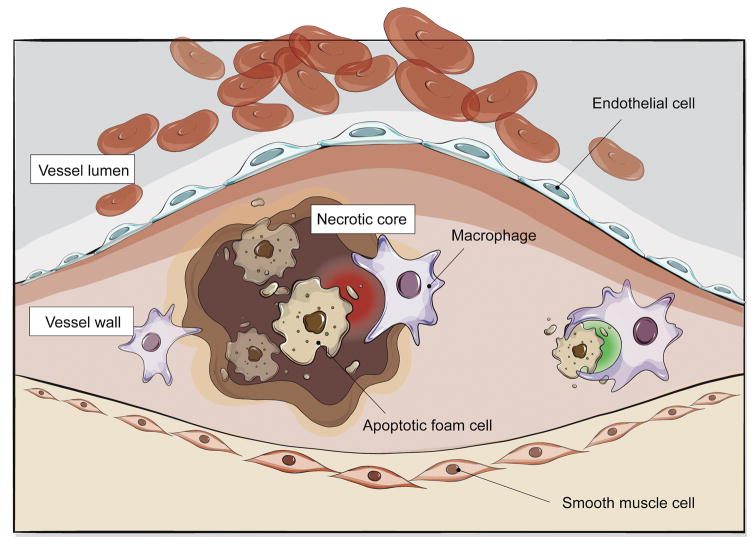
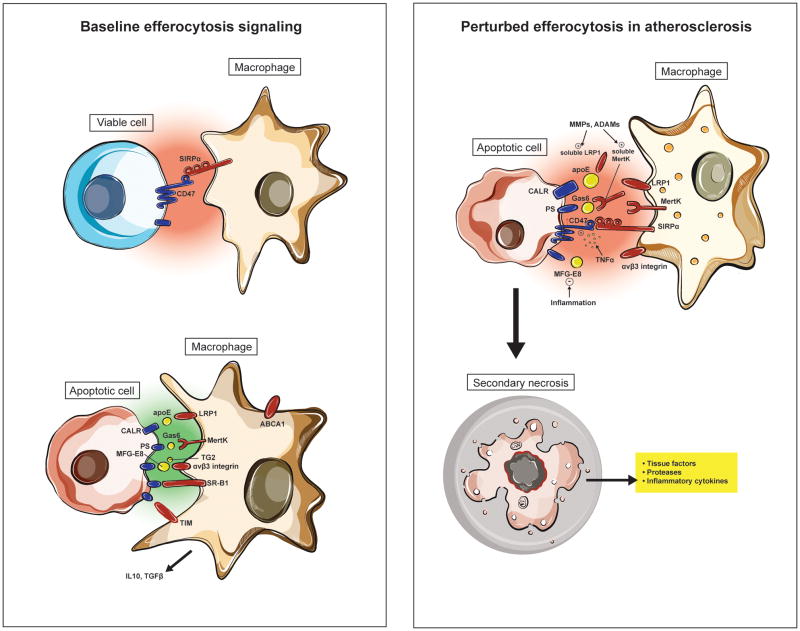
The necrotic core has long been a hallmark of the vulnerable atherosclerotic plaque. Although apoptotic cells are cleared quickly in almost all other tissue beds, their removal appears to be significantly impaired in the diseased blood vessel. Emerging evidence indicates that this phenomenon is caused by a defect in efferocytosis, the process by which apoptotic tissue is recognized for engulfment by phagocytic cells such as macrophages. Genetic and experimental data suggest that efferocytosis is impaired during atherogenesis caused by dysregulation of so-called eat me ligands, which govern the edibility of cells undergoing programmed cell death. The following is a summary of recent data indicating that efferocytosis is a major unappreciated driver of lesion expansion but also a reversible defect that can potentially be targeted as a means to prevent plaque progression.
Keywords: atherosclerosis; efferocytosis; macrophage; necrotic core; vascular biology.
© 2017 American Heart Association, Inc.
Figures
References
-
- Fadok VA, Voelker DR, Campbell PA, Cohen JJ, Bratton DL, Henson PM. Exposure of phosphatidylserine on the surface of apoptotic lymphocytes triggers specific recognition and removal by macrophages. J Immunol. 1992;148:2207–2216. - PubMed
-
- Ravichandran KS, Lorenz U. Engulfment of apoptotic cells: Signals for a good meal. Nat Rev Immunol. 2007;7:964–974. - PubMed
Publication types
MeSH terms
Grants and funding
LinkOut - more resources
Full Text Sources
Other Literature Sources
Medical
