


Survival following a diagnosis of heart failure in primary care
- PMID: 28137979
- PMCID: PMC6192063
- DOI: 10.1093/fampra/cmw145
Survival following a diagnosis of heart failure in primary care
Abstract
Background: Heart failure is a common long term condition affecting around 900 000 people in the UK and patients commonly present to primary care. The prognosis of patients with a code of heart failure in their primary care record is unknown.
Objective: The study sought to determine the overall survival rates for patients with heart failure in a primary care population from the time of diagnosis.
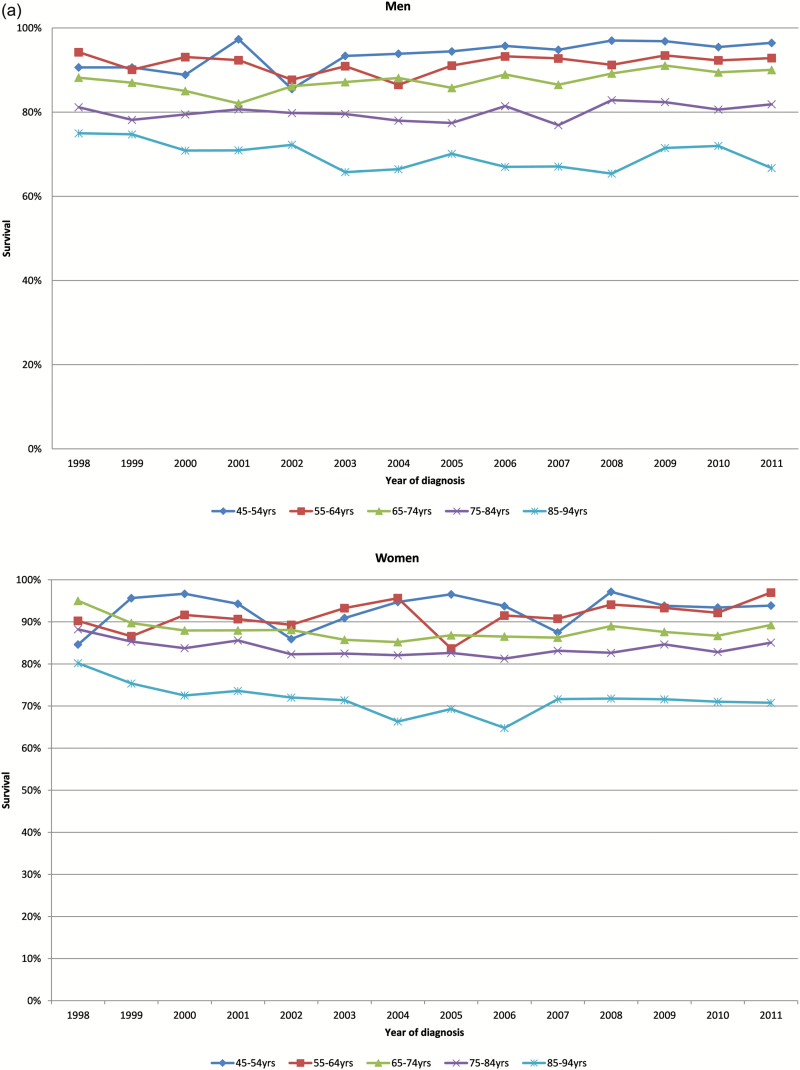
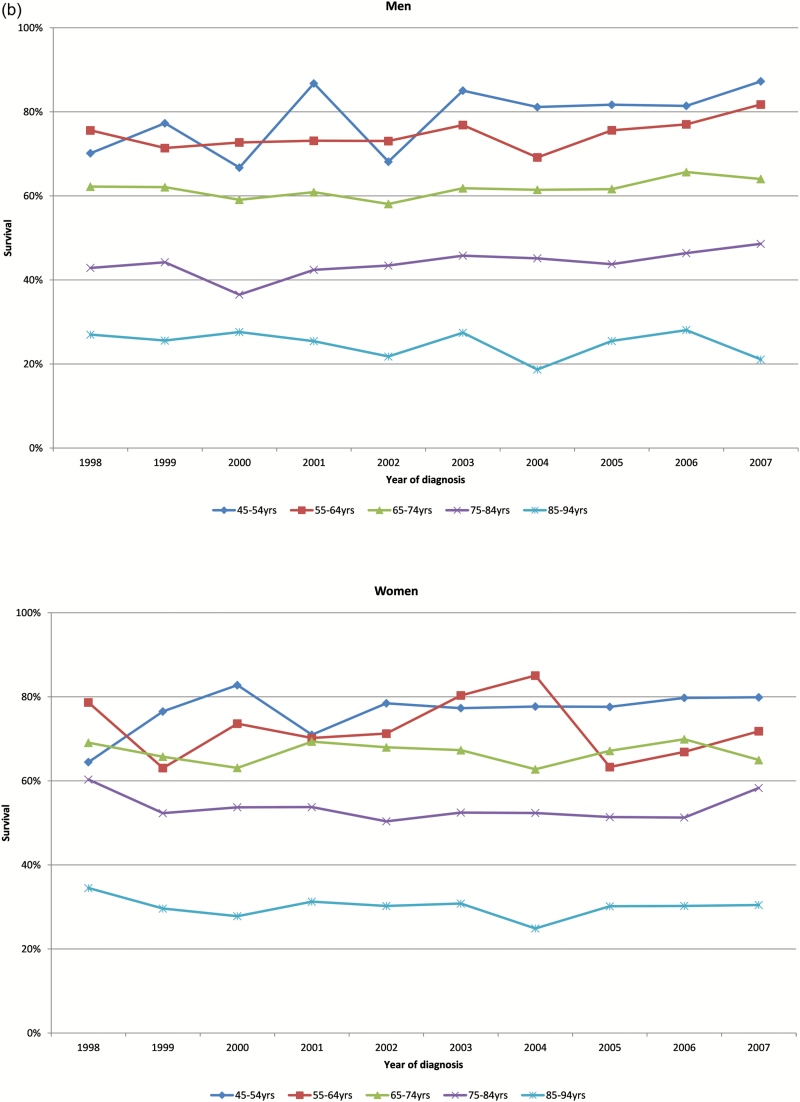
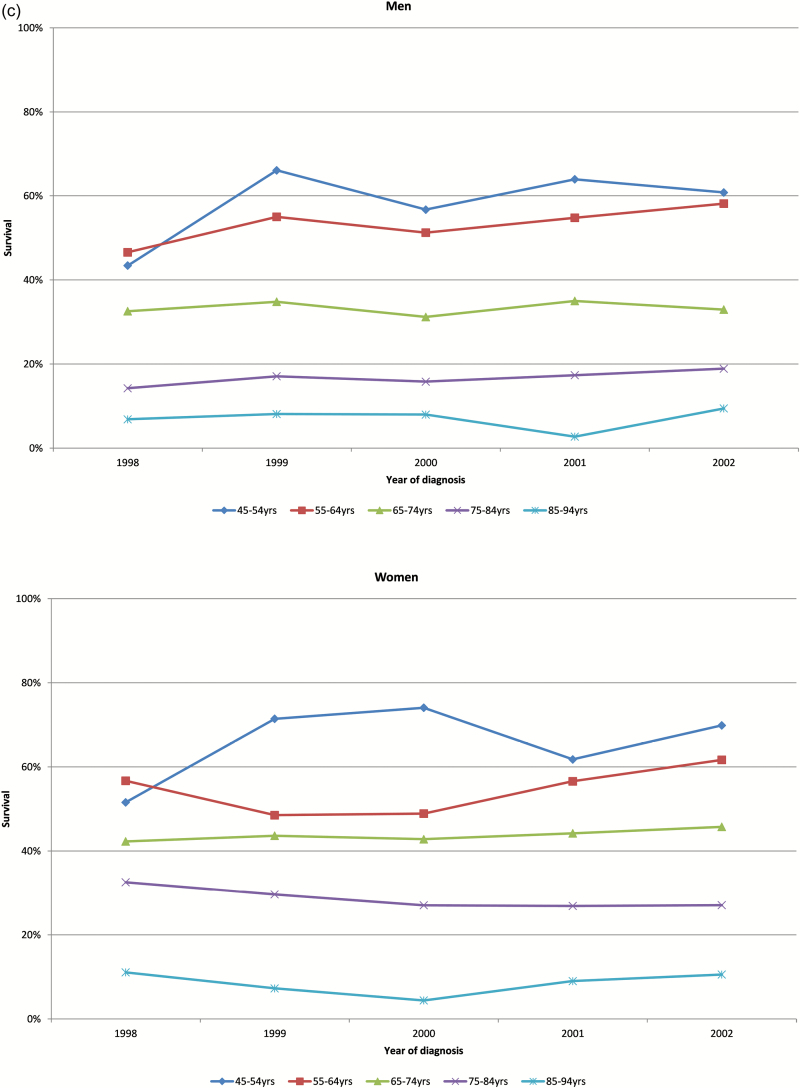
Methods: Survival analysis was carried out using UK primary care records from The Health Improvement Network (THIN) between 1 January 1998 and 31 December 2012. Patients age 45 or over with a first diagnostic label of heart failure were matched by age, sex and practice to people without heart failure. Outcome was death in the heart failure and no heart failure cohorts. Kaplan-Meier curves were used to compare survival. Age-specific survival rates at 1, 5 and 10 years were determined for men and women with heart failure. Survival rates by year of diagnosis and case definition were also calculated.
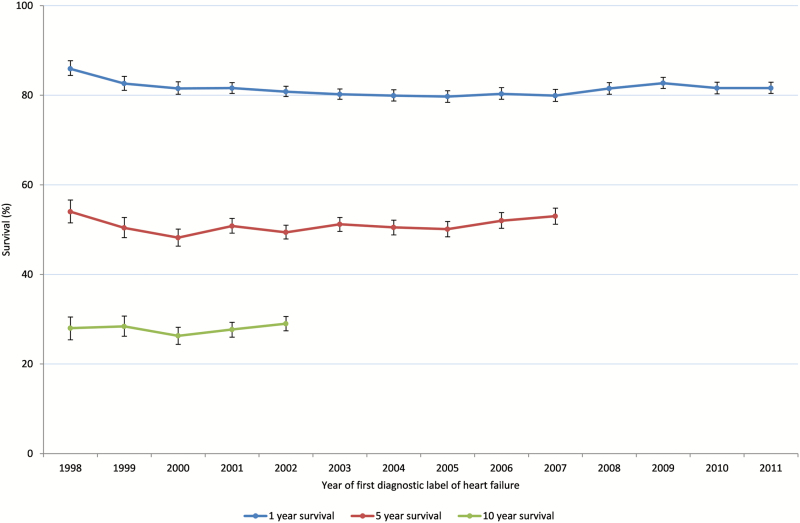
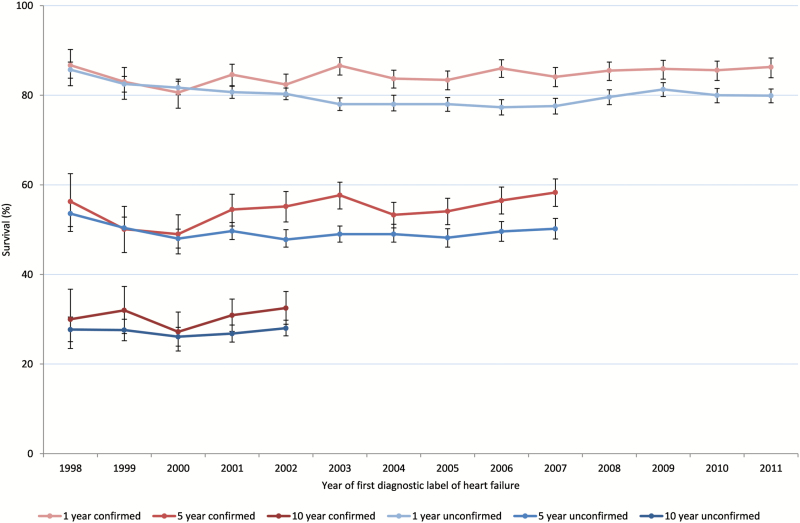
Results: During the study period, 54313 patients had a first diagnostic code of heart failure. Overall survival rates for the heart failure group were 81.3% (95%CI 80.9-81.6), 51.5% (95%CI 51.0-52.0) and 29.5% (95%CI 28.9-30.2) at 1, 5 and 10 years respectively and did not change over time.
Conclusions: In a primary care population, the survival of patients diagnosed with heart failure did not improved over time. Further research is needed to explain these trends and to find strategies to improve outlook.
Keywords: Community; heart failure; primary care; prognosis; survival.
© The Author 2017. Published by Oxford University Press.
Figures
Comment in
-
Reply to comments on 'Taylor et al., Survival following a diagnosis of heart failure inprimary care'.Fam Pract. 2017 Aug 1;34(4):500-501. doi: 10.1093/fampra/cmx024. Fam Pract. 2017. PMID: 28383725 No abstract available.
-
Reply to Forsyth et al., commenting on our paper 'Survival following a diagnosis of heart failure in primary care'.Fam Pract. 2017 Aug 1;34(4):502-503. doi: 10.1093/fampra/cmx040. Fam Pract. 2017. PMID: 28854675 No abstract available.
References
-
- Braunwald E. The war against heart failure: the Lancet lecture. Lancet 2015; 385: 812–24. - PubMed
-
- Stewart S, Jenkins A, Buchan S, et al. The current cost of heart failure to the National Health Service in the UK. Eur J Heart Fail 2002; 4(3): 361–71. - PubMed
-
- Stewart S, MacIntyre K, Hole DJ, et al. More ‘malignant’ than cancer? Five-year survival following a first admission for heart failure. Eur J Heart Fail 2001; 3(3): 315–22. - PubMed
MeSH terms
Grants and funding
LinkOut - more resources
Full Text Sources
Other Literature Sources
Medical
