


doi: 10.1038/ng.3779.
SWI/SNF complex in cancer
Affiliations
- PMID: 28138149
- PMCID: PMC5617137
- DOI: 10.1038/ng.3779
Item in Clipboard
SWI/SNF complex in cancer
Nat Genet.
.
Abstract
Four studies in this issue report new mechanisms underlying the function of the chromatin remodeling SWI/SNF complex in controlling gene expression and suppressing tumor development, providing valuable insights into the treatment of cancers harboring mutations in genes encoding SWI/SNF complex subunits.
Figures
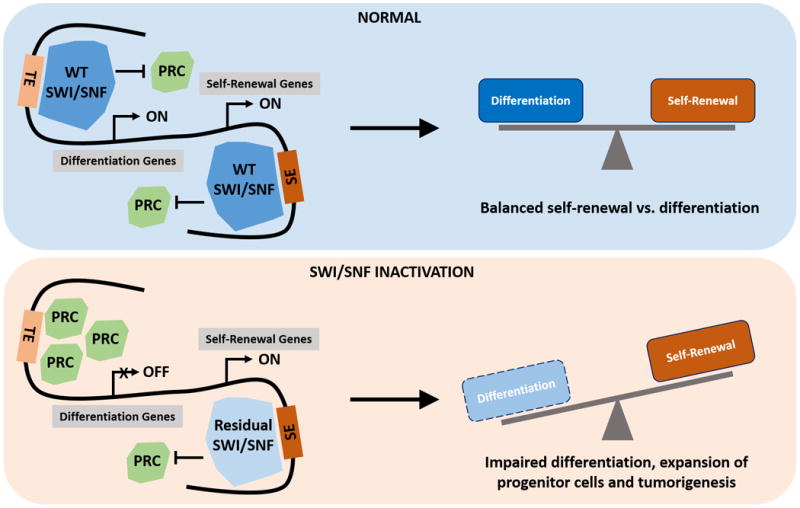
Inactivating mutations/deletions of SWI/SNF subunits cause defective complex assembly and failure to oppose PRC1/2 at promoters and typical enhancers (TE) of genes involved in differentiation. The residual functional SWI/SNF complexes are preferentially localized to super-enhancers (SE) of genes maintaining cell identity. The resulting imbalance between differentiation vs. self-renewal promotes tumorigenesis.
References
-
- Stern M, Jensen R, Herskowitz I. Five SWI genes are required for expression of the HO gene in yeast. J Mol Biol. 1984;178:853–868. - PubMed
-
- Kwon H, Imbalzano AN, Khavari PA, Kingston RE, Green MR. Nucleosome disruption and enhancement of activator binding by a human SW1/SNF complex. Nature. 1994;370:477–481. - PubMed
MeSH terms
Substances
Grants and funding
LinkOut - more resources
Full Text Sources
Other Literature Sources
