. 2017 Jan 31:7:41882.
doi: 10.1038/srep41882.

The β and γ subunits play distinct functional roles in the α2βγ heterotetramer of human NAD-dependent isocitrate dehydrogenase

Affiliations

The β and γ subunits play distinct functional roles in the α2βγ heterotetramer of human NAD-dependent isocitrate dehydrogenase

Tengfei Ma et al. Sci Rep. .

Abstract

Human NAD-dependent isocitrate dehydrogenase existing as the α2βγ heterotetramer, catalyzes the decarboxylation of isocitrate into α-ketoglutarate in the Krebs cycle, and is allosterically regulated by citrate, ADP and ATP. To explore the functional roles of the regulatory β and γ subunits, we systematically characterized the enzymatic properties of the holoenzyme and the composing αβ and αγ heterodimers in the absence and presence of regulators. The biochemical and mutagenesis data show that αβ and αγ alone have considerable basal activity but the full activity of α2βγ requires the assembly and cooperative function of both heterodimers. α2βγ and αγ can be activated by citrate or/and ADP, whereas αβ cannot. The binding of citrate or/and ADP decreases the S0.5,isocitrate and thus enhances the catalytic efficiencies of the enzymes, and the two activators can act independently or synergistically. Moreover, ATP can activate α2βγ and αγ at low concentration and inhibit the enzymes at high concentration, but has only inhibitory effect on αβ. Furthermore, the allosteric activation of α2βγ is through the γ subunit not the β subunit. These results demonstrate that the γ subunit plays regulatory role to activate the holoenzyme, and the β subunit the structural role to facilitate the assembly of the holoenzyme.


Conflict of interest statement

The authors declare no competing financial interests.

Figures
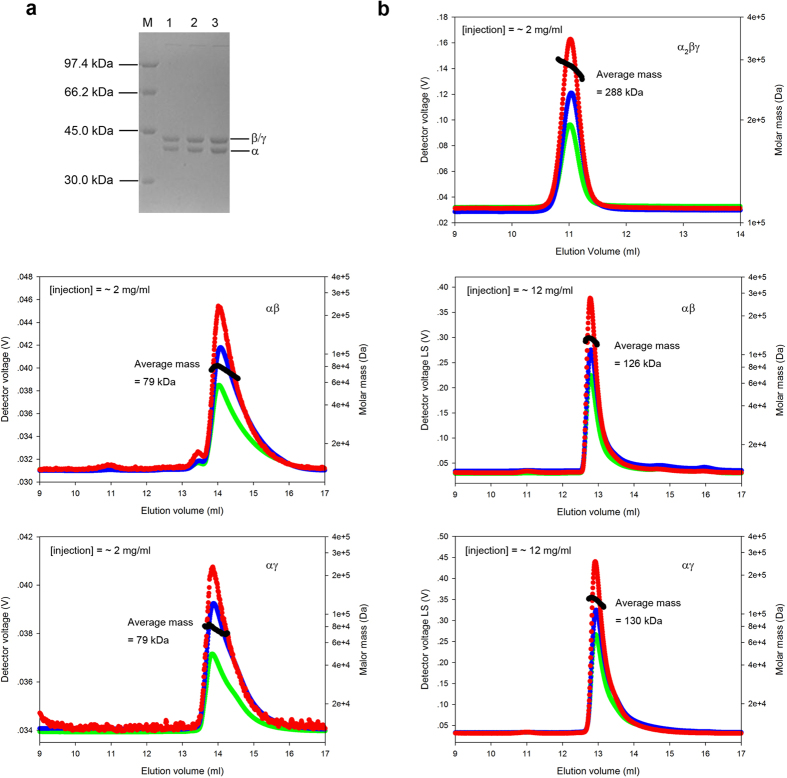
Figure 1
Figure 1. SDS-PAGE and SEC-MALS analyses of the α2βγ heterotetramer and the αβ and αγ heterodimers of human NAD-IDH.
(a) SDS-PAGE (12%) analyses of the α2βγ heterotetramer and the αβ and αγ heterodimers with Coomassie blue staining. M, molecular mass standards; lane 1, the α2βγ heterotetramer; lane 2, the αβ heterodimer; lane 3, the αγ heterodimer. The upper band represents the β or/and γ subunits (39 kDa), and the lower band represents the α subunit (37 kDa). The ratio of the catalytic subunit and regulatory subunit(s) in all three samples is 1:1. (b) SEC-MALS analyses of the α2βγ, αβ and αγ proteins. Chromatograms show the readings from the light scattering (red) at 90°, refractive index (blue), and UV (green) detectors. The left and right vertical axes represent the light scattering detector reading and the molecular mass. The black curve represents the calculated molecular mass. The αβ and αγ proteins show an elution peak at about 14 ml corresponding to an average molecular mass of about 79 kDa at the injection protein concentration of 2 mg/ml, and an elution peak at about 13 ml corresponding to an average molecular mass of about 130 kDa at the injection protein concentration of 12 mg/ml. The α2βγ protein shows an elution peak at about 11 ml corresponding to an average molecular mass of about 288 kDa at the injection protein concentration of 2 mg/ml.
Figure 2
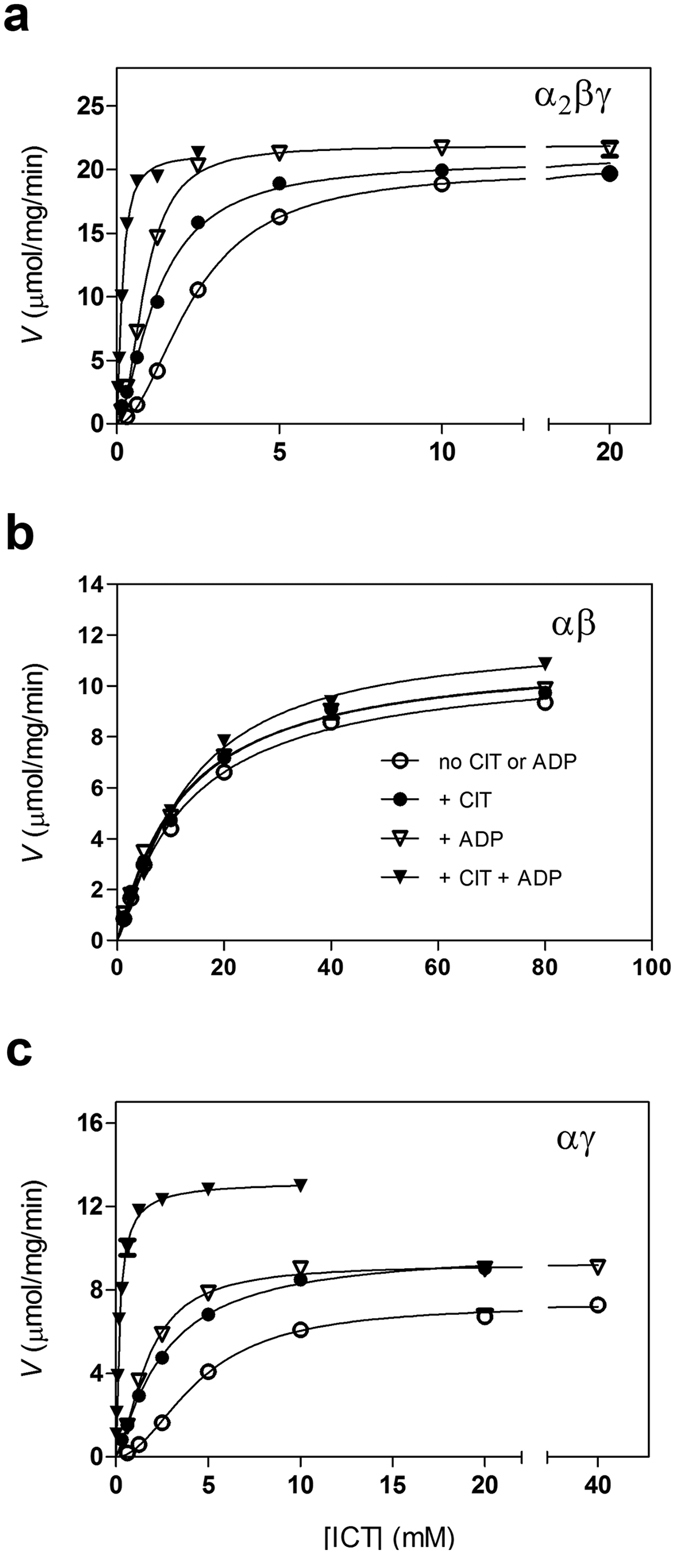
Figure 2. Saturation curves of the α2βγ heterotetramer and the αβ and αγ heterodimers for isocitrate in the absence and presence of positive regulator(s).
(a) Saturation curves of the α2βγ enzyme. (b) Saturation curves of the αβ enzyme. (c) Saturation curves of the αγ enzyme. The activities of the α2βγ and αγ enzymes were measured at the standard conditions (33 mM Tris-acetate, pH 7.4, 2 mM MnCl2, and 3.2 mM NAD) with varied concentration of ICT in the absence or presence of 1 mM CIT or/and 1 mM ADP. The activity of the αβ enzyme was measured at the standard conditions but with higher concentration of Mn2 + (50 mM). The derived Vmax, S0.5 and kcat are listed in Tables 2 and 3.
Figure 3
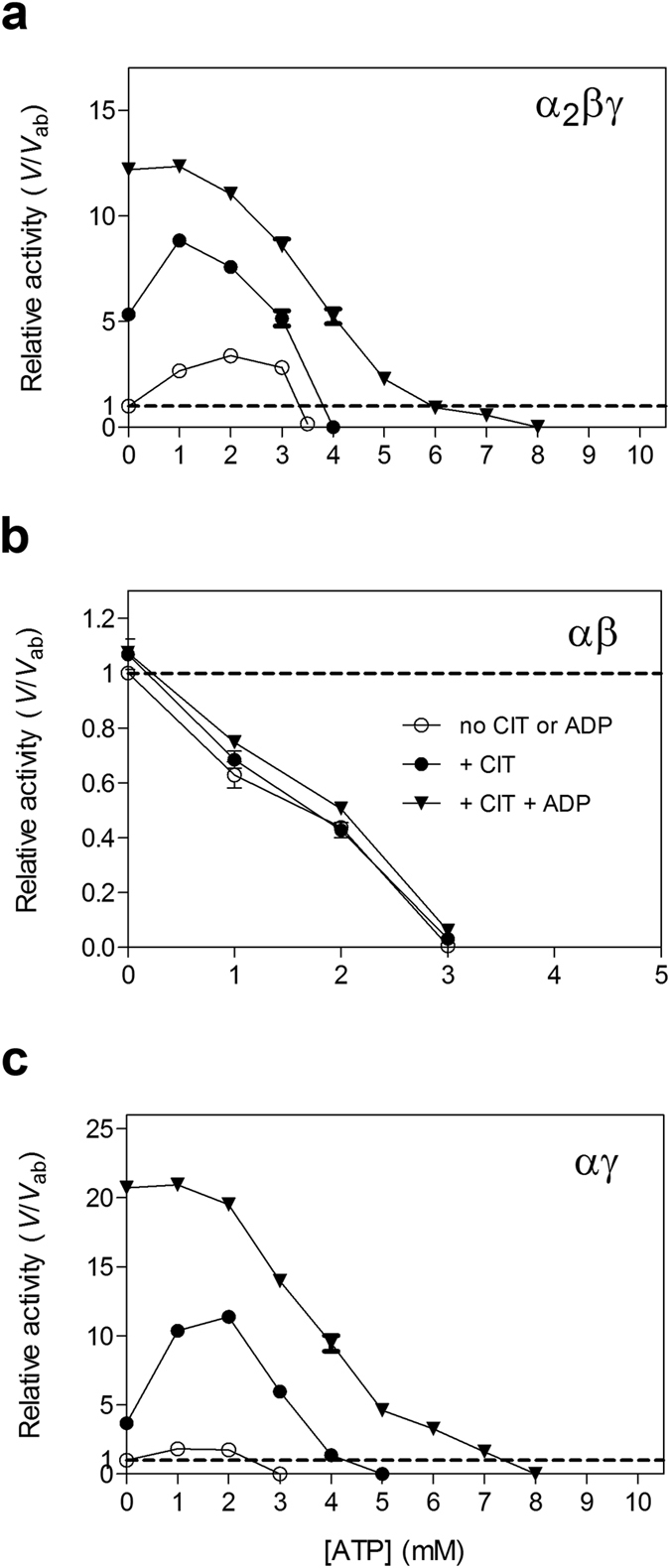
Figure 3. Activation and inhibition effects of ATP.
(a) The relative activity of the α2βγ enzyme vs. the concentration of ATP in the absence or presence of positive regulator(s). (b) The relative activity of the αβ enzyme vs. the concentration of ATP in the absence or presence of positive regulator(s). (c) The relative activity of the αγ enzyme vs. the concentration of ATP in the absence or presence of positive regulator(s). The activities in the absence of any regulators (Vab) are defined as 1 and indicated by dashed lines. The activities were measured at the standard conditions with a subsaturating concentration of ICT (0.6 mM for the α2βγ and αγ enzymes and 2 mM for the αβ enzyme) in the absence or presence of 1 mM CIT or/and 1 mM ADP and varied concentration of ATP (0–10 mM).

References

    1. McAlister-Henn L. Ligand binding and structural changes associated with allostery in yeast NAD(+)−specific isocitrate dehydrogenase. Arch Biochem Biophys 519, 112–117 (2012). - PMC - PubMed
    1. Ehrlich R. S. & Colman R. Separation, recombination, and characterization of dissimilar subunits of the DPN-dependent isocitrate dehydrogenase from pig heart. J Biol Chem 258, 7079–7086 (1983). - PubMed
    1. Ehrlich R. S., Hayman S., Ramachandran N. & Colman R. Re-evaluation of molecular weight of pig heart NAD-specific isocitrate dehydrogenase. J Biol Chem 256, 10560–10564 (1981). - PubMed
    1. Ehrlich R. S. & Colman R. F. Interrelationships among nucleotide binding sites of pig heart NAD-dependent isocitrate dehydrogenase. J Biol Chem 257, 4769–4774 (1982). - PubMed
    1. Ramachandran N. & Colman R. F. Chemical characterization of distinct subunits of pig heart DPN-specific isocitrate dehydrogenase. J Biol Chem 255, 8859–8864 (1980). - PubMed

Publication types