


Alignment of Healthy Dietary Patterns and Environmental Sustainability: A Systematic Review
- PMID: 28140320
- PMCID: PMC5105037
- DOI: 10.3945/an.116.012567
Alignment of Healthy Dietary Patterns and Environmental Sustainability: A Systematic Review
Abstract
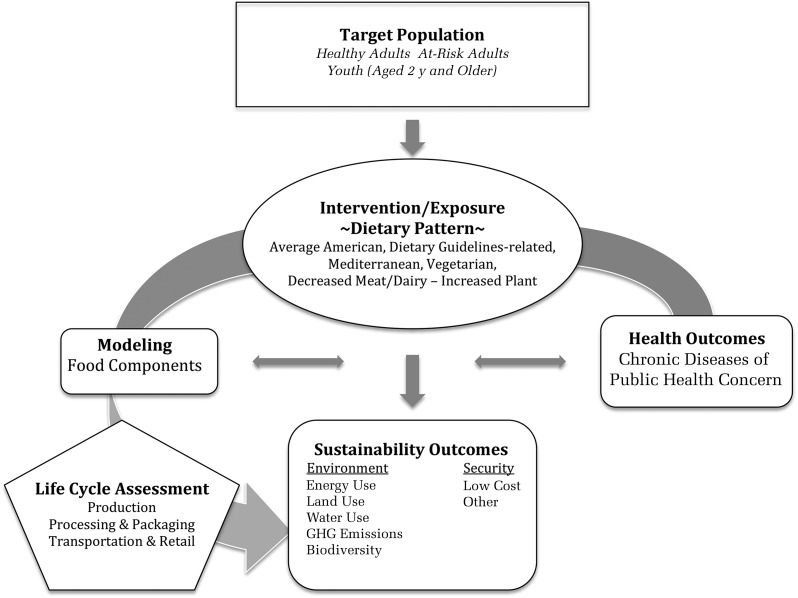
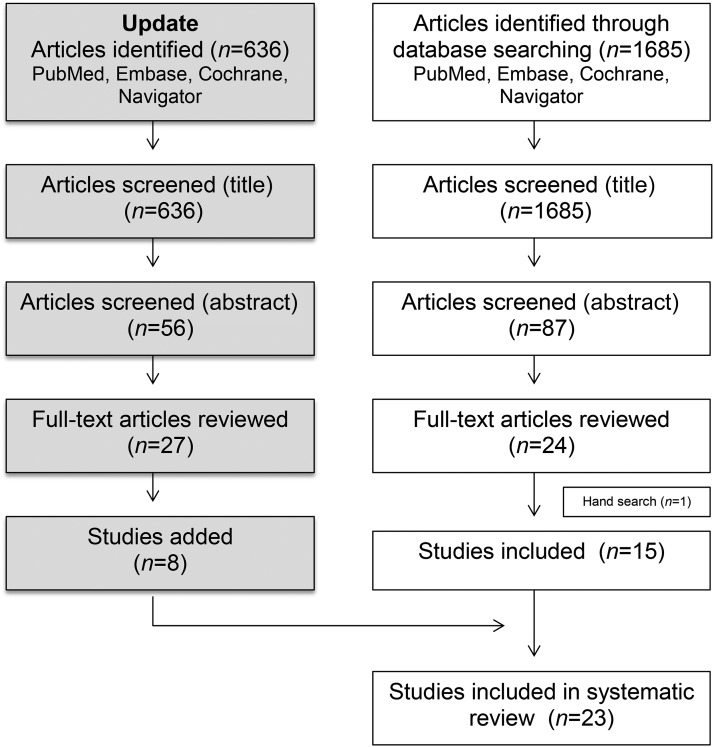
To support food security for current and future generations, there is a need to understand the relation between sustainable diets and the health of a population. In recent years, a number of studies have investigated and compared different dietary patterns to better understand which foods and eating patterns have less of an environmental impact while meeting nutritional needs and promoting health. This systematic review (SR) of population-level dietary patterns and food sustainability extends and updates the SR that was conducted by the 2015 US Dietary Guidelines Advisory Committee, an expert committee commissioned by the federal government to inform dietary guidance as it relates to the committee's original conclusions. In the original SR, 15 studies met the criteria for inclusion; since then, an additional 8 studies have been identified and included. The relations between dietary intake patterns and both health and environmental outcomes were compared across studies, with methodologies that included modeling, life cycle assessment, and land use analysis. Across studies, consistent evidence indicated that a dietary pattern higher in plant-based foods (e.g., vegetables, fruits, legumes, seeds, nuts, whole grains) and lower in animal-based foods (especially red meat), as well as lower in total energy, is both healthier and associated with a lesser impact on the environment. This dietary pattern differs from current average consumption patterns in the United States. Our updated SR confirms and strengthens the conclusions of the original US Dietary Guidelines Advisory Committee SR, which found that adherence to several well-characterized dietary patterns, including vegetarian (with variations) diets, dietary guidelines-related diets, Mediterranean-style diets, the Dietary Approaches to Stop Hypertension (DASH) diet, and other sustainable diet scenarios, promotes greater health and has a less negative impact on the environment than current average dietary intakes.
Keywords: dietary guidelines; dietary patterns; food security; life cycle assessment; sustainable diets; systematic review.
© 2016 American Society for Nutrition.
Conflict of interest statement
2 Author disclosures: ME Nelson, MW Hamm, FB Hu, SA Abrams, and TS Griffin, no conflicts of interest.
Figures
References
-
- Rome declaration on world food security and world food summit plan of action [monograph on the Internet]. Rome: Food and Agriculture Organization of the United Nations; 1996 [cited 2016 Jul 8]. Available from: http://www.fao.org/docrep/003/w3613e/w3613e00.htm.
-
- Burlingame B, Dernini S. Sustainable diets and biodiversity: directions and solutions for policy, research and action [monograph on the Internet]. Rome: Food and Agriculture Organization of the United Nations; 2010 [cited 2016 May 16]. Available from: http://www.fao.org/docrep/016/i3004e/i3004e.pdf.
-
- Steffen W, Richardson K, Rockström J, Cornell SE, Fetzer I, Bennett EM, Biggs R, Carpenter SR, de Vries W, de Wit CA, et al. . Planetary boundaries: guiding human development on a changing planet. Science 2015;347:1259855. - PubMed
-
- UNEP year book: emerging issues in our global environment 2012 [monograph on the Internet]. Nairobi (Kenya): United Nations Environment Programme; 2012 [cited 2016 Feb 7]. Available from: www.unep.org/yearbook/2012/.
Publication types
MeSH terms
LinkOut - more resources
Full Text Sources
Other Literature Sources
Research Materials
Miscellaneous
