


Systemic corticosteroid regimens for prevention of bronchopulmonary dysplasia in preterm infants
- PMID: 28141913
- PMCID: PMC6464844
- DOI: 10.1002/14651858.CD010941.pub2
Systemic corticosteroid regimens for prevention of bronchopulmonary dysplasia in preterm infants
Update in
-
Systemic corticosteroid regimens for prevention of bronchopulmonary dysplasia in preterm infants.Cochrane Database Syst Rev. 2023 Mar 13;3(3):CD010941. doi: 10.1002/14651858.CD010941.pub3. Cochrane Database Syst Rev. 2023. PMID: 36912887 Free PMC article.
Abstract
Background: Cochrane systematic reviews show that systemic postnatal corticosteroids reduce the risk of bronchopulmonary dysplasia (BPD) in preterm infants. However, corticosteroids have also been associated with an increased risk of neurodevelopmental impairment. It is unknown whether these beneficial and adverse effects are modulated by differences in corticosteroid treatment regimens.
Objectives: To assess the effects of different corticosteroid treatment regimens on mortality, pulmonary morbidity, and neurodevelopmental outcome in very low birth weight (VLBW) infants.
Search methods: We used the standard search strategy of the Cochrane Neonatal Review group to search the Cochrane Central Register of Controlled Trials (CENTRAL; 2016, Issue 2) in the Cochrane Library (searched 21 March 2016), MEDLINE via PubMed (1966 to 21 March 2016), Embase (1980 to 21 March 2016), and CINAHL (1982 to 21 March 2016). We also searched clinical trials' databases, conference proceedings, and the reference lists of retrieved articles for randomized controlled trials.
Selection criteria: Randomized controlled trials (RCTs) comparing two or more different treatment regimens of systemic postnatal corticosteroids in preterm infants at risk for BPD, as defined by the original trialists. Studies investigating one treatment regimen of systemic corticosteroids to a placebo or studies using inhalation corticosteroids were excluded.
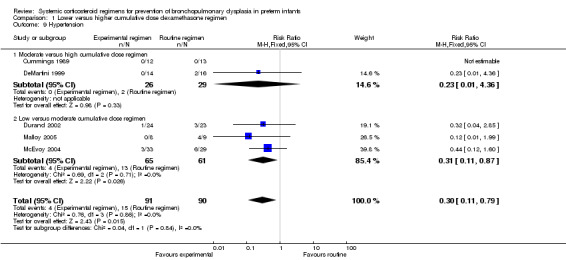
Data collection and analysis: Two authors independently assessed eligibility and quality of trials and extracted data on study design, participant characteristics and the relevant outcomes. We asked the original investigators to verify if data extraction was correct and, if possible, to provide any missing data. The primary outcomes to be assessed were: mortality at 36 weeks' postmenstrual age (PMA) or at hospital discharge; BPD defined as oxygen dependency at 36 weeks' PMA; long-term neurodevelopmental sequelae, including cerebral palsy, measured by the Bayley Mental Developmental Index (MDI); and blindness or poor vision. Secondary outcomes were: duration of mechanical ventilation and failure to extubate at day 3 and 7 after initiating therapy; rescue treatment with corticosteroids outside the study period; and the incidence of hypertension, sepsis and hyperglycemia during hospitalizations. Data were analyzed using Review Manager 5 (RevMan 5). We used the GRADE approach to assess the quality of evidence.
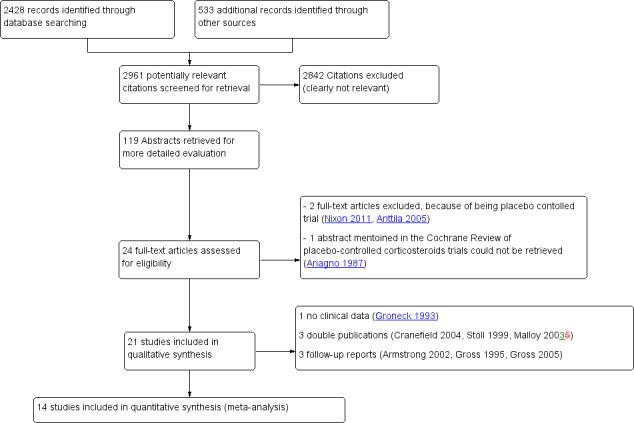
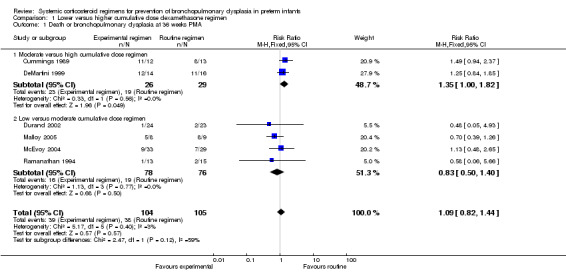
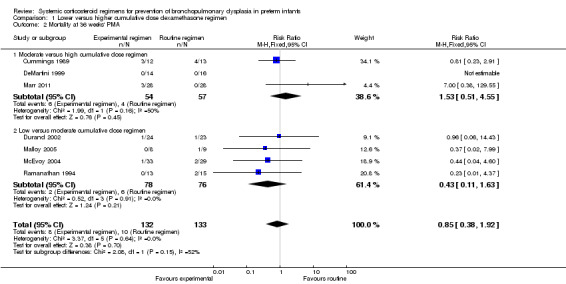
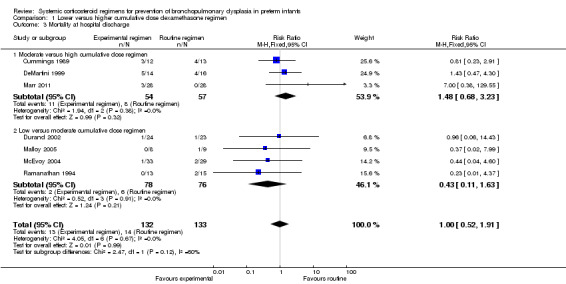
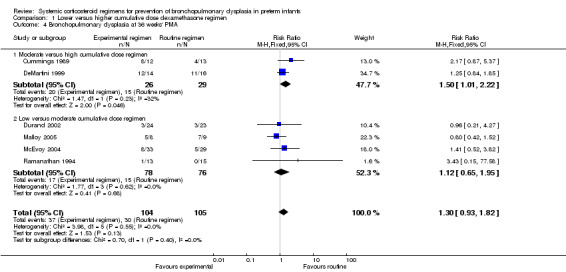
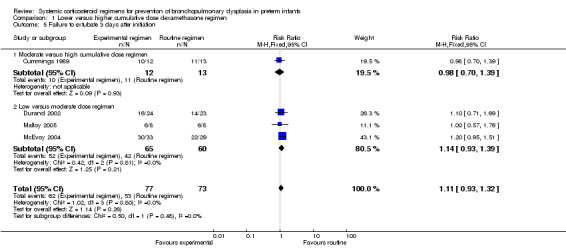
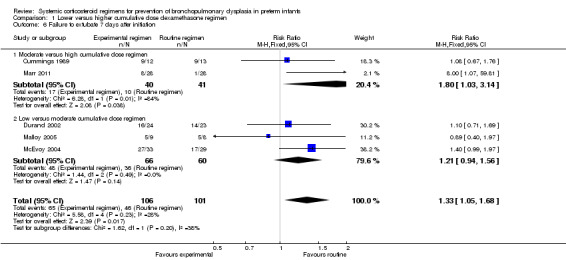
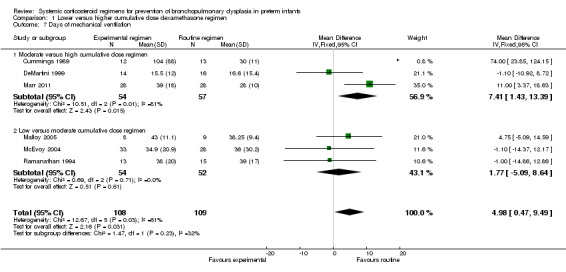
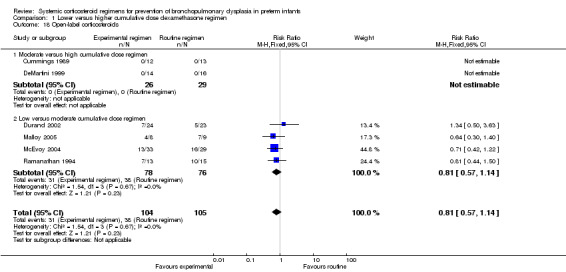
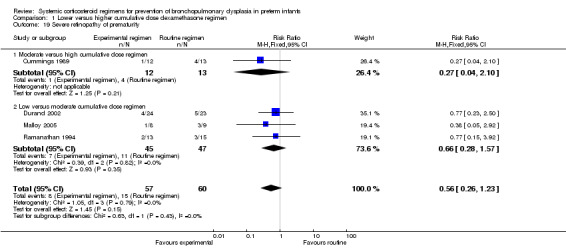
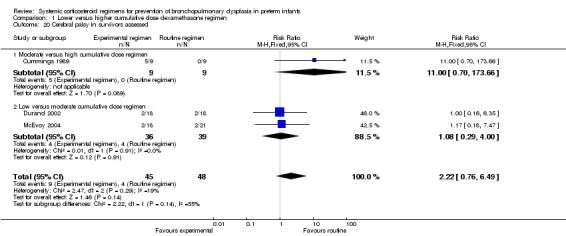
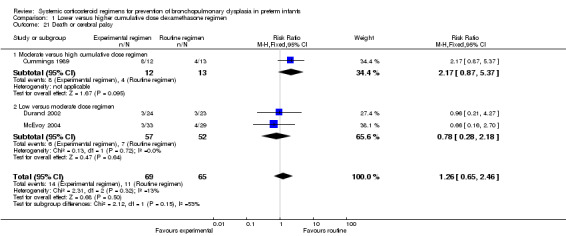
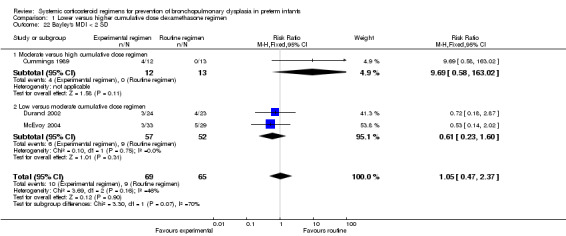
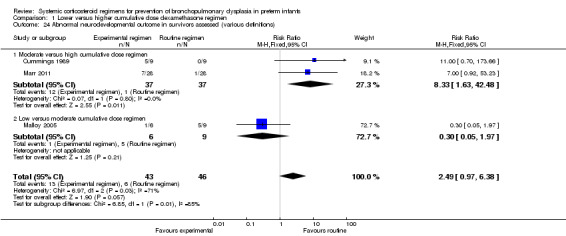
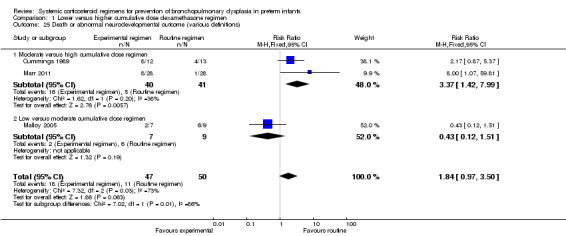
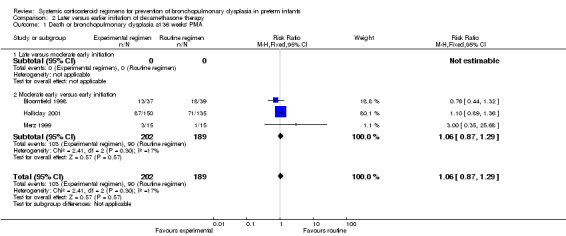
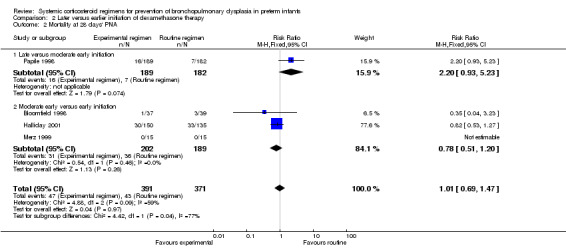
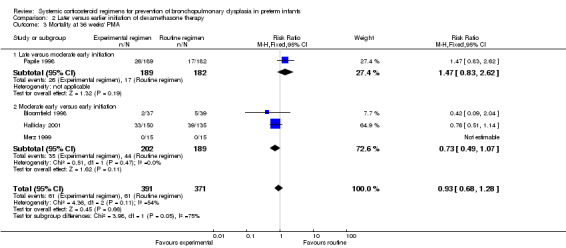
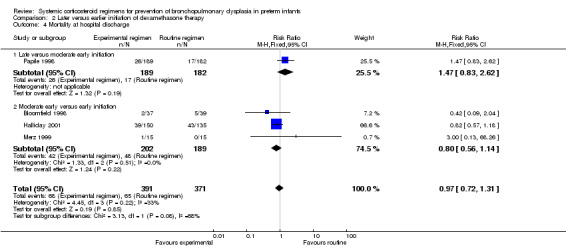
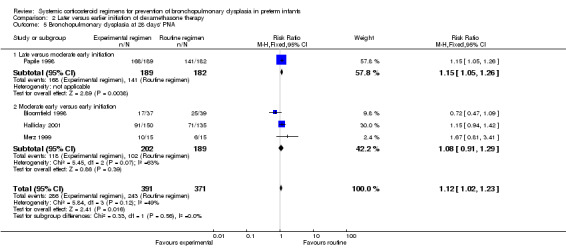
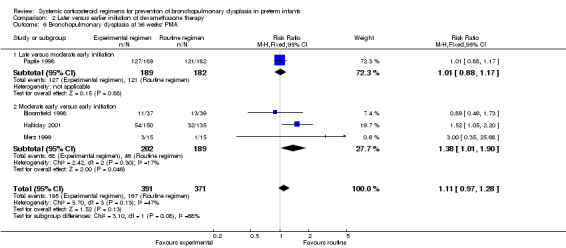
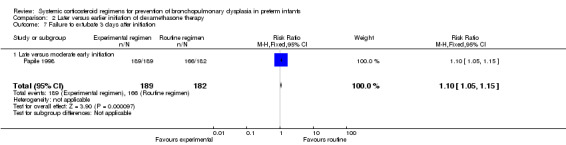
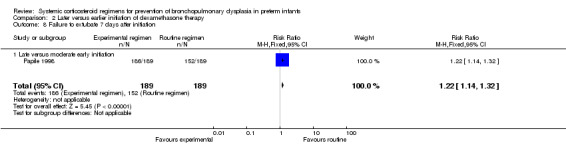
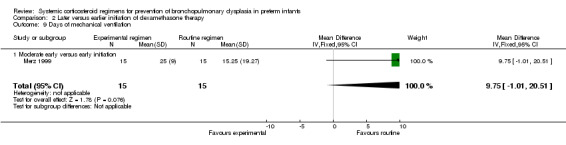
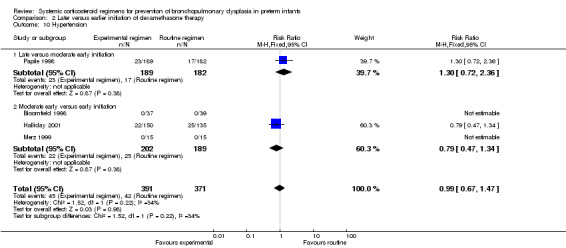
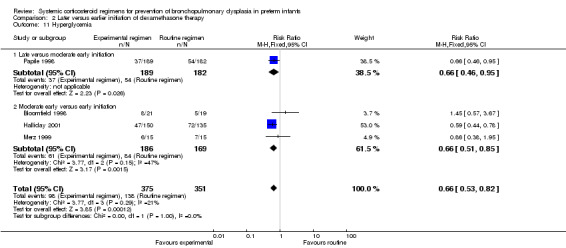
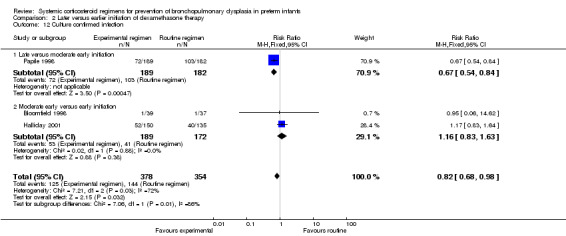
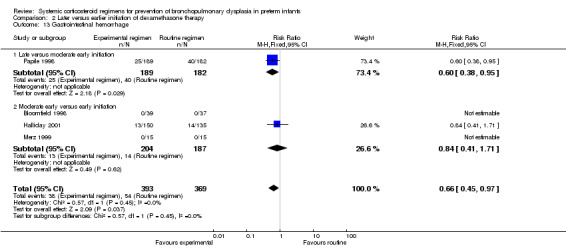
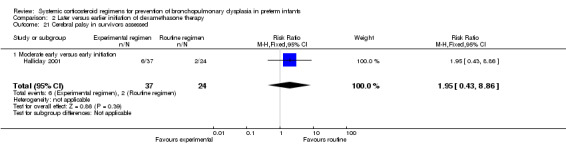
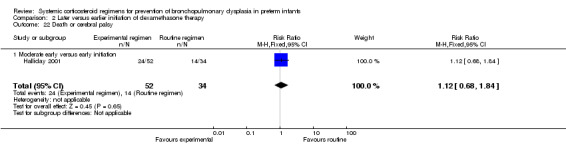
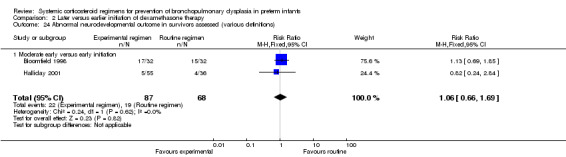
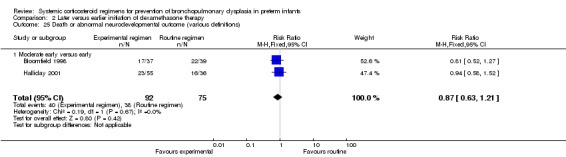
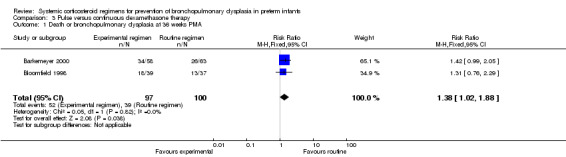
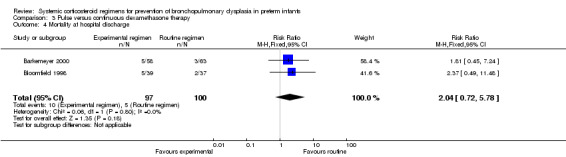
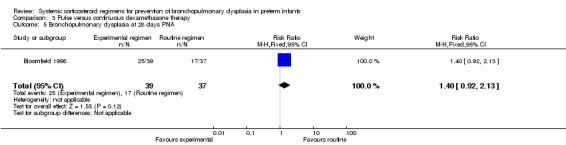
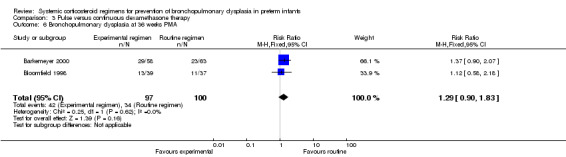
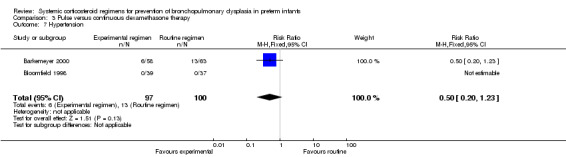
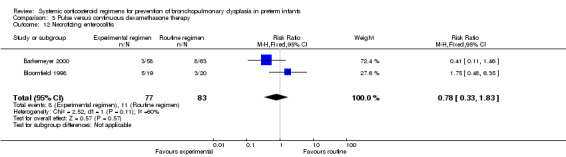
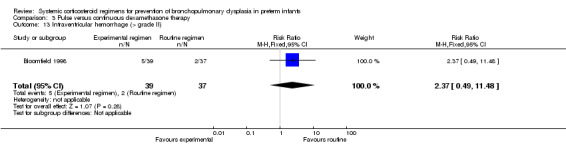
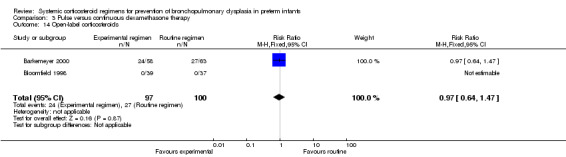
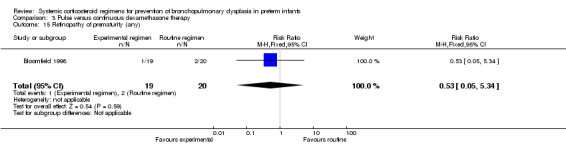
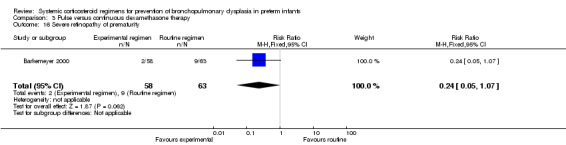
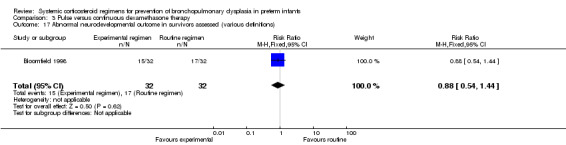
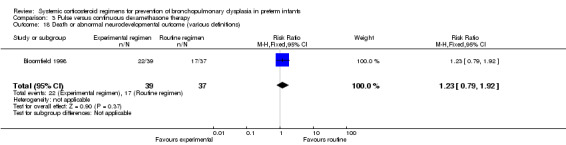
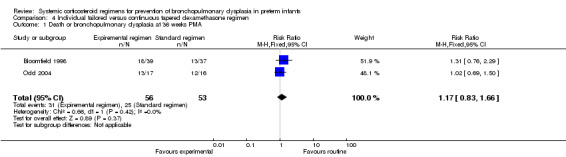
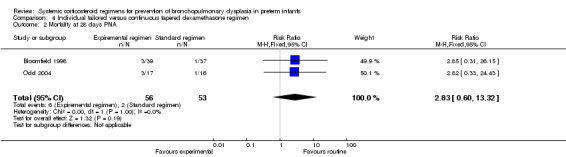
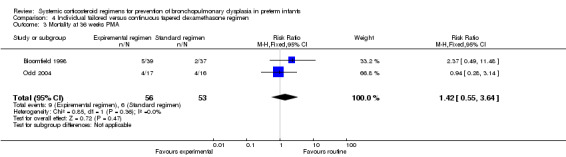
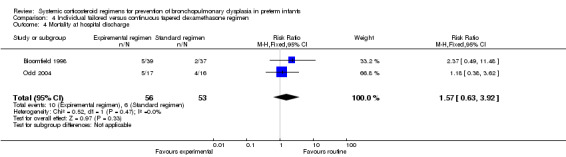
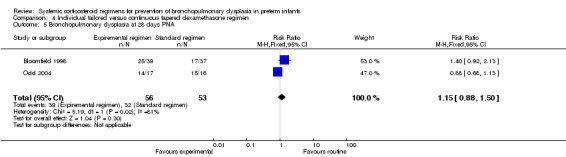
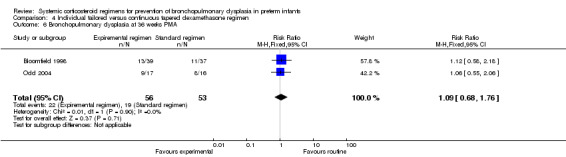
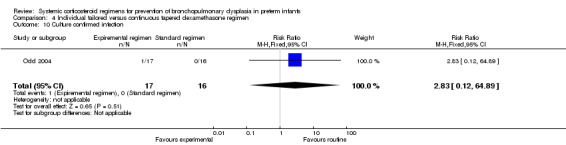
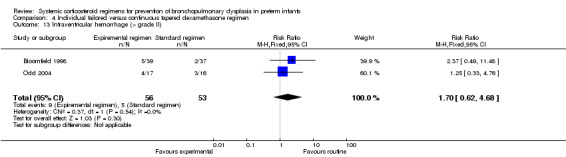
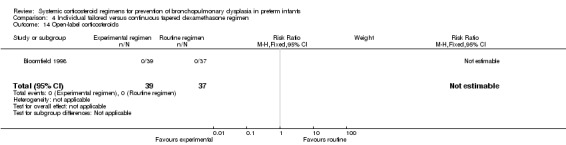
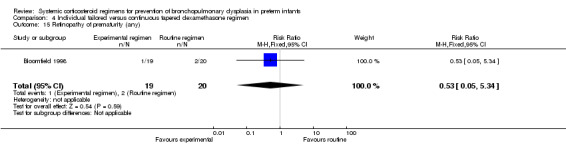
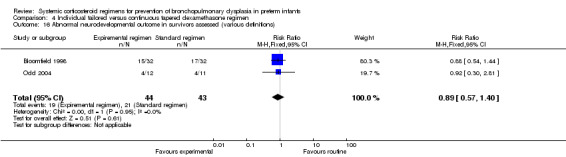
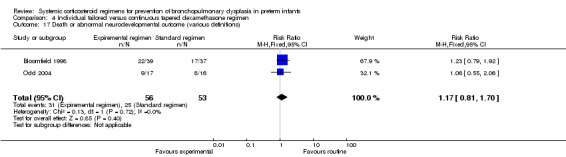
Main results: Fourteen studies were included in this review. Only RCTs investigating dexamethasone were identified. Eight studies enrolling a total of 303 participants investigated the cumulative dosage administered; three studies contrasted a high versus a moderate and five studies a moderate versus a low cumulative dexamethasone dose.Analysis of the studies investigating a moderate dexamethasone dose versus a high-dosage regimen showed an increased risk of BPD (typical risk ratio (RR) 1.50, 95% confidence interval (CI) 1.01 to 2.22; typical risk difference (RD) 0.26, 95% CI 0.03 to 0.49; number needed to treat for an additional harmful outcome (NNTH) 4, 95% CI 1.9 to 23.3; I² = 0%, 2 studies, 55 infants) as well as an increased risk of abnormal neurodevelopmental outcome (typical RR 8.33, 95% CI 1.63 to 42.48; RD 0.30, 95% CI 0.14 to 0.46; NNTH 4, 95% CI 2.2 to 7.3; I² = 68%, 2 studies, 74 infants) when using a moderate cumulative-dosage regimen. The composite outcomes of death or BPD and death or abnormal neurodevelopmental outcome showed similar results although the former only reached borderline significance.There were no differences in outcomes between a moderate- and a low-dosage regimen.Four other studies enrolling 762 infants investigated early initiation of dexamethasone therapy versus a moderately early or delayed initiation and showed no significant differences in the primary outcomes. The two RCTs investigating a continuous versus a pulse dexamethasone regimen showed an increased risk of the combined outcome death or BPD when using the pulse therapy. Finally, two trials investigating a standard regimen versus a participant-individualized course of dexamethasone showed no difference in the primary outcome and long-term neurodevelopmental outcomes.The quality of evidence for all comparisons discussed above was assessed as low or very low, because the validity of all comparisons is hampered by small samples of randomized infants, heterogeneity in study population and design, non-protocolized use of 'rescue' corticosteroids and lack of long-term neurodevelopmental data in most studies.
Authors' conclusions: Despite the fact that some studies reported a modulating effect of treatment regimens in favor of higher-dosage regimens on the incidence of BPD and neurodevelopmental impairment, recommendations on the optimal type of corticosteroid, the optimal dosage, or the optimal timing of initiation for the prevention of BPD in preterm infants cannot be made based on current level of evidence. A well-designed large RCT is urgently needed to establish the optimal systemic postnatal corticosteroid dosage regimen.
Conflict of interest statement
No financial disclosure to be declared. No potential conflicts of interest known.
Figures
References
References to studies included in this review
Barkemeyer 2000 {published data only}
-
- Barkemeyer BM, Davey A, Cummings JJ, Pappagallo M, Durand M, Stevens D, et al. Pulse vs. continuous dexamethasone therapy for neonatal chronic lung disease (CLD) in very low birthweight (VLBW) infants. Pediatric Research. 2000; Vol. 47, issue 4:276A.
Bloomfield 1998 {published data only}
-
- Armstrong DL, Penrice J, Bloomfield FH, Knight DB, Dezoete JA, Harding JE. Follow up of a randomised trial of two different courses of dexamethasone for preterm babies at risk of chronic lung disease. Archives of Disease in Childhood. Fetal and Neonatal Edition 2002;86(2):F102‐7. [PUBMED: 11882552] - PMC - PubMed
-
- Bloomfield FH, Knight DB, Harding JE. Side effects of 2 different dexamethasone courses for preterm infants at risk of chronic lung disease: a randomized trial. Journal of Pediatrics 1998;133(3):395‐400. [PUBMED: 9738724] - PubMed
Cummings 1989 {published data only}
-
- Cummings JJ, D'Eugenio DB, Gross SJ. A controlled trial of dexamethasone in preterm infants at high risk for bronchopulmonary dysplasia. New England Journal of Medicine 1989;320(23):1505‐10. [PUBMED: 2657423] - PubMed
-
- Gross SJ, Anbar RD, Mettelman BB. Follow‐up at 15 years of preterm infants from a controlled trial of moderately early dexamethasone for the prevention of chronic lung disease. Pediatrics 2005;115(3):681‐7. [PUBMED: 15741372] - PubMed
-
- Gross SJ, Cummings JJ. Four year follow‐up of a controlled trial of dexamethasone (DEX) in ventilator dependent preterm infants. Pediatric Research. 1994; Vol. 35(4):204A.
Da Silva 2002 {published data only}
-
- Silva OP, Kumaran VS, Knoppert DC. Randomized Controlled Trial Comparing Two Regimens of Dexamethasone in the Neonate with Chronic Lung Disease. Pediatric Research. 2002; Vol. 53:369A.
DeMartini 1999 {published data only}
-
- DeMartini TJ, Muraskas JK. Pulse versus tapered dosing dexamethasone for evolving bronchopulmonary dysplasia (BPD). Pediatric Research 1999;45(4):300A.
Durand 2002 {published data only}
-
- Durand M, Mendoza ME, Tantivit P, Kugelman A, McEvoy C. A randomized trial of moderately early low‐dose dexamethasone therapy in very low birth weight infants: dynamic pulmonary mechanics, oxygenation, and ventilation. Pediatrics 2002;109(2):262‐8. [PUBMED: 11826205] - PubMed
Halliday 2001 {published data only}
-
- Halliday HL, Patterson CC, Halahakoon CW. A multicenter, randomized open study of early corticosteroid treatment (OSECT) in preterm infants with respiratory illness: comparison of early and late treatment and of dexamethasone and inhaled budesonide. Pediatrics 2001;107(2):232‐40. [PUBMED: 11158452] - PubMed
-
- Wilson TT, Waters L, Patterson CC, McCusker CG, Rooney NM, Marlow N, et al. Neurodevelopmental and respiratory follow‐up results at 7 years for children from the United Kingdom and Ireland enrolled in a randomized trial of early and late postnatal corticosteroid treatment, systemic and inhaled (the Open Study of Early Corticosteroid Treatment). Pediatrics 2006;117(6):2196‐205. [PUBMED: 16740865] - PubMed
Malloy 2005 {published data only}
-
- Malloy CA, Hilal K, Weiss MG, Rizvi Z, Muraskas JK. A prospective, randomized, double‐masked trial comparing low dose to conventional dose dexamethasone in neonatal chronic lung disease. Internet Journal of Pediatrics and Neonatology 2005; Vol. 5, issue 1:10473.
-
- Malloy CA, Hilal K, Weiss MG, Rizvi Z, Muraskas JK. Randomized controlled trial comparing standard vs. lower dose dexamethasone therapy in neonates with chronic lung disease. E‐PAS. 2003:2776.
Marr 2011 {published data only}
-
- Marr BL, Bode MM, Gross SJ. Trial of 42 Day vs. 9 Day Courses of Dexamethasone (DEX) for the Treatment of Evolving Bronchopulmonary Dysplasia (BPD) in Extremely Preterm (EP) Infants. E‐PAS20111660.6. 2011. - PubMed
McEvoy 2004 {published data only}
-
- McEvoy C, Bowling S, Williamson K, McGaw P, Durand M. Randomized, double‐blinded trial of low‐dose dexamethasone: II. Functional residual capacity and pulmonary outcome in very low birth weight infants at risk for bronchopulmonary dysplasia. Pediatric Pulmonology 2004;38(1):55‐63. [PUBMED: 15170874] - PubMed
Merz 1999 {published data only}
-
- Merz U, Peschgens T, Kusenbach G, Hornchen H. Early versus late dexamethasone treatment in preterm infants at risk for chronic lung disease: a randomized pilot study. European Journal of Pediatrics 1999;158(4):318‐22. [PUBMED: 10206132] - PubMed
Odd 2004 {published data only}
-
- Cranefield DJ, Odd DE, Harding JE, Teele RL. High incidence of nephrocalcinosis in extremely preterm infants treated with dexamethasone. Pediatric Radiology 2004;34(2):138‐42. [PUBMED: 14624322] - PubMed
-
- Odd DE, Armstrong DL, Teele RL, Kuschel CA, Harding JE. A randomized trial of two dexamethasone regimens to reduce side‐effects in infants treated for chronic lung disease of prematurity. Journal of Paediatrics and Child Health 2004;40(5‐6):282‐9. [PUBMED: 15151582] - PubMed
Papile 1998 {published data only}
-
- Papile LA, Tyson JE, Stoll BJ, Wright LL, Donovan EF, Bauer CR, et al. A multicenter trial of two dexamethasone regimens in ventilator‐dependent premature infants. New England journal of medicine 1998;338(16):1112‐8. [PUBMED: 9545359] - PubMed
-
- Stoll BJ, Temprosa M, Tyson JE, Papile LA, Wright LL, Bauer CR, et al. Dexamethasone therapy increases infection in very low birth weight infants. Pediatrics 1999;104(5):e63. [PUBMED: 10545589] - PubMed
Ramanathan 1994 {published data only}
-
- Ramanathan R, Siassi B, Sardesai S, deLemos RA. Comparison of two dosage regimens of dexamethasone for early treatment of chronic lung disease in very low birth weight (VLBW). Pediatric Research 1994;34:250A.
References to studies excluded from this review
Anttila 2005 {published data only}
-
- Anttila E, Peltoniemi O, Haumont D, Herting E, ter Horst H, Heinonen K, et al. Early neonatal dexamethasone treatment for prevention of bronchopulmonary dysplasia. Randomised trial and meta‐analysis evaluating the duration of dexamethasone therapy. European Journal of Pediatrics 2005;164(8):472‐81. [PUBMED: 15864643] - PubMed
Ariagno 1987 {published data only}
-
- Ariagno RL, Sweeney TE, Baldwin RB, Inguillo D, Martin D. Controlled trial of dexamethasone in preterm infantsat risk for bronchopulmonary dysplasia: lung function, clinical course and outcome at three years. Unpublished manuscript as stated in Cochrane review (Halliday et al.).
Groneck 1993 {published data only}
-
- Groneck P, Oppermann M, Speer CP. Levels of complement anaphylatoxin C5a in pulmonary effluent fluid of infants at risk for chronic lung disease and effects of dexamethasone treatment. Pediatric Research 1993;34(5):586‐90. [PUBMED: 8284093] - PubMed
-
- Groneck P, Reuss D, Gotze‐Speer B, Speer CP. Effects of dexamethasone on chemotactic activity and inflammatory mediators in tracheobronchial aspirates of preterm infants at risk for chronic lung disease. Journal of Pediatrics 1993;122(6):938‐44. [PUBMED: 8388949] - PubMed
Additional references
AAP 2002
-
- Committee on Fetus and Newborn. Postnatal corticosteroids to treat or prevent chronic lung disease in preterm infants. Pediatrics 2002;109(2):330‐8. [PUBMED: 11826218] - PubMed
Bancalari 2006
-
- Bancalari E, Claure N. Definitions and diagnostic criteria for bronchopulmonary dysplasia. Seminars in Perinatology 2006;30(4):164‐70. [PUBMED: 16860155] - PubMed
Brozanski 1995
-
- Brozanski BS, Jones JG, Gilmour CH, Balsan MJ, Vazquez RL, Israel BA, et al. Effect of pulse dexamethasone therapy on the incidence and severity of chronic lung disease in the very low birth weight infant. Journal of Pediatrics 1995;126(5 Pt 1):769‐76. [PUBMED: 7752005] - PubMed
Carlton 1997
-
- Carlton DP, Albertine KH, Cho SC, Lont M, Bland RD. Role of neutrophils in lung vascular injury and edema after premature birth in lambs. Journal of Applied Physiology 1997;83(4):1307‐7. [PUBMED: 9338441] - PubMed
CDTG 1991
-
- Collaborative Dexamethasone Trial Group. Dexamethasone therapy in neonatal chronic lung disease: an international placebo‐controlled trial. Pediatrics 1991;88(3):421‐7. [PUBMED: 1881718] - PubMed
Cheong 2013
-
- Cheong JL, Anderson P, Roberts G, Duff J, Doyle LW. Postnatal corticosteroids and neurodevelopmental outcomes in extremely low birthweight or extremely preterm infants: 15‐year experience in Victoria, Australia. Archives of Disease in Childhood. Fetal and Neonatal Edition 2013;98(1):F32‐6. [PUBMED: 22684163] - PubMed
Coalson 2006
-
- Coalson JJ. Pathology of bronchopulmonary dysplasia. Seminars in Perinatology 2006;30(4):179‐84. [PUBMED: 16860157] - PubMed
Costeloe 2012
Doyle 2005
-
- Doyle LW, Halliday HL, Ehrenkranz RA, Davis PG, Sinclair JC. Impact of postnatal systemic corticosteroids on mortality and cerebral palsy in preterm infants: effect modification by risk for chronic lung disease. Pediatrics 2005;115(3):655‐61. [PUBMED: 15741368] - PubMed
Doyle 2010
-
- Doyle LW, Ehrenkranz RA, Halliday HL. Postnatal hydrocortisone for preventing or treating bronchopulmonary dysplasia in preterm infants: a systematic review. Neonatology 2010;98(2):111‐7. [PUBMED: 20150750] - PubMed
Doyle 2014
-
- Doyle LW, Halliday HL, Ehrenkranz RA, Davis PG, Sinclair JC. An update on the impact of postnatal systemic corticosteroids on mortality and cerebral palsy in preterm infants: effect modification by risk of bronchopulmonary dysplasia. Journal of Pediatrics 2014;165(6):1258‐60. [PUBMED: 25217197] - PubMed
Doyle 2014a
Doyle 2014b
Durand 1995
-
- Durand M, Sardesai S, McEvoy C. Effects of early dexamethasone therapy on pulmonary mechanics and chronic lung disease in very low birth weight infants: a randomized, controlled trial. Pediatrics 1995;95(4):584‐90. [PUBMED: 7700763] - PubMed
Ehrenkranz 2005
-
- Ehrenkranz RA, Walsh MC, Vohr BR, Jobe AH, Wright LL, Fanaroff AA, et al. Validation of the National Institutes of Health consensus definition of bronchopulmonary dysplasia. Pediatrics 2005;116(6):1353‐60. [PUBMED: 16322158] - PubMed
Ferreira 2000
-
- Ferreira PJ, Bunch TJ, Albertine KH, Carlton DP. Circulating neutrophil concentration and respiratory distress in premature infants. Journal of Pediatrics 2000;136(4):466‐72. [PUBMED: 10753244] - PubMed
GRADEpro GDT 2016 [Computer program]
-
- on www.gradepro.org. GRADEpro. www.gradepro.org. Version 2014. McMaster University, 06‐03‐2016.
Halliday 2001a
-
- Halliday HL. Guidelines on neonatal steroids. Prenatal Neonatal Medicine 2001;6:371‐3.
Halliday 2003a
Halliday 2003b
Halliday 2003c
Higgins 2011
-
- Higgins JPT, Green S (editors). Cochrane Handbook for Systematic Reviews of Interventions Version 5.1.0 (updated March 2011). The Cochrane Collaboration, 2011. Available from handbook.cochrane.org.
Hozo 2005
Huang 2007
-
- Huang CC, Lin HR, Liang YC, Hsu KS. Effects of neonatal corticosteroid treatment on hippocampal synaptic function. Pediatric Research 2007;62(3):267‐70. [PUBMED: 17622955] - PubMed
Husain 1998
-
- Husain AN, Siddiqui NH, Stocker JT. Pathology of arrested acinar development in post surfactant bronchopulmonary dysplasia. Human Pathology 1998;29(7):710‐7. [PUBMED: 9670828] - PubMed
Jobe 1999
-
- Jobe AJ. The new BPD: an arrest of lung development. Pediatric Research 1999;46(6):641‐3. [PUBMED: 10590017] - PubMed
Jobe 2001
-
- Jobe AH, Bancalari E. Bronchopulmonary dysplasia. American Journal of Respiratory and Critical Care Medicine 2001;163(7):1723‐9. [PUBMED: 11401896] - PubMed
Kaempf 2003
-
- Kaempf JW, Campbell B, Sklar RS, Arduza C, Gallegos R, Zabari M, et al. Implementing potentially better practices to improve neonatal outcomes after reducing postnatal dexamethasone use in infants born between 501 and 1250 grams. Pediatrics 2003;111(4 Pt 2):e534‐41. [PUBMED: 12671173] - PubMed
Karemaker 2006
-
- Karemaker R, Heijnen CJ, Veen S, Baerts W, Samsom J, Visser GH, et al. Differences in behavioral outcome and motor development at school age after neonatal treatment for chronic lung disease with dexamethasone versus hydrocortisone. Pediatric Research 2006;60(6):745‐50. [PUBMED: 17065571] - PubMed
Kitchen 1987
-
- Kitchen WH, Ford GW, Rickards AL, Lissenden JV, Ryan MM. Children of birth weight less than 1000 g: changing outcome between ages 2 and 5 years. Journal of Pediatrics 1987;110(2):283‐8. [PUBMED: 2433422] - PubMed
Lodygensky 2005
-
- Lodygensky GA, Rademaker K, Zimine S, Gex‐Fabry M, Lieftink AF, Lazeyras F, et al. Structural and functional brain development after hydrocortisone treatment for neonatal chronic lung disease. Pediatrics 2005;116(1):1‐7. [PUBMED: 15995023] - PubMed
Northway 1967
-
- Northway WH Jr, Rosan RC, Porter DY. Pulmonary disease following respiratory therapy of hyaline‐membrane disease. Bronchopulmonary dysplasia. New England Journal of Medicine 1967;276(7):357‐68. [PUBMED: 5334613] - PubMed
O'Brodovich 1985
-
- O'Brodovich HM, Mellins RB. Bronchopulmonary dysplasia. Unresolved neonatal acute lung injury. American Review of Respiratory Disease 1985;132(3):694‐709. [PUBMED: 3898946] - PubMed
O'Shea 1999
-
- O'Shea TM, Kothadia JM, Klinepeter KL, Goldstein DJ, Jackson BG, Weaver RG 3rd, et al. Randomized placebo‐controlled trial of a 42‐day tapering course of dexamethasone to reduce the duration of ventilator dependency in very low birth weight infants: outcome of study participants at 1‐year adjusted age. Pediatrics 1999;104(1 Pt 1):15‐21. [PUBMED: 10390254] - PubMed
Onland 2009
-
- Onland W, Offringa M, Jaegere AP, Kaam AH. Finding the optimal postnatal dexamethasone regimen for preterm infants at risk of bronchopulmonary dysplasia: a systematic review of placebo‐controlled trials. Pediatrics 2009;123(1):367‐77. [PUBMED: 19117904] - PubMed
Onland 2010
-
- Onland W, Kaam AH, Jaegere AP, Offringa M. Open‐label glucocorticoids modulate dexamethasone trial results in preterm infants. Pediatrics 2010;126(4):e954‐64. [PUBMED: 20837588] - PubMed
Rademaker 2007
-
- Rademaker KJ, Uiterwaal CS, Groenendaal F, Venema MM, Bel F, Beek FJ, et al. Neonatal hydrocortisone treatment: neurodevelopmental outcome and MRI at school age in preterm‐born children. Journal of Pediatrics 2007;150(4):351‐7. [PUBMED: 17382109] - PubMed
RevMan 2012 [Computer program]
-
- The Nordic Cochrane Centre, The Cochrane Collaboration. Review Manager (RevMan). Version 5.2. Copenhagen: The Nordic Cochrane Centre, The Cochrane Collaboration, 2012.
Schmidt 2008
-
- Schmidt B, Roberts R, Millar D, Kirpalani H. Evidence‐based neonatal drug therapy for prevention of bronchopulmonary dysplasia in very‐low‐birth‐weight infants. Neonatology 2008;93(4):284‐7. [PUBMED: 18525211] - PubMed
Schünemann 2013
-
- Schünemann H, Brożek J, Guyatt G, Oxman A, editors. GWG. GRADE handbook for grading quality of evidence and strength of recommendations. Available from www.guidelinedevelopment.org/handbook Updated October 2013.
Shinwell 2003
Shinwell 2007
Short 2007
-
- Short EJ, Kirchner HL, Asaad GR, Fulton SE, Lewis BA, Klein N, et al. Developmental sequelae in preterm infants having a diagnosis of bronchopulmonary dysplasia: analysis using a severity‐based classification system. Archives of Pediatrics and Adolescent Medicine 2007;161(11):1082‐7. [PUBMED: 17984411] - PMC - PubMed
Stoll 2010
van der Heide‐Jalving 2003
-
- Heide‐Jalving M, Kamphuis PJ, Laan MJ, Bakker JM, Wiegant VM, Heijnen CJ, et al. Short‐ and long‐term effects of neonatal glucocorticoid therapy: is hydrocortisone an alternative to dexamethasone?. Acta Paediatrica (Oslo, Norway: 1992) 2003;92(7):827‐35. [PUBMED: 12892163] - PubMed
Walsh 2005
-
- Walsh MC, Morris BH, Wrage LA, Vohr BR, Poole WK, Tyson JE, et al. Extremely low birthweight neonates with protracted ventilation: mortality and 18‐month neurodevelopmental outcomes. Journal of Pediatrics 2005;146(6):798‐804. [PUBMED: 15973322] - PubMed
Walsh 2006
-
- Walsh MC, Yao Q, Horbar JD, Carpenter JH, Lee SK, Ohlsson A. Changes in the use of postnatal steroids for bronchopulmonary dysplasia in 3 large neonatal networks. Pediatrics 2006;118(5):e1328‐35. [PUBMED: 17079534] - PubMed
Watterberg 2007
-
- Watterberg KL, Shaffer ML, Mishefske MJ, Leach CL, Mammel MC, Couser RJ, et al. Growth and neurodevelopmental outcomes after early low‐dose hydrocortisone treatment in extremely low birth weight infants. Pediatrics 2007;120(1):40‐8. [PUBMED: 17606560] - PubMed
Watterberg 2010
-
- Watterberg KL. Policy statement ‐ postnatal corticosteroids to prevent or treat bronchopulmonary dysplasia. Pediatrics 2010;126(4):800‐8. [PUBMED: 20819899] - PubMed
Yeh 1997
-
- Yeh TF, Lin YJ, Hsieh WS, Lin HC, Lin CH, Chen JY, et al. Early postnatal dexamethasone therapy for the prevention of chronic lung disease in preterm infants with respiratory distress syndrome: a multicenter clinical trial. Pediatrics 1997;100(4):E3. [PUBMED: 9310536] - PubMed
Yeh 1998
-
- Yeh TF, Lin YJ, Huang CC, Chen YJ, Lin CH, Lin HC, et al. Early dexamethasone therapy in preterm infants: a follow‐up study. Pediatrics 1998;101(5):E7. - PubMed
Yoder 2009
-
- Yoder BA, Harrison M, Clark RH. Time‐related changes in steroid use and bronchopulmonary dysplasia in preterm infants. Pediatrics 2009;124(2):673‐9. [PUBMED: 19620192] - PubMed
References to other published versions of this review
Onland 2008
-
- Onland W, Jaegere AP, Offringa M, Kaam AH. Effects of higher versus lower dexamethasone doses on pulmonary and neurodevelopmental sequelae in preterm infants at risk for chronic lung disease: a meta‐analysis. Pediatrics 2008;122(1):92‐101. [PUBMED: 18595991] - PubMed
Publication types
MeSH terms
Substances
LinkOut - more resources
Full Text Sources
Other Literature Sources
Medical
Miscellaneous
