Electronic Alerts for Acute Kidney Injury
- PMID: 28143633
- PMCID: PMC5399999
- DOI: 10.3238/arztebl.2017.0001
Electronic Alerts for Acute Kidney Injury
Abstract
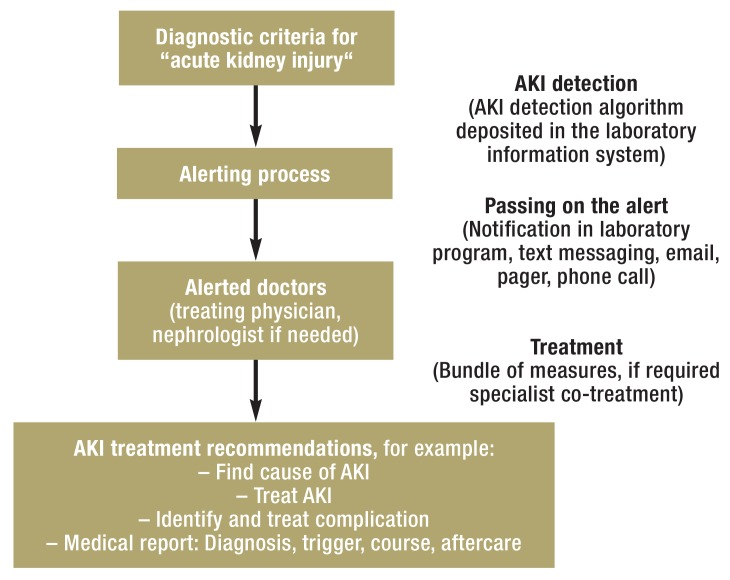
Background: Acute kidney injury (AKI) often takes a complicated course if diagnosed late and undertreated. Electronic alerts that provide an early warning of AKI are intended to support treating physicians in making the diagnosis of AKI and treating it appropriately. The available evidence on the effects of such alert systems is inconsistent.
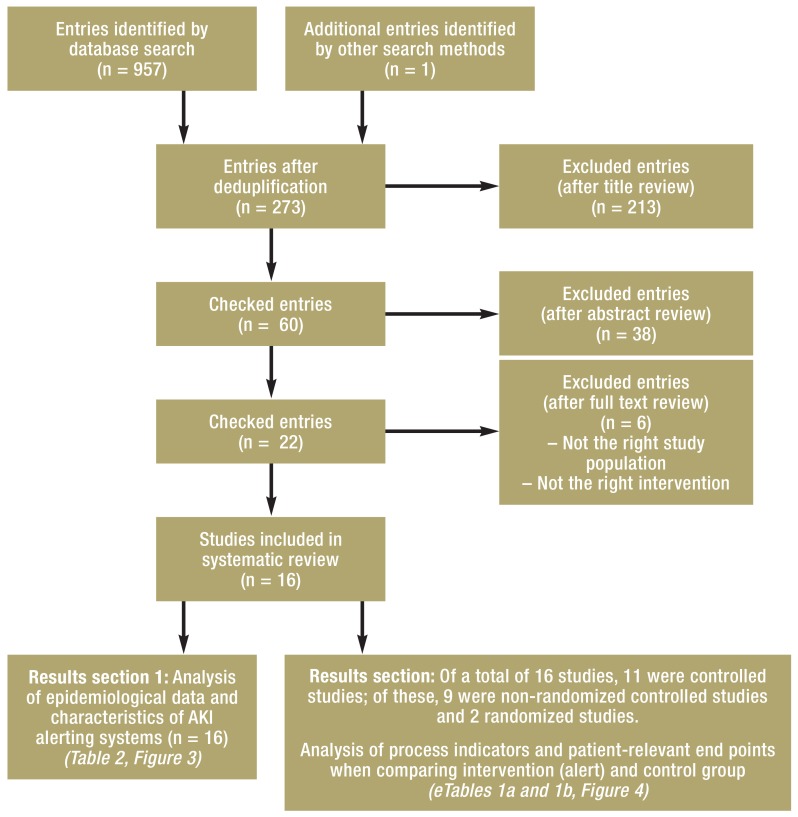
Methods: We employed the PRISMA recommendations for systematic literature reviews to identify relevant articles in the PubMed, Scopus, and Web of Science databases. All of the studies that were retrieved were independently assessed by two of the authors with respect to the methods of computer-assisted electronic alert systems and their effects on process indicators and clinical endpoints.
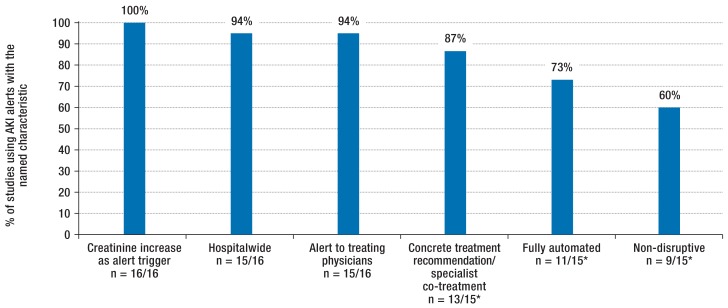
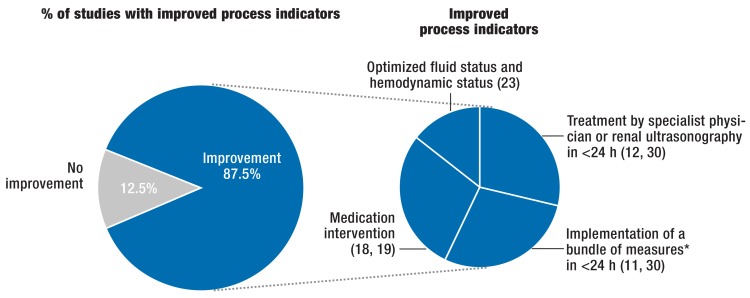
Results: 16 studies with a total of 32 842 patients were identified. 8.5% of admitted patients had community-acquired or hospital-acquired AKI, with an in-hospital mortality of 22.8%. Fifteen electronic alert systems were in use throughout the participating hospitals. In 13 of 15 studies, alarm activation was accompanied by concrete treatment recommendations. A randomized controlled trial in which no such recommendations were given did not reveal any benefit of the alert system for the patients. In controlled but non-randomized trials, however, the provision of concrete treatment recommendations when the alert was activated led to more frequent implementation of diagnostic or therapeutic measures, less loss of renal function, lower in-hospital mortality, and lower mortality after discharge compared to control groups without an electronic alert for AKI.
Conclusion: Non-randomized controlled trials of electronic alerts for AKI that were coupled with treatment recommendations have yielded evidence of improved care processes and treatment outcomes for patients with AKI. This review is limited by the low number of randomized trials and the wide variety of endpoints used in the studies that were evaluated.
Figures
Comment in
-
Functional Impairment Does not Equal Injury.Dtsch Arztebl Int. 2017 Apr 28;114(17):300. doi: 10.3238/arztebl.2017.0300a. Dtsch Arztebl Int. 2017. PMID: 28530176 Free PMC article. No abstract available.
-
Effect of the Method for Creatinine Measurement.Dtsch Arztebl Int. 2017 Apr 28;114(17):300. doi: 10.3238/arztebl.2017.0300b. Dtsch Arztebl Int. 2017. PMID: 28530177 Free PMC article. No abstract available.
References
-
- Sawhney S, Marks A, Fluck N, Levin A, Prescott G, Black C. Intermediate and long-term outcomes of survivors of acute kidney injury episodes: a large population-based cohort study. Am J Kidney Dis. 2016 Aug 20 pii: S0272-6386(16)30256-6. doi:10.1053/j.ajkd.2016.05.018. [Epub ahead of print] - PMC - PubMed
-
- Kindgen-Milles D. Epidemiologie und prognostische Relevanz des akuten Nierenversagens Akutes Nierenversagen bei Intensivpatienten: Praxis und Therapie. In: Jörres A, editor. Deutscher Ärzteverlag. Köln: 2010. pp. 1–14.
Publication types
MeSH terms
LinkOut - more resources
Full Text Sources
Other Literature Sources
Medical