


Proximal Fifth Metatarsal Fractures: Anatomy, Classification, Treatment and Complications
- PMID: 28144601
- PMCID: PMC5251206
- DOI: 10.5812/atr.33298
Proximal Fifth Metatarsal Fractures: Anatomy, Classification, Treatment and Complications
Abstract
Context: Fractures of proximal fifth metatarsal are one of the most common fractures of the foot.
Evidence acquisition: A search of PubMed for studies on proximal fifth metatarsal fracture and Jones fracture focusing on the classification and management was performed. The reference list of the retrieved articles was searched for additional related studies.
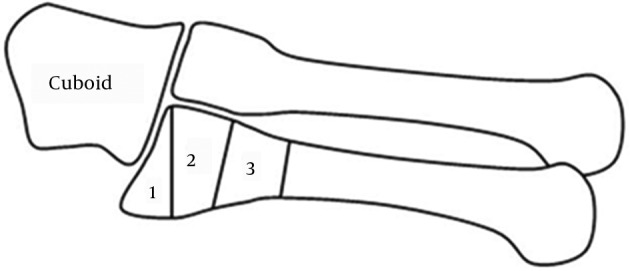
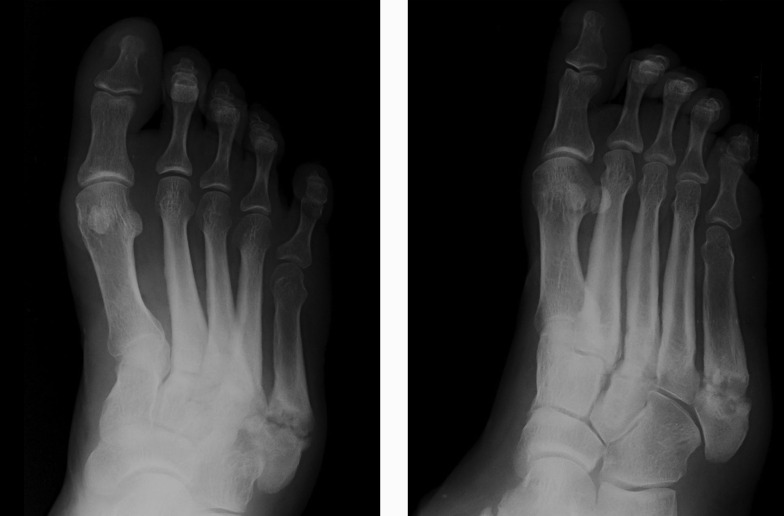
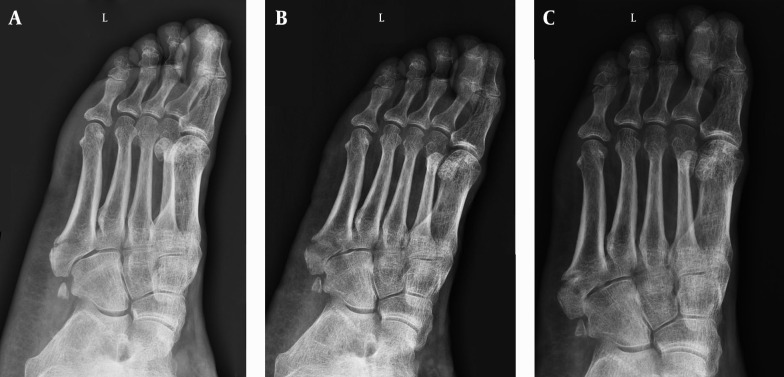
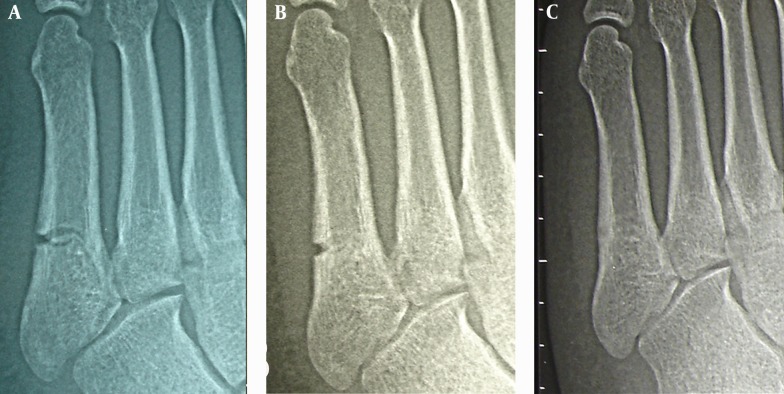
Results: The vascular supply and soft tissue anatomy of the fifth metatarsal explains the increased risk of delayed union and non-union in fractures at the metaphyseal-diaphyseal junction. Lawrence and Botte classify proximal fifth metatarsal fractures according to their location: tuberosity avulsion fractures (zone 1), fractures at metaphyseal-diaphyseal junction extending into the fourth-fifth intermetatarsal joint (zone 2) and proximal diaphyseal fractures (zone 3). Zone 1 fractures are treated conservatively with functional immobilization and early mobilization with excellent outcome. For zone 2 and zone 3 fractures, acute forms can be treated conservatively but with a risk of delayed union time and time for return to function. Therefore, early surgical fixation with intramedullary screw is advised in athletic individuals. For cases presented with signs of delayed union and non-union, surgical treatment with or without bone grafting is recommended. Complications of these fractures and their management are discussed in this report.
Conclusions: Lawrence and Botte's classification of proximal fifth metatarsal fractures is recommended by experts, due to its implication on prognosis and treatment strategy. Zone 1 fractures should be treated conservatively due to their excellent healing potential. Early operative treatment is advised for zone 2 and zone 3 fractures, especially in the athletic group. Complications of delayed union, non-union and refractures should be treated by revision fixation and bone grafting.
Keywords: Anatomy; Bone; Classification; Evidence-Based Medicine; Fracture Fixation; Fractures; Metatarsal Bones.
Figures
References
-
- Metcalfe SA. Non-united fifth metatarsal metaphyseal fractures. The Foot. 2001;11(2):99–102.
-
- Petrisor BA, Ekrol I, Court-Brown C. The epidemiology of metatarsal fractures. Foot Ankle Int. 2006;27(3):172–4. - PubMed
-
- Josefsson PO, Karlsson M, Redlund-Johnell I, Wendeberg B. Closed treatment of Jones fracture. Good results in 40 cases after 11-26 years. Acta Orthop Scand. 1994;65(5):545–7. - PubMed
-
- Dameron TB. Fractures of the Proximal Fifth Metatarsal: Selecting the Best Treatment Option. J Am Acad Orthop Surg. 1995;3(2):110–4. - PubMed
Publication types
LinkOut - more resources
Full Text Sources
Other Literature Sources