. 2017 Jan 30;9(2):25.
doi: 10.3390/v9020025.

Echovirus 6 Infects Human Exocrine and Endocrine Pancreatic Cells and Induces Pro-Inflammatory Innate Immune Response

Affiliations

Echovirus 6 Infects Human Exocrine and Endocrine Pancreatic Cells and Induces Pro-Inflammatory Innate Immune Response

Luis Sarmiento et al. Viruses. .

Abstract

Human enteroviruses (HEV), especially coxsackievirus serotype B (CVB) and echovirus (E), have been associated with diseases of both the exocrine and endocrine pancreas, but so far evidence on HEV infection in human pancreas has been reported only in islets and ductal cells. This study aimed to investigate the capability of echovirus strains to infect human exocrine and endocrine pancreatic cells. Infection of explanted human islets and exocrine cells with seven field strains of E6 caused cytopathic effect, virus titer increase and production of HEV protein VP1 in both cell types. Virus particles were found in islets and acinar cells infected with E6. No cytopathic effect or infectious progeny production was observed in exocrine cells exposed to the beta cell-tropic strains of E16 and E30. Endocrine cells responded to E6, E16 and E30 by upregulating the transcription of interferon-induced with helicase C domain 1 (IF1H1), 2'-5'-oligoadenylate synthetase 1 (OAS1), interferon-β (IFN-β), chemokine (C-X-C motif) ligand 10 (CXCL10) and chemokine (C-C motif) ligand 5 (CCL5). Echovirus 6, but not E16 or E30, led to increased transcription of these genes in exocrine cells. These data demonstrate for the first time that human exocrine cells represent a target for E6 infection and suggest that certain HEV serotypes can replicate in human pancreatic exocrine cells, while the pancreatic endocrine cells are permissive to a wider range of HEV.

Keywords: acinar cells; echovirus; enterovirus; inflammation; islet of Langerhans; pancreas; tropism.


Conflict of interest statement

The authors declare no competing financial interests. The funders had no role in study design, data collection and analysis, decision to publish, or preparation of the manuscript.

Figures
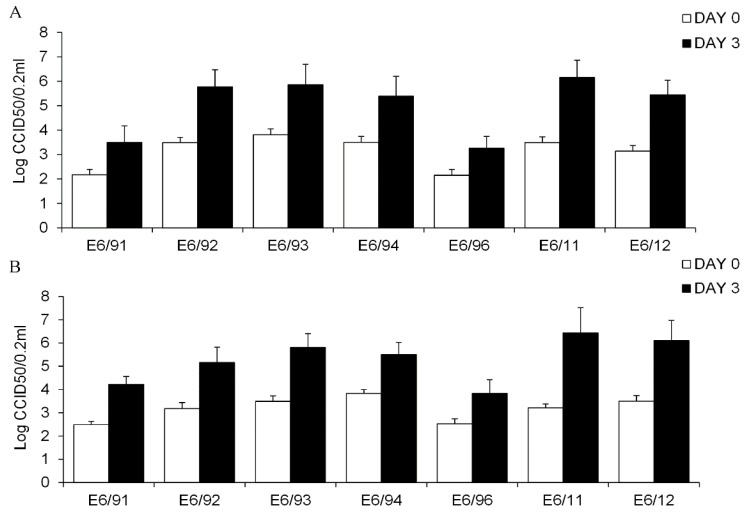
Figure 1
Figure 1
Replication of field strains of echovirus 6 (E6) in primary human exocrine cells (A) and into the islets (B). Free-floating human exocrine cells derived from ten donors and islets from seven donors were infected with a 1000 50% cell culture infectious dose (CCID50)/0.2 mL of E6/91, E6/92, E6/93, E6/94, E6/96, E6/11 and E6/12. The samples were taken at day 0 (empty bar) and day 3 (filled bar) post-infections and were assayed for total infectivity by using the CCID50 titration method. Data are presented as log10 (CCID50/0.2 mL), means ± standard deviation (SD) from experiment performed in triplicate.
Figure 2
Figure 2
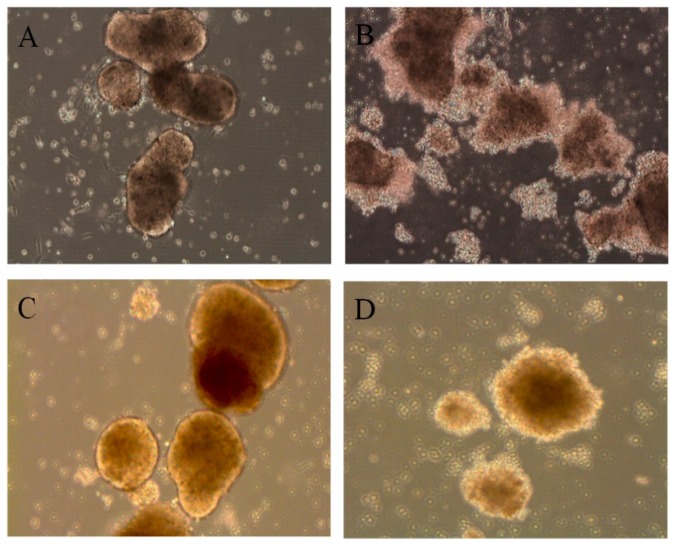
Virus-induced cytopathic effect in explanted human pancreatic exocrine cells and islets three days post-infection. (A) Mock-infected exocrine cells; (B) E6-infected exocrine cells; (C) Mock-infected islets; (D) E6-infected islets. The present results are a sample from different experiments with similar findings performed on islets from seven donors and exocrine cells from ten donors inoculated with the seven strains of E6.
Figure 3
Figure 3
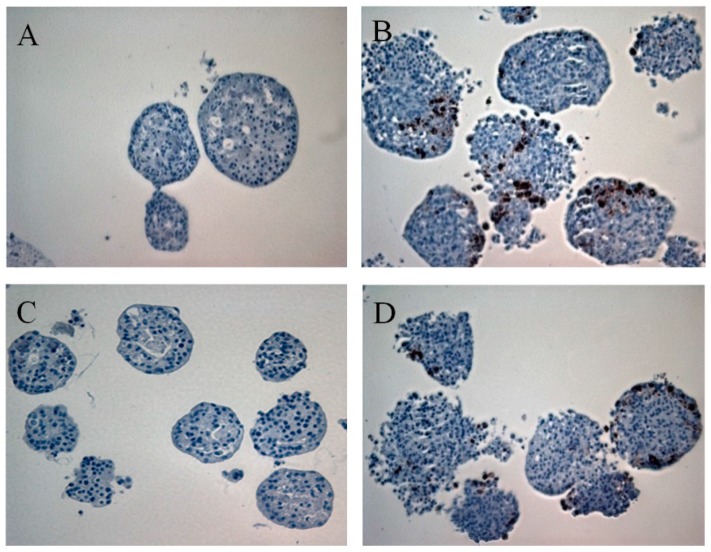
Immunostaining for human enteroviruses (HEV) protein VP1 in exocrine cells and islets three days after infection with E6/11. (A) Mock-infected exocrine cells; (B) E6-infected exocrine cells; (C) Mock-infected islets; (D) E6-infected islets. Representative example of three independent experiments.
Figure 4
Figure 4
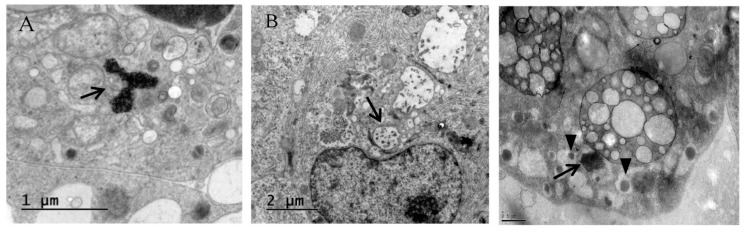
Electron microscopy of exocrine and endocrine cells infected with E6/11. (A) Virus particles (arrow) arranged in arrays in the cytoplasm of acinar cells, scale bar: 1 μm; (B) Portion of acinus showing degraded cytoplasm, membrane vesicles and vacuoles (arrow), scale bar: 2 μm; (C) Beta cells from islets infected with E6 containing virus particles arranged in a cluster (arrow) in close proximity to insulin granules (arrowhead), scale bar: 0.5 μm.
Figure 5
Figure 5
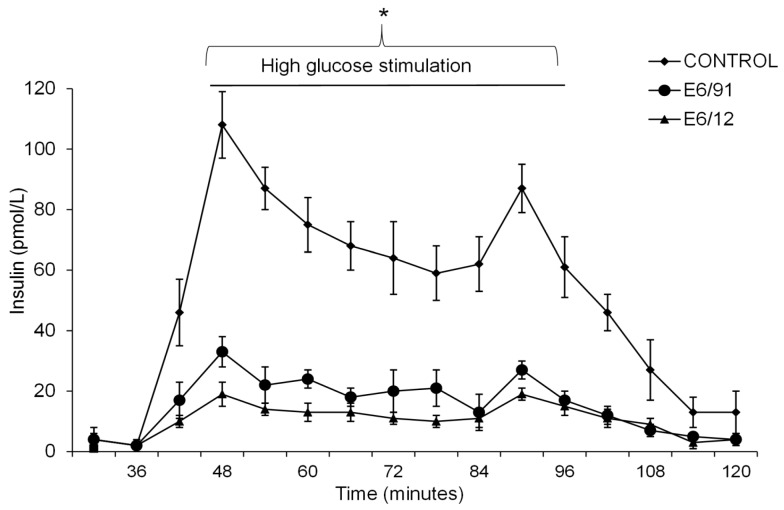
Dynamic release of glucose-stimulated insulin secretion in E6-infected islets. Fifty hand-picked and size-matched islets from three donors were infected with E6/91 and E6/12. Mock-infected islets were left as a negative control. On day three after infection, the islets were perifused with glucose (1.67 mmol/L, 16.7 mmol/L, and 1.67 mmol/L). Fractions were collected at six-minute intervals and the secreted insulin was measured by enzyme-linked immunosorbent assay (ELISA). Data are presented as means ± SD and are based on observations from at least three donors. * p < 0.05 between groups (minutes 42 to 102).
Figure 6
Figure 6
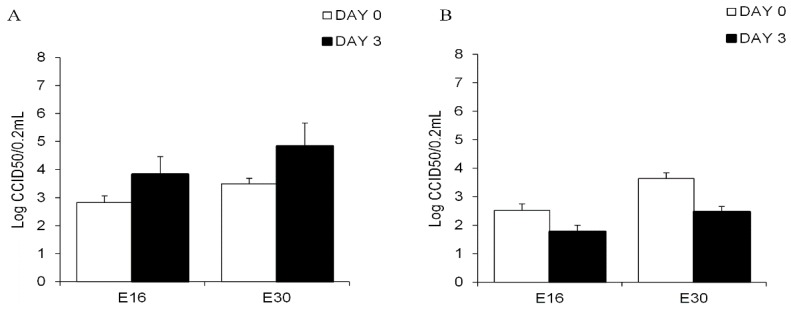
Viral titers of the epidemic strains of E16 and E30 in the culture medium of infected human islets (A) and exocrine cells (B). Free-floating human exocrine cells from ten donors and islets from seven donors were infected with a 1000 CCID50/0.2 mL of E16 and E30. Aliquots of the culture medium were withdrawn day 0 (empty bar) and day 3 (filled bar). Virus titers were obtained using the CCID50 titration method. Data are presented as log10 (CCID50/0.2 mL), means ± SD from experiment performed in triplicate.
Figure 7
Figure 7
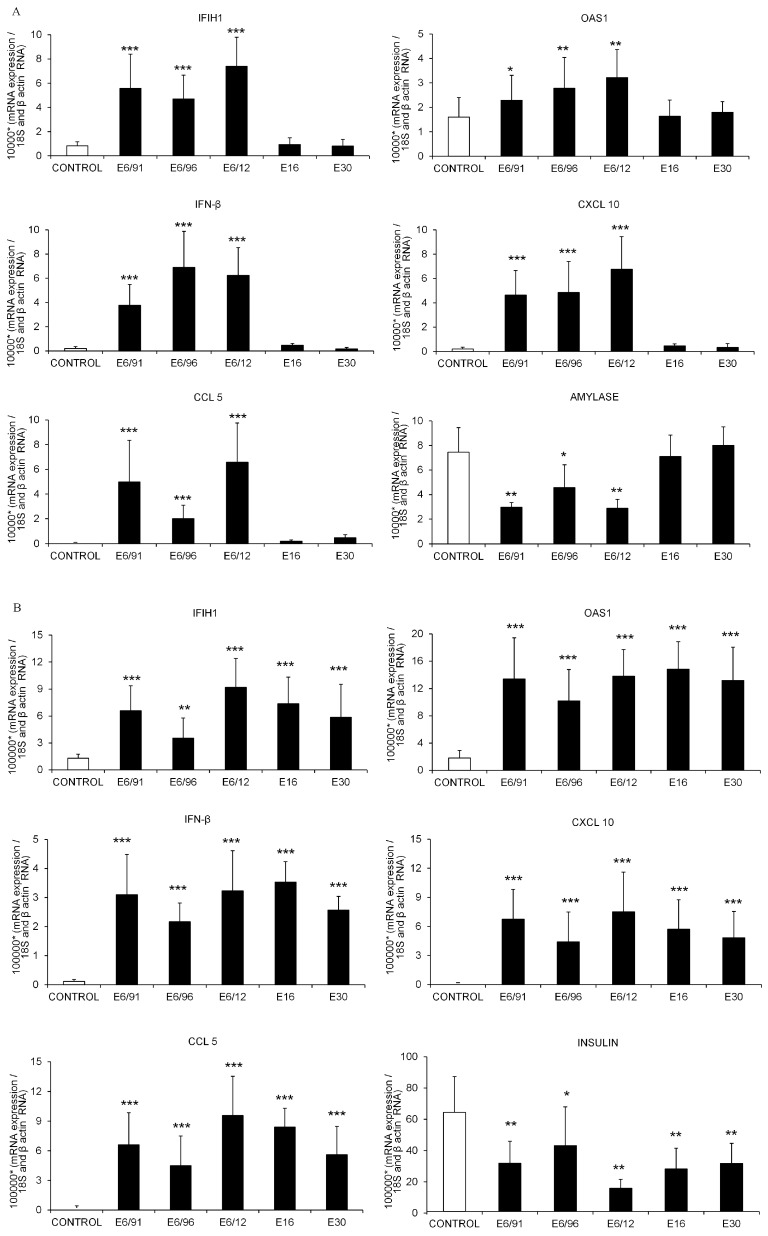
Expression of genes related to virus recognition, antiviral response and amylase in mock-infected and virus-infected pancreatic acinar cells (A); Expression of genes related to virus recognition, antiviral response and islet hormone in mock-infected and virus-infected islets (B). Isolated human exocrine cell clusters and islets were mock-treated or infected with clinical strains of E6/91, E6/96, E6/12, E16 and E30 for 72 h. mRNA expression of interferon induced with helicase C domain 1 (IF1H1); 2′–5′-oligoadenylate synthetase 1 (OAS1); interferon-β (IFN-β); chemokine (C–X–C motif) ligand 10 (CXCL10); chemokine (C–C motif) ligand 5 (CCL5); amylase and insulin were assayed by real time reverse transcription-polymerase chain reaction (RT-PCR) and normalized by the house keeping gene 18S and β-actin using ΔCt method. Gene expression levels are presented as mRNA expression relative to the expression of the housekeeping gene (2−ΔCt). The expression level of each gene in virus-infected cells was compared to the one measured in mock-infected cells (control) from the same donors. Data are presented as means ± SD and were based on observations from at least three donors. Ct: cycle threshold. * p < 0.05, ** p < 0.01, *** p < 0.001.

References

    1. Huber S., Ramsingh A.I. Coxsackievirus-induced pancreatitis. Viral Immunol. 2004;17:358–369. doi: 10.1089/vim.2004.17.358. - DOI - PubMed
    1. Yeung W.C., Rawlinson W.D., Craig M.E. Enterovirus infection and type 1 diabetes mellitus: Systematic review and meta-analysis of observational molecular studies. BMJ. 2011;342:d35. doi: 10.1136/bmj.d35. - DOI - PMC - PubMed
    1. Ylipaasto P., Klingel K., Lindberg A.M., Otonkoski T., Kandolf R., Hovi T., Roivainen M. Enterovirus infection in human pancreatic islet cells, islet tropism in vivo and receptor involvement in cultured islet beta cells. Diabetologia. 2004;47:225–239. doi: 10.1007/s00125-003-1297-z. - DOI - PubMed
    1. Ylipaasto P., Kutlu B., Rasilainen S., Rasschaert J., Salmela K., Teerijoki H., Korsgren O., Lahesmaa R., Hovi T., Eizirik D.L., et al. Global profiling of coxsackievirus- and cytokine-induced gene expression in human pancreatic islets. Diabetologia. 2005;48:1510–1522. doi: 10.1007/s00125-005-1839-7. - DOI - PubMed
    1. Elshebani A., Olsson A., Westman J., Tuvemo T., Korsgren O., Frisk G. Effects on isolated human pancreatic islet cells after infection with strains of enterovirus isolated at clinical presentation of type 1 diabetes. Virus Res. 2007;124:193–203. doi: 10.1016/j.virusres.2006.11.004. - DOI - PubMed

Publication types

MeSH terms

Substances

LinkOut - more resources